
|
Getting your Trinity Audio player ready...
|

Ok, so did Darwin get it right? We all like to use the saying, “survival of the fittest”, but do we really know what it means? Do we fully grasp the cruel reality of the circle of life and the evolution of different animal species. Well, there’s one place on earth where you can see this up close, in real time, no YouTube video or virtual reality: the Galapagos Islands.
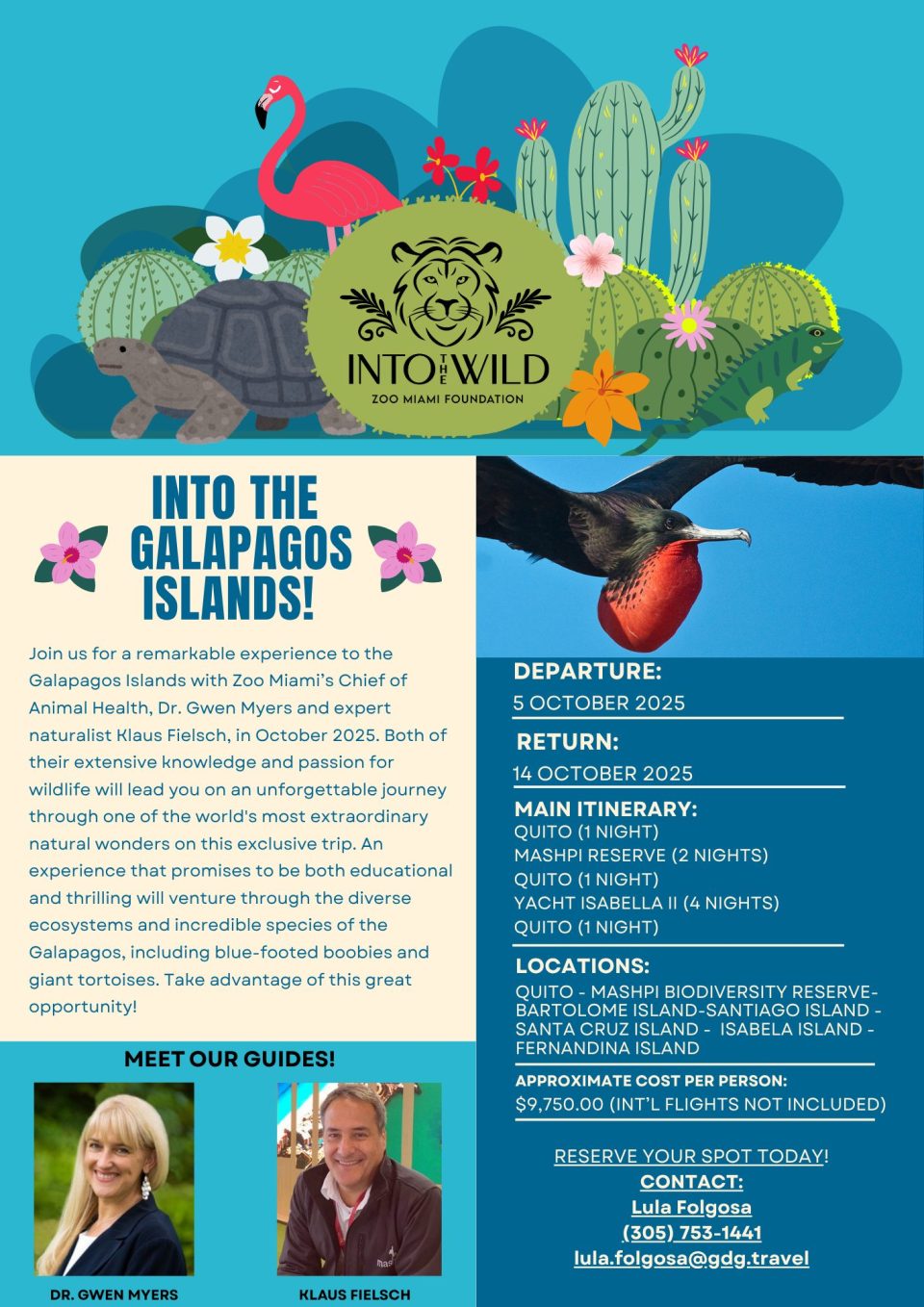
You can join Zoo Miami’s Head Veterinarian, Dr. Gwen Myers, for the adventure of a lifetime to the legendary Galápagos Islands from October 5-14, 2025. Known for their unparalleled biodiversity and as the cradle of Darwin’s discoveries, the Galápagos offer rare encounters with giant tortoises, marine iguanas, blue-footed boobies, and more.
With Gwen as your guide, you’ll gain exclusive insight into the delicate balance of island ecosystems and the veterinary science behind wildlife conservation. Her years of hands-on experience caring for some of the world’s most extraordinary species will enrich your luxurious journey and deepen your appreciation for this natural wonder.
I’ve had the privilege of knowing Dr Myers since about 2015 and have witnessed her unwavering compassion and dedication towards the animals that we care for at Zoo Miami. She is a consummate professional and has traveled the world with the mission of caring for endangered animals and conserving the spaces where they live. As she prepares for this trip, I had the opportunity to ask her a few questions.
- Why are the Galápagos considered one of the most important places in the world for understanding evolution and conservation?
- The Galápagos Islands are widely recognized as one of the most important natural laboratories for understanding evolution and biodiversity conservation. Their global significance stems from their unique ecological conditions, geographic isolation, and high levels of endemic species, which collectively offer invaluable insights into natural selection and adaptive evolution. Charles Darwin’s visit to the Galápagos played a pivotal role in shaping modern evolutionary theory. Observing variations in finches across different islands, Darwin noted how species adapted their beak shapes and feeding behaviors to local environments and led to his theory of natural selection. Today the Galapagos Islands serve as a contemporary benchmark for effective conservation practices as the ecosystems of the islands have faced threats from invasive species, climate change, and human impact. They are a model for integrated conservation strategies that balance ecological protection with sustainable development.
- What unique adaptations make Galápagos species like the marine iguana or giant tortoise so extraordinary?
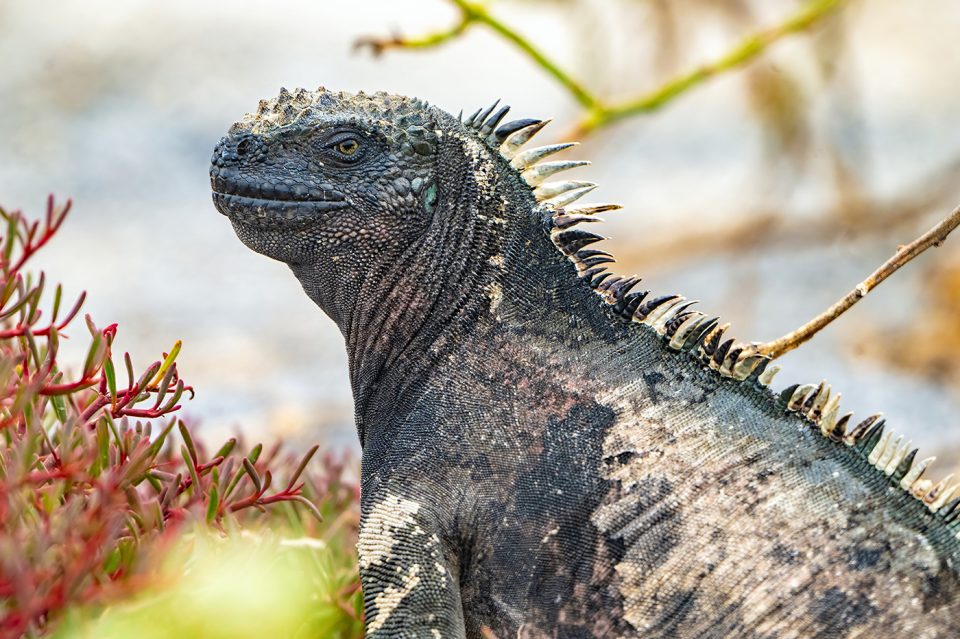
- Species like the Galápagos marine iguana and giant tortoise are extraordinary because of the unique adaptations they’ve developed in response to the islands’ isolated and often extreme environments. The marine iguana, for example, is the only lizard in the world that forages in the sea; it has a flattened tail for swimming, strong limbs for clinging to rocks in rough surf, and specialized glands that expel excess salt after diving. Meanwhile, the giant tortoise has evolved distinct shell shapes depending on the island it inhabits—domed shells for cooler, wetter areas and saddleback shells that allow them to stretch their necks and reach higher vegetation in drier regions. Both species have slow metabolisms and can go long periods without food or water, which is crucial for survival in such unpredictable conditions. These adaptations not only highlight the incredible power of evolution but also show why the Galápagos are such a vital place for scientific research and conservation.
- As a veterinarian, what are the most fascinating health challenges you’ve seen in (island) wildlife?
- Each wildlife ecosystem has its own set of fascinating challenges. In the Galapagos Islands, one of the most significant is the impact of introduced parasites, diseases and predators. Many island species have no natural immunity to pathogens brought in by humans or domestic animals. Avian pox and parasitic flies were inadvertently introduced and have serious, life-threatening effects on several bird populations, including Darwin’s finches. There is always the trauma and injury that happens related to human activity, such as collisions with boats or fishing gear entanglement, and pollution plays a broad role in individual and population health. Marine iguanas, which rely on specific algae for nutrition, can face starvation when ocean temperatures rise and alter the marine food web. Although introduced predators, such as feral cats, rats, pigs, and even goats, are among the most dangerous health threats to native Galapagos species, successful eradication programs have led to remarkable recoveries of native species on specific islands.
- How does what you see in the Galápagos connect to the work you do here at Zoo Miami?
- The work done in the Galápagos Islands is closely connected to Zoo Miami through shared goals in conservation, research, and public education. One of Zoo Miami’s core missions is education. Through exhibits, programs, and outreach, it helps raise public awareness about the ecological importance of the Galápagos Islands and the challenges they face. Our very own Galapagos Tortoises have successfully bred this past year, helping to further advance our understanding of reproductive challenges and advancements in this species survival. Zoo Miami has played a significant role in supporting conservation projects in the Galápagos, particularly through partnerships that focus on protecting endangered species and restoring fragile ecosystems. This work parallels the efforts of Zoo Miami in protecting and restoring our local fragile ecosystem – the Pine Rocklands, and the special animals that are only found here.
- What moment in the Galápagos left you completely awestruck? (assuming she has been there before)
- I had the great fortune of diving on my first trip to the Galapagos islands, and was amazed at seeing schooling hammerheads, massive whale sharks, and seeing Darwin’s Arch. But what really struck me with awe was a moment on one of the islands where I was just feet away from marine iguanas, Galapagos sea lions, and Sally Lightfoot crabs gently stepping across the black lava rocks and I realized that I was surrounded by creatures found nowhere else on Earth, each adapted perfectly to their environment – and showing no fear of my presence. Because these animals evolved in isolation with no natural land predators, many never developed a fear response to people. I was able to observe these animals up close, behaving naturally, without disturbing them. It was a powerful and awe-inspiring moment.
- Why is it so important to protect fragile ecosystems like the Galápagos now more than ever?
- Protecting fragile ecosystems like the Galápagos is critical now more than ever because these environments are under increasing pressure from climate change, invasive species, human development, and globalization. The Galápagos Islands are home to an extraordinary number of endemic species—plants and animals found nowhere else on Earth—many of which have evolved in isolation over millions of years and are extremely vulnerable to small environmental changes. The Galápagos serves as a living model of evolution. Protecting ecosystems like the Galápagos supports global biodiversity, helps regulate the climate, and preserves natural resources that benefit all life—including humans. The choices we make today -both for island populations like the Galapagos and ecosystems in our own backyards – will determine whether these irreplaceable environments can survive for future generations.
✨ Spaces are limited, don’t miss this once-in-a-lifetime opportunity!
For more information and to reserve your spot on this unforgettable ten day trip, please contact Lula Folgosa @ Express Travel at 305-753-1441. $9,750 cost per person is based on double occupancy.