
|
Getting your Trinity Audio player ready...
|
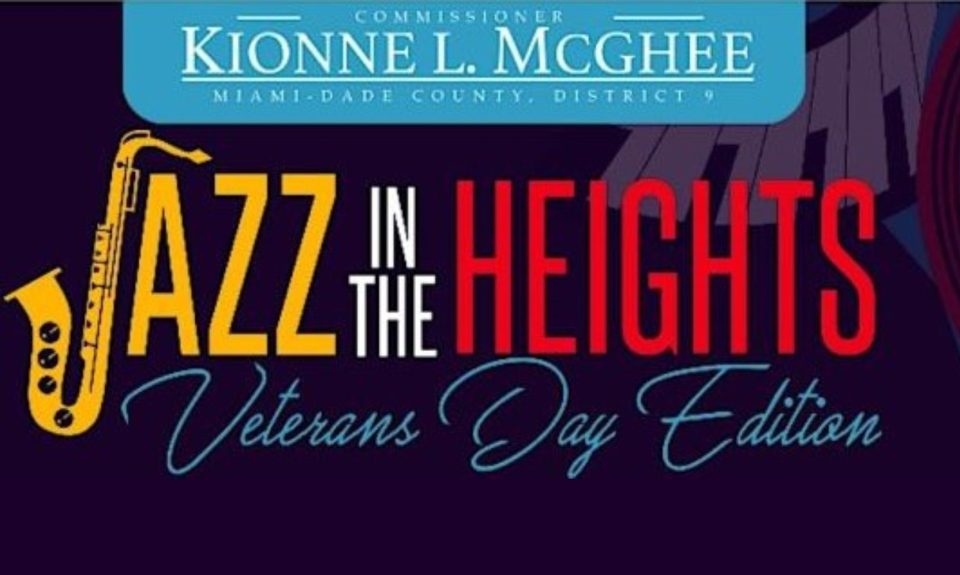
There is a novel but powerful approach behind Jazz in the Heights: treat gratitude and economic opportunity as two sides of the same commitment to community. In District 9, the difference between “a good idea” and “a thriving business” has often come down to one word: access. Access to the right paperwork. Access to the right networks. Access to capital. Access to customers. Vice Chairman Kionne L. McGhee built Jazz in the Heights by treating those access gaps as solvable—not inevitable—and by designing a public celebration that doubles as an economic on-ramp for the very people who have been locked out the longest.
District 9’s economic reality makes that approach especially consequential. Median household income in District 9 is $54,486, compared to $67,263 countywide, and unemployment stands at 5.6% compared to 3.3% countywide. The county’s overall poverty rate is 14.1%. In communities facing those pressures, opportunity can’t be abstract—it has to be engineered into systems that people can actually reach.
Step One: Start with the real barrier—vendor readiness and the “front-door problem”
McGhee’s first move was practical: identify why local entrepreneurs with talent still weren’t becoming vendors, securing contracts, or scaling beyond the neighborhood level. The answer wasn’t a lack of hustle—it was structural friction. Forms, licensing, compliance requirements, registrations, and fees create a “front door” that many small businesses can’t afford to enter, especially early on.
So McGhee built the Small Business Bootcamp as a bridge into the county ecosystem—focused on turning would-be vendors into properly registered, county-ready businesses. The program covers core startup fees that often stop entrepreneurs before they even start, including business license costs, Local Business Tax Receipt fees, and Florida Division of Corporations (Sunbiz) fees.
That design choice matters: when you remove the cost of compliance, you don’t just help someone “learn business”—you remove the toll booth that blocks them from the marketplace.
Step Two: Training alone isn’t enough—so he helped connect businesses to capital
McGhee understood a second reality: knowledge without resources still leaves people stuck. A business can be registered and ready but still unable to buy inventory, upgrade equipment, pay for insurance, or cover marketing. That’s where targeted small business grant support becomes a multiplier.
District 9 small business owners can access the Mom and Pop Small Business Grant Program, which provides up to $5,000 per business and can be used for expenses like supplies, equipment, liability insurance, minor renovations, advertising, and professional services. The program’s eligible uses are built around what small businesses actually need to grow: the tools, protections, and visibility required to compete.
This is bridge-building in real terms: help people get legal and compliant, then help them become operational and competitive.
Step Three: Create the missing space—honor veterans and elevate entrepreneurs in the same arena
After building capacity on the backend, McGhee addressed a different gap on the front end: there was no single large, consistent venue where the community could gather to honor veterans, express gratitude in person, and simultaneously circulate real dollars through local small businesses.
So he created it.
Jazz in the Heights was designed as a space where recognition and opportunity happen side-by-side—where veterans are celebrated not as an afterthought, but as the heart of the gathering, and where small businesses aren’t on the margins, but integrated into the experience.
The event has been explicitly framed as a community gathering built to empower veterans, residents, and small business owners.
Step Four: Make it free—because participation is the point
McGhee’s model works because it’s not built around gatekeeping. Jazz in the Heights is structured to maximize participation, which means eliminating the most common barrier for families and for the community: ticket cost.
The event is free for residents and participating vendors, making it easier for families to show up, meet and thank veterans, and support small businesses in the same place, at the same time.
That same principle extends to vendor access in the way the event is engineered—reducing participation barriers that can otherwise climb into the thousands, especially for smaller operators who don’t have a marketing budget or a reserve fund. When the public is welcomed in and small businesses are welcomed in, the event becomes a real marketplace—not a closed circuit.
Step Five: Scale with the community—then build a roadmap others can copy
Jazz in the Heights didn’t stay small. Its growth pushed it into larger spaces to match demand. The event moved from Zoo Miami into the Miami-Dade County Fairgrounds to accommodate a rapidly growing audience and vendor base.
This scale is part of why the event has become widely known as one of the county’s major Veterans-and-small-business platforms. It has been branded as “the biggest” Veterans & Small Business event in promotional materials, reflecting the scope of its ambition and reach.
The results: measurable opportunity, visible pride, and sustained momentum
Jazz in the Heights has functioned as an economic engine for entrepreneurs by concentrating customers, culture, and commerce in one place. The event has provided opportunities for 190 businesses to participate across categories including food, retail, services, and artists.
The Small Business Bootcamp has helped push that impact upstream: it has assisted with startup funds for over 100 businesses, provided technical assistance to over 300, and provided monetary grants.
The event’s long-run attendance footprint has also been substantial. Jazz in the Heights has attracted over 100,000 guests since its inception, reflecting the event’s evolution from a local gathering into a countywide draw.
Just as important, this growth has not happened by accident. McGhee has invested millions of dollars into this vision—directly supporting small businesses, nonprofit partners, vendors, and veteran-centered programming to ensure the event remains accessible, mission-driven, and rooted in community benefit.
And beyond the music and marketplace, Jazz in the Heights is anchored by intentional moments of recognition—bringing forward a lineup of participants and honorees who help the community pause, reflect, and publicly uplift the veterans whose service made so much possible.
When you put those pieces together—business readiness, capital support, a free public platform, and massive community turnout—you get something rare: a civic event that produces social pride and economic outcomes at the same time.
“We can’t just do what’s easy or what’s been done before—we have to do more,” McGhee said. “More access, more opportunity, more support for the businesses and families who keep this community moving, and more gratitude for the veterans who’ve given so much. That’s what Jazz in the Heights is about: showing up for people in a way that actually changes what’s possible.”
Recognition that matches the mission
McGhee’s work as a bridge builder—connecting veterans, small businesses, nonprofits, and financially challenged communities—has earned public recognition. He was honored as the Carrie Meek Foundation’s 2025 Citizen of the Year, reflecting sustained commitment to service and community uplift.
What Jazz in the Heights represents
Jazz in the Heights is a living example of what happens when leadership is built on understanding the community’s real needs:
- People don’t need motivation—they need access.
- Small businesses don’t just need exposure—they need readiness and capital.
- Veterans don’t just deserve applause—they deserve a community that shows up.
- Culture doesn’t just entertain—it can unify neighborhoods and raise expectations of what’s possible.
That’s why this event matters. It’s not a one-day celebration—it’s a bridge built year after year, strong enough to carry veterans’ recognition, small business growth, and the pride of a community determined to rise together.