

|
Getting your Trinity Audio player ready...
|
Mama Hattie’s House is building hope and opportunity for girls stepping into adulthood to fulfil their mission to give young women a place to call home.
In the heart of Overtown, a place has begun to take shape, and it all started with one empty lot. Soon, this space will become Mama Hattie’s House, a haven for young women transitioning out of foster care and into independence.
This project is the vision of Girl Power Rocks CEO and founder, Thema Campbell, in honor of her grandmother, Hattie Skinner Bacon, better known as Mama Hattie. For Thema and her daughter Rashada, this home is more than just a building, but a way to honor her grandmother’s legacy.
“I grew up around my grandmother, also my mom,” Thema said. “My mom was a great mother, but we loved Mama Hattie. We wanted to be at my grandmother’s house; she had a sweetness about her.”
According to the Florida Department of Health, there were 20,627 children ages 17 and under in the foster care system in 2024. In Miami-Dade County, there were 1,422 children in the foster care system last year.
“Mama Hattie’s House is on its way to becoming a real thing and it was just an idea in my head because I wanted a safe place for girls to live, especially those girls who were aging out of foster care,” Thema said.
Rashada Campbell, director of operations at Girl Power Rocks, highlights that Mama Hattie’s House aims to give young women aging out of foster care the support they need as they enter adulthood.
“The girls who will be coming to Mama Hattie’s House will be girls who are aging out of foster care,” said Campbell. “The girls are typically not equipped with financial management, higher education. A lot of them don’t understand the real dangers of going out on your own at 18.”
According to the organization Children’s Rights, 50% of youth with prior involvement in foster care are unemployed by age 24. Research also found that an FBI operation across 76 cities in the nation found that 60% of sex trafficking victims were previously involved with the foster care system.
The need for a place like Mama Hattie’s House, especially in Overtown, is crucial to helping these young women. The neighborhood has limited access to safe housing and youth services, making it even harder for those aging out of foster care to find the support they need.
“They are going through some hard things in that community so having that resource of consistency is extremely important,” said Carissa Ford, a clinical social worker.
The house will provide secure housing, mentorship, educational support and life‑skills training to girls who have aged out of foster care to help and prepare them for the world.
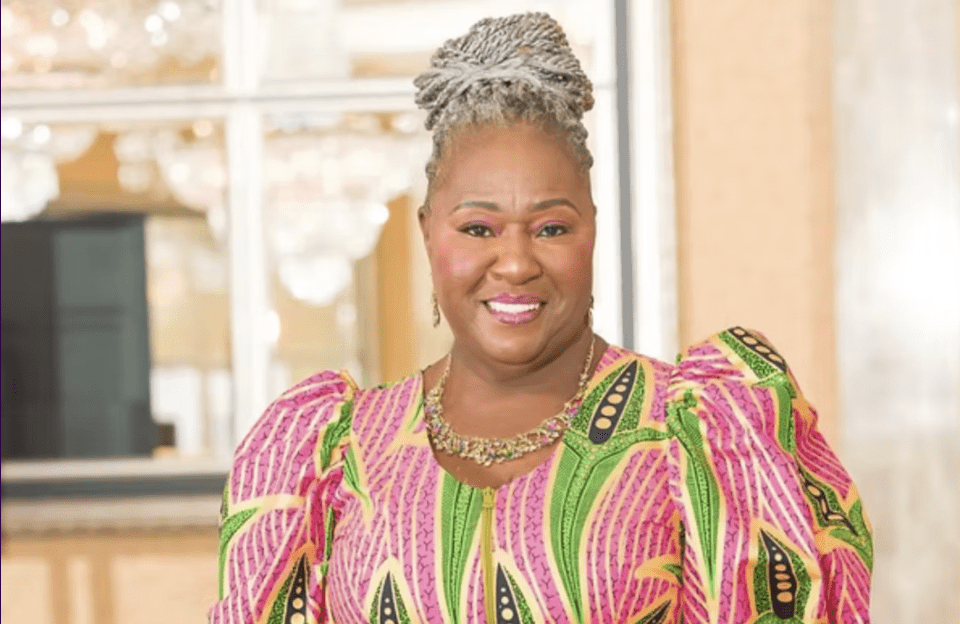
Despite this incredible idea of Mama Hattie’s House being the culmination of a life-long goal, Campbell has been helping girls in need for over 25 years. Their mission is “to create a world where every girl, regardless of background, has the tools and support needed to reach her full potential.”
They aim to help these girls and to give them a safe space through many programs.
One of these is their after-school program, which welcomes girls from all over Miami-Dade County for two hours after school for a variety of activities, including arts, sports, field trips, and parent support groups.
The Girls Choir introduces participants ages 7 to 17 years old to diverse musical genres and cultures, while the Girls Intervention Program Plus helps at-risk youth and first-time nonviolent offenders build essential life skills. Through the Sister Circle Mentorship Program, girls are paired with positive role models for guidance and support.
“We have to make sure we are putting services, putting support behind these girls so that they can grow up to be good mothers, and unities and friends,” said Campbell. “We have to make sure that women and girls are held to a very high standard.”
The organization also provides opportunities through experiences like the College and Heritage Tour, which exposes girls to universities and historical landmarks and the Summer STEAM Workforce Training Camp, where they gain hands-on skills for future careers. Together, these programs prepare girls to thrive academically, professionally, and personally.

Keaira Carter, who was in the foster care system, understands the value and importance of a place like Mama Hattie’s House and the good it can do for these girls.
“I feel like Mama Hattie’s House will give these girls that were in situations like I was in or worse, it will make them feel like they belong somewhere, like someone actually cares,” said Carter. “I feel like it is a chance that I never had, that I was never given, that I never knew would have existed in the first place.”
It’s stories like hers that inspired Campbell to continue to fight for these girls. Not only her own experience but seeing what they were going through made her want to help.
“The way that Mama Hattie’s House became a thing for me was when I was meeting these girls who had been through trauma, who had been through God knows what atrocities that I couldn’t even imagine could happen to me when I was growing up,” said Campbell.
According to the Florida Girls Initiative (FGI), in 2022 at least 1.36 million Florida girls were living with circumstances that put their futures at risk. An estimated 461,000 have suffered abuse and trauma.
The construction of Mama Hattie’s House is scheduled to begin in 2026 and it will represent much more than four walls and a bed. It will be the first time these girls will have a space they can call their own and feel safe.
They won’t have to worry about where to sleep or where to sleep, they will have a place in which they will not only be taken care of, but will also help them to achieve the skills to take care of themselves and in the future depend on no one.
Mama Hattie made Campbell and her family feel like they always had a place to go, a place to call home, and now, she carries that same message that her grandmother taught her and expands it to the girls and the community with one simple message: No one should face life alone.
This story is part of a collaboration between Miami’s Community Newspapers and the Lee Caplin School of Journalism & Media at Florida International University..