
|
Getting your Trinity Audio player ready...
|
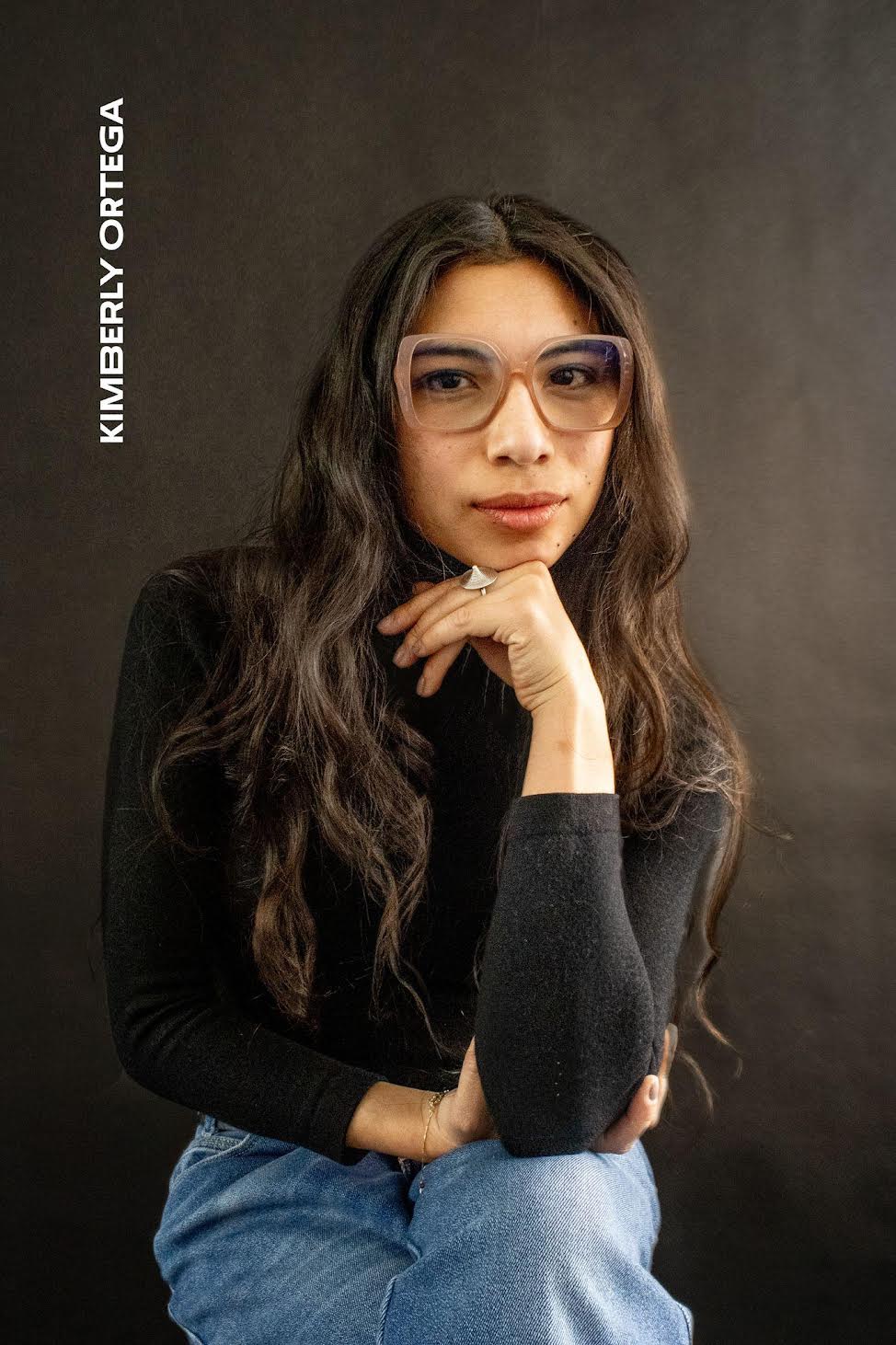
Kimberly Ortega is redefining fashion with scraps, straw and soul. From Quito to New York, her designs stitch together heritage, sustainability and resilience — all under her brand, SOAK.
Growing up in Quito, Ecuador, Ortega recalls an afternoon with her father, Martín, at his used auto parts store. “I am basically making money from trash,” he said, explaining how he took what others threw away and turned it into something valuable.
That moment stayed with her.
Years later, when she was enrolled at Parsons School of Design in New York, professors admired her use of leftover fabrics, piecing together fragments until they formed a garment. “You’re taking scraps and turning them into real garments,” she recalls them saying.
For Ortega, it was more than a design choice — it was a connection to her roots and to her parents’ philosophy of transformation and resilience.
Her mother, Irlanda Sánchez, originally a clinical psychologist, switched to industrial psychology and joined Martín in the used auto parts business after Kimberly was born. “They both started working together, and I grew up learning about the value of recycling and turning materials into something meaningful,” Ortega recalls.
Her path to fashion wasn’t straightforward. She spent her childhood competing in modern dance competitions from age eight. Drawn to science, she initially planned to major in chemical engineering. “I always loved the lab work, the chemistry part,” she says. “But I realized I couldn’t keep up with both dancing and my studies.”
Her parents encouraged her to follow her heart: “If you’re going to be a dancer, be the best dancer in the world. If you’re going to be a shoemaker, be the best shoemaker in the world.”
From Ecuador to Parsons: A Journey of Movement and Meaning
In 2015, she shifted to visual arts at Universidad San Francisco de Quito, where she also minored in fashion design. For her undergraduate thesis, she combined her fascination with chemistry and textiles by experimenting with natural dyes and fabrics.
After graduating in 2020, Ortega landed her first job at Allpamamas, an Ecuadorian ethical fashion project that collaborates with indigenous artisans in the Andes.
“It was an amazing experience,” she says. “Even now, I still collaborate with some of the embroiderers I met there. They’re incredible women.”
But Ortega wanted to build her career abroad. Her sister had been living in the United States for several years, and what began as a short visit to Florida soon became something else. “We were supposed to go on vacation,” Ortega says. “But in my mind, I was already thinking about staying.”
Just as she was settling into life in the U.S., a sudden health scare forced her to change course.

“I cried so much,” Ortega says. “I had to return to Ecuador, carrying all my materials in overweight suitcases — crying the whole way.”“I quit my job and left everything behind,” she explains. “I thought, ‘Okay, I have no job, I can’t go back to the U.S. – yet –but I still have to keep working.’ That’s when I started [my label SOAK.”
What began as a small project became her creative rebirth. Through SOAK, she explored a new kind of fashion — one that values simplicity, purpose, and honesty in design.
Each piece is made with intention, favoring quality over excess and small-scale production over mass consumption. Her approach focuses on functionality and comfort, blending minimalism with identity and care for the planet.
SOAK also reflects her belief that fashion should be inclusive and forward-thinking, celebrating gender diversity and encouraging people to express themselves freely. She works closely with Ecuadorian artisans, combining traditional craftsmanship with modern aesthetics to honor her roots while sharing Ecuador’s heritage with the world.
During college, Ortega spent two consecutive summers attending dance school at Brooklyn DanceSport Club in New York. “It was amazing to be in that energy, surrounded by people from all over the world,” she recalls. A dance teacher once told her she could stay a year if she studied there, and her mother, Irlanda, encouraged her: “If that’s really what you want, go for it.” That experience inspired her to seek out fashion schools, ultimately leading her to apply to Parsons.
She even had a card with information about Parsons, which she didn’t see again until 2022 — the year she applied and earned a 60% scholarship to pursue an MFA in Fashion Design and Society. The program emphasized fashion as a cultural, social, and ecological system, encouraging students to define their own design identity, collaborate globally, and prepare to launch or lead a brand.
At Parsons, Ortega worked as a research assistant for Lucia Cuba, a Peruvian designer and former director at the school. Cuba’s research focused on children’s education and gender in fashion.
“She was creating more accessible libraries for children and encouraging them to make choices beyond traditional gender norms,” Ortega explains. “It made me think about my collections differently — that fashion could break barriers and be truly genderless.”
Once in New York, Ortega met her boyfriend, Jeremy Herrmann, through a mutual friend at Parsons. Initially, they didn’t interact directly. When Ortega returned for her second year she moved in with Jeremy, whom she had been dating for about a month, out of economic necessity.
Despite the suddenness, living together felt natural. “It was super easy,” Herrmann recalls. “It felt right — nothing felt awkward or difficult.” He’s a painter — they understand the demands of creative work and encourage each other’s projects.
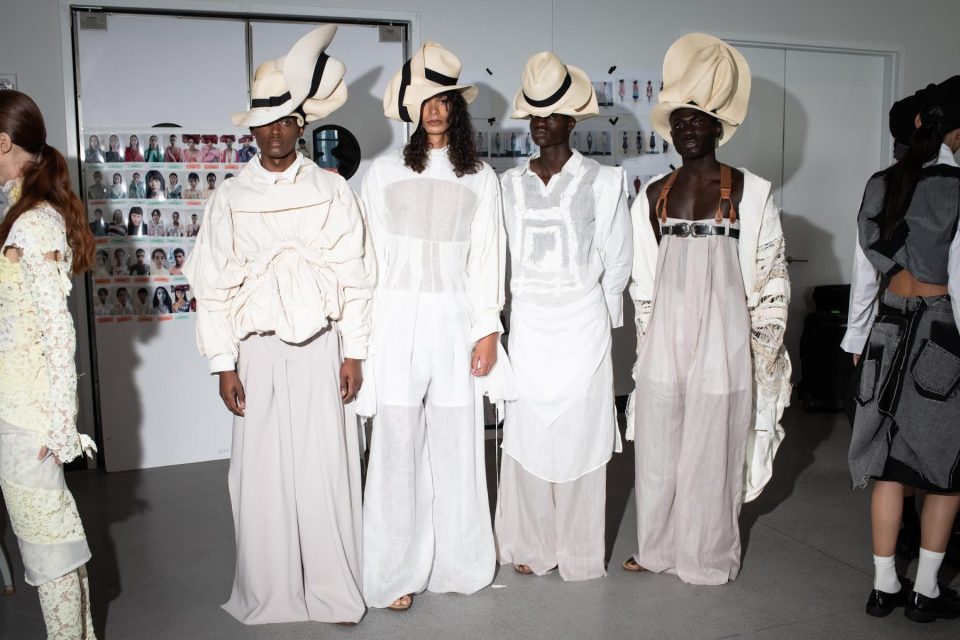
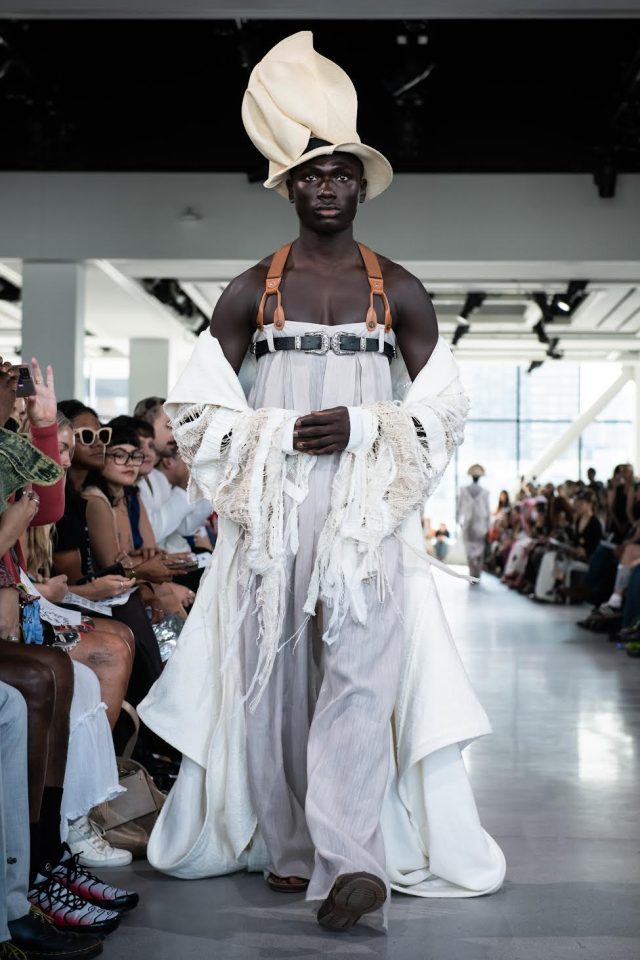
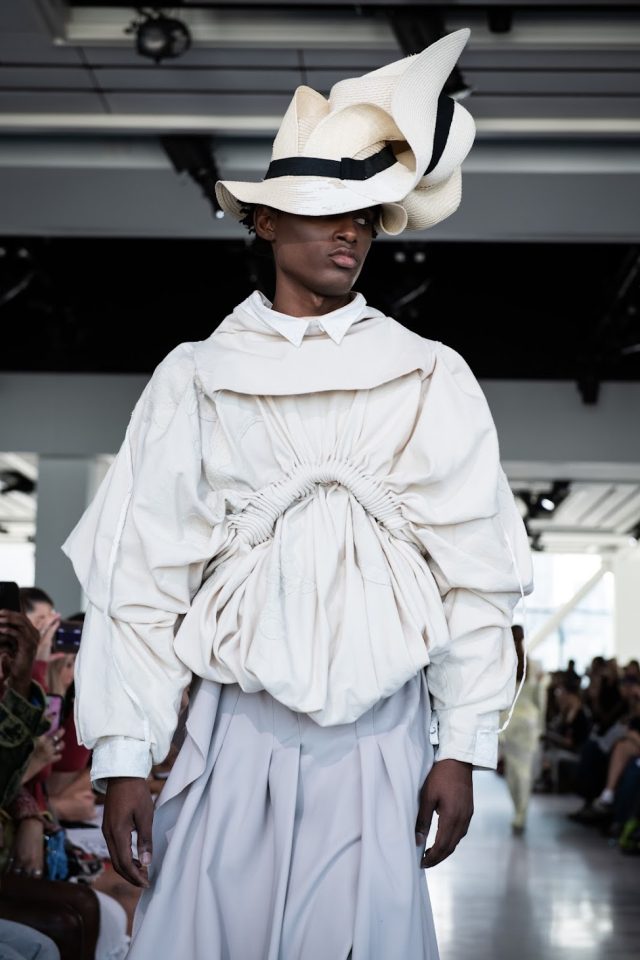
For her MFA thesis, Ortega focused on paja toquilla, the straw used to make the iconic Panama hat. Though commonly associated with Panama, the hat’s true origin is Ecuador. The misnomer dates back to the early 20th century, when Ecuadorian straw hats were shipped to Panama before being exported globally.
“It was important for me to show the history behind it,” she says. “The paja toquilla represents Ecuador’s working-class roots, and I wanted to bring that to the global fashion stage.”
Ortega’s thesis presentation at Parsons was a whirlwind of emotion, exhaustion, and teamwork. As the deadline approached, she and her boyfriend, Herrmann, pulled an all-nighter to finish her portfolio and garments.
“We didn’t sleep,” she recalls. “At 4 a.m., the printer broke, we ran out of paper, and I started crying. I told him, ‘You go to bed, I’ll figure it out.’ But he stayed up with me until the very end.”
Though Jeremy had no experience with sewing, Ortega taught him how to hand-stitch and weave. “Some of the pieces actually have his handiwork — we were weaving together.” He was so supportive.” Their creative partnership extended beyond fashion: Ortega helped him organize his art portfolio and apply for fellowships and grants. “We’re learning the business side together,” Herrmann said. “We’re building visibility for both SOAK and Jeremy’s studio, trying to grow and reach more people,” Ortega added.
The decision to work with paja toquilla came from a personal place. Ortega recalls being told abroad that she didn’t “look Ecuadorian.” That comment made her feel a mix of frustration and anger. From that moment, she decided to show the richness, diversity, and strength of Ecuadorian culture through her designs — reclaiming her identity and sharing it on a global stage.
To realize her vision, Ortega collaborated with local artisans and brands, including María Sánchez and Sumakmaki, who helped manipulate the straw into sculptural forms. It was meticulous, hands-on work that bridged cultures and highlighted the skill and labor of Ecuadorian craftspeople.
Now established in New York, Ortega balances her brand with other fashion projects. She measures success not by fame or wealth, but by impact and opportunity. “For me, success is more about tranquility and wisdom than recognition. It’s about making my message heard and representing the beauty of our country.”
Despite Ecuador’s recent political and social turmoil, Ortega remains deeply connected to her roots.
“I feel frustration and sadness seeing my friends and family affected,” she admits. “But I also know my work could serve as a form of resistance and support, giving visibility to our culture internationally.”
From dance floors in Quito to New York Fashion Week, Kimberly Ortega’s journey is a story of resilience, creativity, and transformation. With SOAK, she is not just building a brand — she is crafting a bridge between Ecuadorian heritage and the global fashion world, one scrap of fabric at a time.
This story is part of a collaboration between Miami’s Community Newspapers and the Lee Caplin School of Journalism & Media at Florida International University.