

|
Getting your Trinity Audio player ready...
|
 Entrepreneurs know all too well how a brilliant idea can be slowed down—not by lack of vision, not by financing, but by the permitting maze in the 305. In unincorporated Miami Dade County, the process is comparatively seamless—but step just a mile into one of the 34 incorporated municipalities in the county, and the system becomes far more complex. One city’s fire review may go through a local fire department; another may rely on county fire‐rescue. One taps into a municipal water & sewer review; another still uses the county’s infrastructure. The variation is bewildering for anyone trying to turn ambition into action.
Take for example: regardless of whether a business is opened in unincorporated territory or within a city, the environmental review—handled by the county’s Department of Regulatory & Economic Resources (RER) via its Environmental Resources Management (DERM) unit—always remains with the county. Meanwhile, a developer in a municipality must navigate not only the local building department, but must often submit separate reviews to DERM, to the county Water & Sewer Department, to Impact Fees review, to fire prevention, and more.
This patchwork of systems poses real challenges for entrepreneurs—especially those launching small businesses or first‐time operators who don’t have legions of in-house permitting experts. They face unpredictable timelines, unfamiliar portals, differing checklists, separate fees, and the need to coordinate across jurisdictions. The result: delays, added cost, lost initiative.
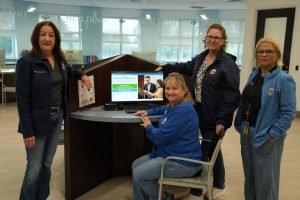
That is why the office of Daniella Levine Cava, mayor of Miami-Dade County, has stepped in with a game-changing pilot initiative. The county is partnering with municipalities to install “MeetQ” kiosks at local municipal building departments. At these kiosks, local permit clerks trained by county RER staff will assist city customers in real time with MeetQ appointments—offering clarification on plan review comments, handling re-work or fee questions, or helping resolve cross-jurisdictional issues. A contractor encountering a fire review question or a water & sewer review hurdle won’t have to shuffle between offices—they’ll be able to use the kiosk inside their city building department to talk directly to the right reviewer (building, structural, mechanical, electrical, fire, zoning, impact fees, DERM core or specialties, etc.).

Importantly, the most recent municipality to install the kiosk is City of Doral. The pilot idea is to bring the permitting conversation to the business‐owner’s home turf (the local city halls/building departments), rather than forcing them to navigate multiple off-site county offices. In unincorporated county areas, the system is unified; but in incorporated cities, this kind of bridge is vital to reduce the fragmentation.
Why does this matter? Because easing the permitting process is more than bureaucratic convenience—it’s community-centered economic development. When local entrepreneurs spend less time waiting for approvals and more time building their businesses, investing locally, hiring locally, the ripple effect is profound. For the 305 to become an economy that works for everyone, simplifying the path from idea to open‐door matters.

This kiosk initiative is not just about faster permits—it’s about unlocking generational opportunity in the 305. When a young business owner in a neighborhood city doesn’t have to navigate a labyrinth of jurisdictional hand-offs, they’re more likely to open, hire, grow, and thrive. The barrier that often keeps small businesses from scaling is not their ambition—but the tangle of which permit goes where.
Entrepreneurs in Doral and soon in other municipalities will show what’s possible when the county and cities align. The hope is that as the kiosk model spreads, every city within Miami-Dade will join in—meaning a streamlined, more predictable permitting process for all. If we truly want the 305 to be a place of upward mobility and generational growth, we must make the machinery of permitting work for entrepreneurs, not against them. This program sends a clear message: the government of the 305 is rooting for business success—not standing in its way.