
|
Getting your Trinity Audio player ready...
|
The hybrid Miami Jewish Film Festival pulled in more than 58,500 attendees in-person in South Florida and reaching all 50 states online
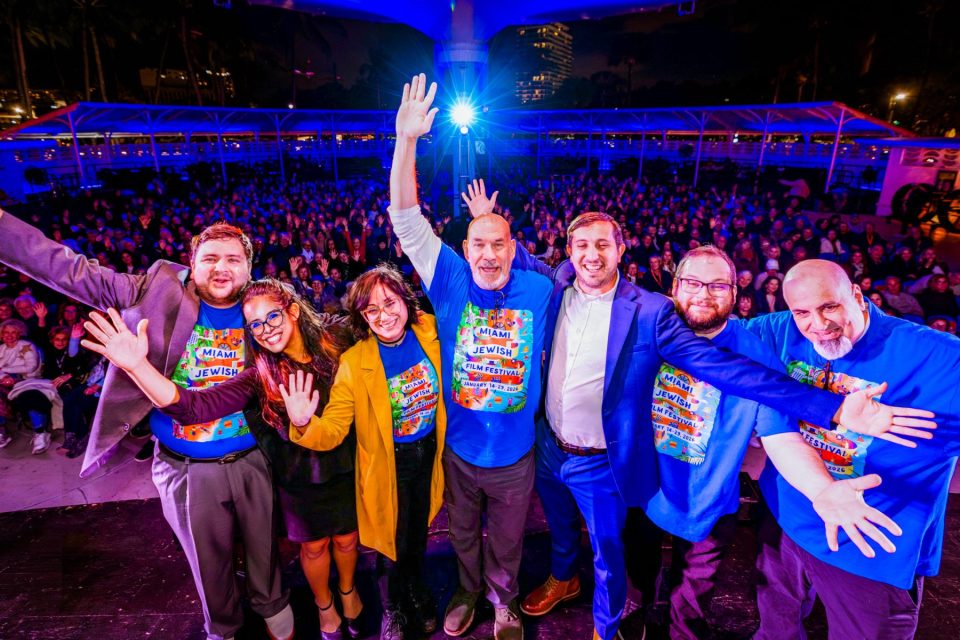
The Miami Jewish Film Festival (MJFF) concluded its 29th edition with resounding success, further cementing its status as the largest Jewish film festival in the world. The 2026 Festival achieved record-breaking attendance, highlighted by 45 sold-out premieres and an estimated total audience and unique viewership exceeding 58,500 across in-theater and virtual platforms—setting a new benchmark in the Festival’s history.
MJFF proudly announced this year’s Jury and Audience Award recipients across nine major categories. The Critics Jury Prize—adjudicated by members of the Florida Film Critics Circle and international journalists—was awarded to The Sea, directed by Shai Carmeli-Pollack, Israel’s official Academy Award submission and a landmark collaboration between Jewish and Palestinian Israeli filmmakers. The Next Wave Jury Prize, selected by a panel of jurors aged 21–35, was presented to Michael Walker’s The Legend of Juan Jose Mundo. Hilan Warshaw’s Honorable Mr. Morgenthau received the Kadima Jury Prize for its timely exploration of Jewish history, while the Torchbearer Award honored Josh Aronson and Adam R. Wood’s Hold On to Your Music. Director Matthew Shear was named Emerging Filmmaker of the Year for Fantasy Life.
Audience Awards were bestowed upon Ken Scott’s Once Upon My Mother (Best Narrative Film), Tom Shoval’s A Letter to David (Best Documentary), Guy Amir and Hanan Savyon’s Pure Luck (Best Israeli Film), and Carli Fogel and Paula Kweskin’s urgent short documentary In Protest (Best Short Film).
The Festival opened with the premiere of Ken Scott’s Once Upon My Mother at the Miami Beach Bandshell, drawing a record-setting audience of 850 attendees. This year’s program featured 139 films—105 features and 34 shorts—from 25 countries, marking the largest slate of films presented by any Jewish film festival worldwide in 2026. More than 80 virtual screenings expanded the Festival’s national reach, engaging audiences across all 50 states, Washington, D.C., Puerto Rico, and the U.S. Virgin Islands. The Festival closed on a high note with Adir Miller and directors Doron and Yoav Paz’s International Emmy Award-winning film The Ring, which captivated more than 800 attendees at the Bandshell.
Beyond the screen, MJFF hosted over 90 film events across nine venues throughout Greater Miami, welcoming more than 90 international filmmakers, artists, and special guests. Notable attendees included Amanda Peet, Jill Kargman, Academy Award-nominated filmmaker Juan José Campanella, acclaimed documentarian Alan Berliner, Israeli comedy icons Guy Amir and Hanan Savyon, producer Nancy Spielberg, Grammy-nominated pianist Mona Golabek, and legendary singer-songwriter Carol Connors.
The Festival also reported significant growth among younger audiences and historically marginalized communities, driven by strategic programming initiatives expanded this year. Central among them was the “Next Wave” program, designed for college students and young professionals ages 21–35. Highlights included late-night screenings celebrating the 40th anniversary of David Cronenberg’s The Fly, as well as a special presentation of cult classic Igby Goes Down featuring a live appearance by Amanda Peet.
One of the Festival’s most powerful moments occurred during the premiere of A Letter to David, attended by Ariel and David Cunio, two of the last Israeli hostages freed in October following the October 7 terrorist attack. Viewing the film for the first time alongside the audience—during their first visit to the United States and their first film festival appearance—the brothers received a prolonged standing ovation from a capacity crowd of more than 240 attendees. The evening concluded with a moving conversation with producer Nancy Spielberg, marking a deeply emotional moment of collective reflection, healing, and solidarity.
Furthering its commitment to inclusivity, MJFF expanded its Accessibility+Inclusion program with the premiere of Disposable Humanity, directed by Cameron S. Mitchell, presented in partnership with Holocaust Memorial Miami Beach. The free, public event drew a capacity audience and spotlighted the two-decade investigation into Nazi Germany’s Aktion T4 program—a precursor to the Holocaust that resulted in the murder of over 300,000 disabled individuals.
Celebrating local voices and Florida-based stories, the Festival hosted the world premiere of From Cuba to America, a made-in-Miami documentary chronicling the life of fashion icon George Feldenkreis. Featuring original music by Emilio Estefan, the film screened three times to sold-out audiences, reaching more than 1,100 attendees. The film traces Feldenkreis’s journey from Havana exile to founding the Perry Ellis fashion empire, illuminating the intersection of Jewish and Cuban heritage that helped shape both his legacy and the city of Miami.
“The extraordinary success of this year’s Miami Jewish Film Festival affirms something we deeply believe, that the shared experience of going to the movies still matters—perhaps now more than ever. At a time of profound division, cinema remains a powerful bridge, bringing people together across cultures, generations, and perspectives. Throughout this Festival, we witnessed theaters filled to capacity, meaningful conversations sparked, and moments of collective reflection that reminded us why storytelling is essential to both cultural understanding and human connection. We are immensely proud of what this community accomplished together—from record-breaking attendance and sold out screenings to the spirit of openness and curiosity that defined every venue. MJFF stands tall in its mission to be a home for all filmmakers and a space for inspiration and discovery, where diverse voices are celebrated and audiences are invited to engage with stories that move hearts and minds. This Festival is, at its core, a testament to the enduring power of film to unite us, strengthen our sense of belonging, and inspire a more thoughtful and compassionate world,” said Igor Shteyrenberg, Executive Director of the Miami Jewish Film Festival.
In total, the 2026 Film Festival program showcased 15 world premieres, 19 international premieres, 13 North American premieres, and 3 U.S. premieres, 8 East Coast premieres, 48 Southeast U.S. premieres, and 20 Florida premieres, as well as over 80 conversations with filmmakers, stars, and scholars from around the world.
Building on this historic momentum, the Miami Jewish Film Festival announced that its milestone 30th edition will take place January 13-28, 2027, marking three decades of championing Jewish and Israeli storytelling and bringing bold, essential cinema to audiences around the world.