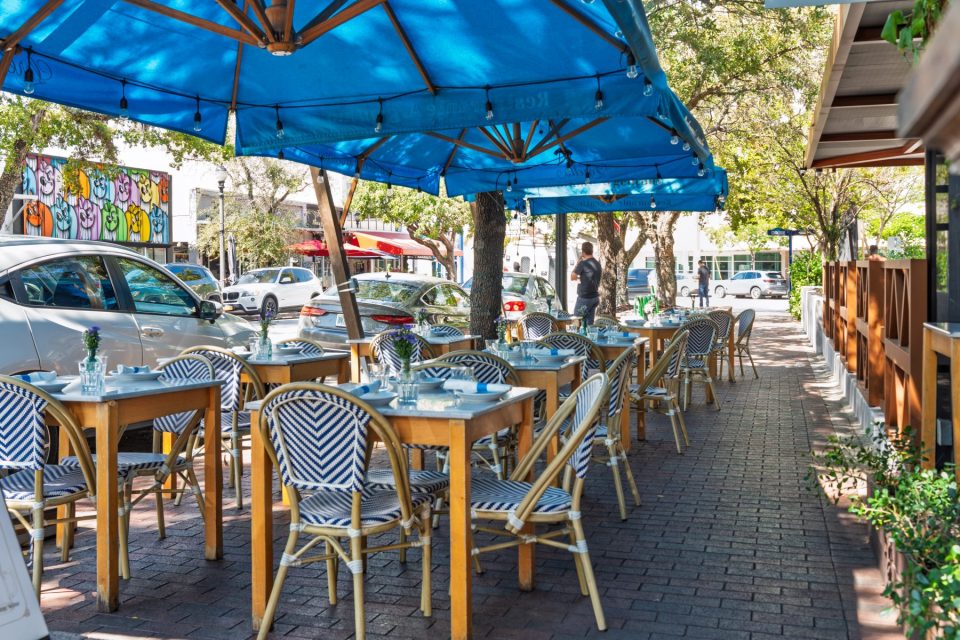

Coconut Grove, Miami’s oldest neighborhood, has quietly evolved into one of South Florida’s most successful business communities – and it’s no accident. With its blend of charm, strategy, and community, the Grove offers a blueprint for how local economies can thrive.
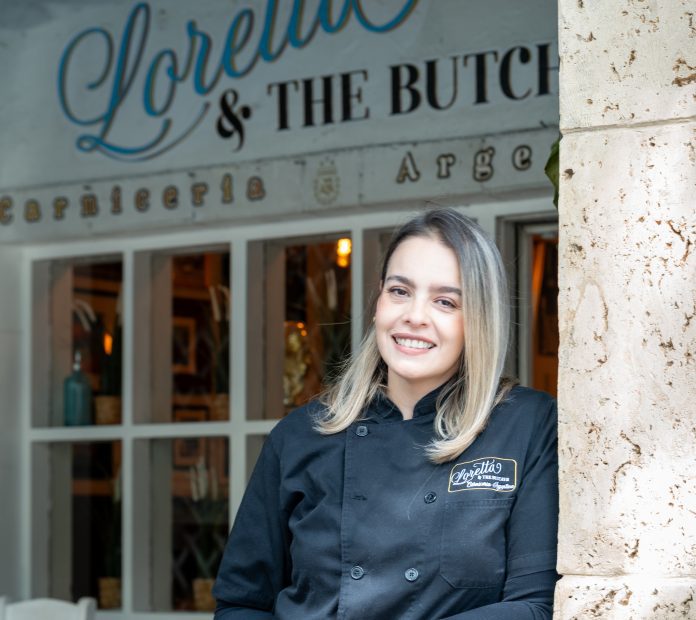
At the heart of its success is a strong sense of community. And at the heart of the Grove’s bustling downtown district are independent businesses, like Loretta and the Butcher on Commodore Plaza, with Maria Alejandra Castaño at the helm.
1 of 5
By cultivating a loyal customer base that values authenticity and true connection, Castaño’s quaint bistro tucked between the busy shops and other businesses on Commodore Plaza has fast become a beloved neighborhood staple.
“Since the very beginning, we wanted to be more than just a restaurant. We’ve built real relationships with our guests and with other businesses in the Grove. We know their names, their favorite dishes, and make each visit one that feels like they’re home.” The loyalty and warmth of their customers continue to fuel the restaurant’s growth.
Culinary Passion
With a passion for Argentine cuisine and making guests feel at home, she’s created a fine restaurant that’s a one way ticket to Buenos Aires. Her journey proves that with the right ingredients, vision, and boldness, anything is possible.
Beyond perfecting beef, Loretta & the Butcher honors an iconic Argentine culinary tradition, led by the passionate and determined Castaño. As a powerful woman in a male-dominated industry, she runs a restaurant that embodies authenticity, quality, and community in the deepest sense.
Castaño’s love for food began in her childhood, growing up in Colombia where meals are a symbol of unity and tradition. “Since I was a little girl, cooking has been my passion and my way of expression. And I’ve always been fascinated by how the right dish can tell a story, awaken emotions, and bring people together.”
Her admiration for Argentina’s beloved cuisine eventually led her to acquire Loretta & the Butcher, where she brings the essence of la parrilla (Argentine grill) to the Grove. With respect for each cut of meat and a dedication to using the highest quality ingredients, she ensures each dish represents the true flavors of Argentina.
“Loretta & the Butcher is more than a restaurant; it’s a total experience. We want patrons to feel transported to Argentina through flavors, aromas, and the welcoming warmth of the atmosphere.”
What Makes an Argentine Grill Great?
A true Argentine “parrilla” is more than just grilled meats, it’s a whole ritual. “Everything starts with the highest quality cuts, cooked over fire with patience. Coarse salt is all the seasoning that’s needed to highlight the succulent meat’s true flavor.”
But beyond the food, it’s about connection. “A true parrilla is meant to be shared with friends and family, with melted provoleta, a glass of wine, and, of course, chimichurri to add the final touch. It’s about friends and family gathering around the grill, living in the moment filled with passion.” At Loretta & the Butcher, every meal is designed to capture that spirit.
Breaking Restaurant Industry Barriers
Running a restaurant as a woman comes with some challenges, but Castaño has always met them head-on with the utmost confidence and perseverance. “The biggest challenge has been breaking biases and stereotypes in a typically male-dominated industry, and proving that female leadership is equally strong and strategic.”
Balancing her roles as a businesswoman, mother, and wife is no easy feat, but Castaño has cultivated a restaurant known for both excellence and inclusivity. “Seeing Loretta and the Butcher grow, curating a unique experience, and being passionate about leadership shows that you can balance those three crucial roles without giving up your dreams.”
The True Taste of Argentina
Loretta & the Butcher’s menu is specifically curated to immerse their guests in the authentic Argentine flavor. Signature dishes include bife de chorizo, ojo de bife, and entraña, all grilled to perfection.
Another standout is Arroz del Gaucho, a bold, comforting dish that echoes Argentina’s rich culinary traditions, alongside their world-famous empanadas, crispy on the outside, boasting a variety of fillings, and bursting with flavor inside. Each dish transports guests straight to Buenos Aires, one bite at a time.
What’s Next for Loretta & the Butcher?
Looking ahead, Maria Alejandra envisions expanding Loretta & the Butcher while maintaining its warm and welcoming atmosphere. “We’re exploring new opportunities to bring our delicious dishes to even more people, all without losing the signature warmth that defines us.”
Her journey is far from over, and that passion burns bright, strong as ever. “Oh, I believe the best is yet to come,” she says.
ABOUT LORETTA AND THE BUTCHER Loretta And The Butcher is located 3195 Commodore Plaza, Coconut Grove, FL 33133. Visit www.lorettaandthebutcher.como to learn more or call 786-618-9982.
For more Miami community news, look no further than Miami Community Newspapers. This Miami online group of newspapers covers a variety of topics about the local community and beyond. Miami’s Community Newspapers offers daily news, online resources, podcasts and other multimedia content to keep readers informed. With topics ranging from local news to community events, Miami’s Community Newspapers is the ideal source for staying up to date with the latest news and happenings in the area.
This family-owned media company publishes more than a dozen neighborhood publications, magazines, special sections on their websites, newsletters, as well as distributing them in print throughout Miami Dade County from Aventura, Sunny Isles Beach, Miami Beach, Coral Gables, Brickell, Coconut Grove, Pinecrest, South Miami, Kendall, Palmetto Bay, Cutler Bay and Homestead. Each online publication and print editions provide comprehensive coverage of local news, events, business updates, lifestyle features, and local initiatives within its respective community.
Additionally, the newspaper has exclusive Miami community podcasts, providing listeners with an in-depth look into Miami’s culture. Whether you’re looking for local Miami news, or podcasts, Miami’s Community Newspapers has you covered. For more information, be sure to check out: https://communitynewspapers.com.
If you have any questions, feel free to email Michael@communitynewspapers.com or Grant@communitynewspapers.com
Stronger businesses start with stronger connections.
Join the Palmetto Bay Business Association Monthly Luncheon and be part of the conversation.
ABOUT US:
Miami Community Newspapers is your go-to source for Miami community news, offering daily updates, podcasts, and multimedia content. Covering local events, business updates, and lifestyle features across Miami-Dade County, our family-owned media company publishes a variety of neighborhood publications both online and in print. Explore Miami’s culture through our exclusive community podcasts, magazines, and newsletters.
The World’s Largest Jewish Film Festival Runs January 14-29, 2026
The Miami Jewish Film Festival (MJFF) announces that Ariel and David Cunio, who were held captive by Hamas terrorists for more than 700 days following the October 7, 2023 attacks, will attend the Florida premiere of the award-winning documentary A Letter to David. Their appearance marks the first time since their release on October 13, 2025 that they will attend a public screening of the film that carries their story—and the first time they will visit the United States, Miami, and a major international film festival.
The screenings will take place on January 24 at the Bill Cosford Cinema and January 25 at the Michael-Ann Russell JCC, accompanied by the film’s producer Nancy Spielberg and acclaimed Israeli director Tom Shoval.
The Festival had been working for months, in close coordination with producer Nancy Spielberg, to make this moment possible. Only in late December—well after the Festival’s program announcement and just weeks before the film’s premiere—did confirmation arrive that Ariel and David would indeed be able to attend. That they can now stand before an audience—free, together, and surrounded by community—underscores the profound gravity of this announcement. Their presence elevates these screenings beyond a premiere, transforming them into a historic act of collective witnessing.
A Letter to David premiered to critical acclaim at the Berlin International Film Festival and went on to win Best Documentary at the Israeli Academy Awards (Ophirs). The film is a deeply personal and powerful testament to family, love, and hope in the face of unimaginable trauma.
Produced by Nancy Spielberg and directed by award-winning Israeli filmmaker Tom Shoval, A Letter to David explores the devastating intersections of art, memory, and war. On October 7, 2023, Shoval’s close friend and collaborator, David Cunio, was abducted along with members of his family from Kibbutz Nir Oz. A decade earlier, David and his twin brother, Eitan, had starred in Shoval’s Berlinale-premiering debut Youth (2013)—a film about brotherhood and kidnapping that now feels hauntingly prophetic.
In his most intimate work to date, Shoval weaves together audition tapes, behind-the-scenes footage, and home videos with present-day testimonies from Eitan and the Cunio family. What emerges is both an intimate portrait of David’s vibrant spirit and a meditation on the unbearable rupture of October 7. More than a film, A Letter to David stands as an act of resistance against forgetting. In a time when Jewish stories—and the truth surrounding them—are too often distorted or erased, the film serves as an essential act of remembrance.
“The attendance of Ariel and David Cunio offers a rare and meaningful opportunity for our community to come together in solidarity. By screening A Letter to David in their presence, we refuse the silence of tragedy and instead choose to bear witness to the strength of the human spirit. Their survival, and the essential truth captured in this monumental film, reminds us that empathy is not naïve—it’s necessary. In times of uncertainty, the simple act of watching a movie together can in itself become a powerful statement of courage and shared humanity. Our Miami Jewish Film Festival exists for moments like this—where art strengthens community and curiosity triumphs over fear,” said Igor Shteyrenberg, Executive Director of the Miami Jewish Film Festival.
MORE INFORMATION:
Tickets for the festival’s in-theater and virtual events go on sale to the public on Wednesday, December 10 and sales continue throughout the festival. In addition to individual tickets ($11-$54), the festival offers All-Access Theater Badges ($350) providing entry to all in-theater events and All-Access Virtual Passes ($249) giving access to all films streaming in the festival’s digital screening room. Festival films will be available to stream starting Thursday, January 15 until Wednesday, January 28 in MJFF’s virtual program. More information is available at www.miamijewishfilmfestival.org
Follow the Miami Jewish Film Festival on Facebook (/miamijewishfilmfestival) or Twitter (@MiamiJFF) for updates and the latest information about the Festival and attending filmmakers. The Miami Jewish Film Festival is a program of the Center for the Advancement of Jewish Education (CAJE), a subsidiary of the Greater Miami Jewish Federation.
The World’s Largest Jewish Film Festival Runs January 14-29, 2026
The Miami Jewish Film Festival (MJFF), the world’s largest Jewish film festival, proudly unveils its “Made in Florida” program as part of its 29th edition, taking place January 14–29, 2026. Celebrating a milestone year with 139 films from more than 20 countries—including 15 world premieres and dozens of international and North American premieres—the Festival continues its hybrid presentation model, offering both virtual and in-person screenings to audiences around the world.
A cornerstone of MJFF’s mission has long been its dedication to uplifting the voices and stories of Florida filmmakers. This year’s “Made in Florida” program expands that commitment more boldly than ever, shining a spotlight on new works rooted in the vibrant Miami community and crafted by filmmakers who call Florida home.
Leading the slate is the world premiere of From Cuba to America, a Miami-made portrait of beloved community leader and visionary entrepreneur George Feldenkreis, tracing his remarkable journey from Havana to building the Perry Ellis fashion empire. Featuring original music by Grammy Award–winning icon Emilio Estefan, the film embodies Miami’s artistic energy and the Festival’s dedication to celebrating stories born from the local community.
The program also includes the US premiere of Sheitel: The Beauty in the Hidden, an intimate and illuminating exploration of the spiritual and cultural significance of hair covering among Jewish women in Bal Harbour’s observant community. Offering unprecedented access and deeply personal testimonies, the film weaves together themes of tradition, identity, and modern Jewish life in Miami.
In addition, MJFF will present a special program pairing the new documentary The New Yorker Theater: A Talbot Legacy with a restored presentation of Robert Bresson’s WWII masterwork A Man Escaped. The evening pays tribute to the Talbots’ transformative role in shaping American art-house cinema while highlighting Miami’s own foundational film history through the presence of Nat Chediak—founder of the Miami Film Festival and a central figure in establishing the city’s cinematic identity. Chediak, featured in the documentary, will join director Sergio Maza for a discussion exploring the Talbots’ legacy, the importance of preserving film history, and Miami’s enduring commitment to international cinema.
Further championing local perspectives is Parting the Waters, an inspiring portrait of Florida native Michele Kupfer and her transformative journey to the Maccabiah Games. Rooted in determination, resilience, and Jewish pride, the film captures the spirit of an athlete whose story resonates far beyond the playing field.
Also featured is Baseball Mensch: The Marty Lurie Story, a heartfelt tribute to the legendary Major League Baseball broadcaster whose Miami upbringing helped shape a career beloved by fans nationwide. The film celebrates both Lurie’s legacy and the city that influenced his enduring passion for the game.
Rounding out the selections is Justin Schein’s critically acclaimed Death & Taxes, which includes insightful commentary from Robert Reich, Paul Krugman, David Stockman, and Grover Norquist in a probing examination of wealth, tax policy, and inequality. Its inclusion underscores the Festival’s commitment to presenting Florida-connected stories that speak to broader national conversations.
“With each passing year, our ‘Made in Florida’ program grows as a testament to the extraordinary creativity that thrives in our community,” said Igor Shteyrenberg, Executive Director of the Miami Jewish Film Festival. “These films are not only made here—they are shaped by the people, cultures, and histories that define Miami. We are honored to champion local filmmakers whose stories reflect the dynamism, diversity, and heart of our city.”
From Cuba to America directed by Jerry Levine
The full lineup and schedule for the 2026 Miami Jewish Film Festival, including “Made in Florida” screenings, will be available at: www.miamijewishfilmfestival.org
MORE INFORMATION:
Tickets for the festival’s in-theater and virtual events go on sale to the public on Wednesday, December 10 and sales continue throughout the festival. In addition to individual tickets ($11-$54), the festival offers All-Access Theater Badges ($350) providing entry to all in-theater events and All-Access Virtual Passes ($249) giving access to all films streaming in the festival’s digital screening room. Festival films will be available to stream starting Thursday, January 15 until Wednesday, January 28 in MJFF’s virtual program. More information is available at www.miamijewishfilmfestival.org
Follow the Miami Jewish Film Festival on Facebook (/miamijewishfilmfestival) or Twitter (@MiamiJFF) for updates and the latest information about the Festival and attending filmmakers. The Miami Jewish Film Festival is a program of the Center for the Advancement of Jewish Education (CAJE), a subsidiary of the Greater Miami Jewish Federation.
Welcome to Thursday Thoughts and Tips to the Pathway to Financial Freedom with Host James Hawkins. Through his expertise as a financial advisor, James offers wonderful insight and advice into the financial world.
In this episode, James is joined by guest Nester Andre. Nester is the owner of his own business, Final Reflection Media.
Listen in to learn tips and tricks to the pathway to financial freedom.
Miami Community Newspapers is your go-to source for Miami community news, offering daily updates, podcasts, and multimedia content. Covering local events, business updates, and lifestyle features across Miami-Dade County, our family-owned media company publishes a variety of neighborhood publications both online and in print. Explore Miami’s culture through our exclusive community podcasts, magazines, and newsletters.
This story was originally produced by WLRN, South Florida’s only public radio station at 91.3 FM, as part of a content sharing partnership with Miami’s Community News. Read more at WLRN.org.
Natalie La Roche Pietri The student to teacher ratio at Dickens Sanomi Academy is 8 to 1. Students get additional attention and support from behavioral analysts and teacher assistants.
After Juliet Sanomi came to the realization that traditional public school wasn’t the right setting for her son, who has autism, she decided to take matters into her own hands. She started a school where he and others like him would thrive.
She began that mission 12 years ago in Plantation. The K-12 private school mostly serves students with special needs — about 85% have intellectual disabilities — with a model focused on strategies that specifically help students with disabilities succeed.
“ This is a program to change the life of a child who the system says is impossible,” said Juliet Sanomi, the school’s founder and principal. “They’re now over there doing what the world says they could not do,” Sanomi told WLRN. “This is home to children.”
But the school’s future is at risk.
Private school owners, like Sanomi, began facing financial struggles after the state dramatically expanded the school voucher program in 2023 and struggled to pay them in timely fashion.
A months-long WLRN investigation revealed the state mismanaged school vouchers and was unable to accurately track student enrollment, resulting in delayed and missing funds to families and private school leaders. The program wasn’t prepared to take on hundreds of thousands of new students at the time of the expansion. Now, more than 500,000 students depend on public money to pay for private schooling.
Sanomi told WLRN she’s had to borrow about $300,000 in loans to keep the school open since the problems began. The voucher payments she’s received this school year are being used to patch the previous financial holes caused by inconsistent payments, she said.
“We have rent to pay, we have programs to run. We had to reduce staff because we didn’t know where the next funds were coming,” Sanomi said.
Facing eviction, she is being forced to relocate the school.
Natalie La Roche Pietri Founder and principal Juliet Sanomi has had to face tough decisions as she has navigated the funding challenges, including letting go of staff.
Parent Tamara Takacs has two kids with autism in Sanomi’s school. Her son is in third grade, her daughter is in kindergarten.
“I can’t imagine my kids going to another school. They’re nonverbal and they suffer like tantrums all the time,” Takacs, a single mom, told WLRN. “ If this school doesn’t exist, I don’t know what I’m gonna do. It’ll be devastating to us.”
The Florida Auditor General reported in November that the state Department of Education’s management of vouchers was riddled with problems, including a shortfall of millions of dollars in the 2024-25 school year.
Nearly $17 million from this year’s funds were released to pay families and schools affected by state mismanagement. Lawmakers are also looking to take legislative action that would change how education funding in the state is handled to prevent future chaos and mismanagement.
Sanomi said these efforts are appreciated, but they don’t “erase the mistakes of the past.”
“I don’t have to lose the school for somebody else’s mistake,” she told WLRN.
‘A myriad of accountability challenges’
Following the expansion of school vouchers in 2023, the state and funding organizations had about 60 days to prepare ahead of a heightened application season and school year. Step Up For Students, the largest voucher administrator in the state, went from servicing 258,000 students to 420,000 in four months. Today, it manages more than 500,000.
Last fall, a state audit laid out the scope of the problem.
Matthew Tracy, deputy auditor general, presented findings to the Senate’s Appropriations Committee for PreK-12 education in November examining how the Florida Department of Education handled voucher funding in the 2024-25 school year.
The “autopsy” he performed on the department’s voucher handling, Tracy said, “found that the administration and oversight of state education funding was met with a myriad of accountability challenges that left the statewide funding shortfall…”
Voucher funding organizations received $398 million more than what was originally allocated to them.
Tracylisted 16 accountability challenges last school year. Among them: unexpected funding demand, missed opportunities for enrollment verification and delays in funding processing.
The DOE sends the voucher money to non-profit voucher funding organizations, who then disperse it to schools and students.
Tracy also gave a run-down to the PreK-12 Budget Subcommittee in the House of Representatives. At one of the multiple meetings in October, Step Up For Students CEO Gretchen Shoenhaar said the organization works very closely with the DOE.
“We have both a regularly scheduled meeting with them and we also speak to them frequently on an ad hoc basis when we need to,” she said. “We also send a great deal of communications to the families and to the schools.”
Money follows where the student goes. The state tracks students by checking enrollment status. If a student’s name appears in both district and private school enrollment, state law requires the student’s funding be frozen to prevent duplication.
Courtesy of Juliet Sanomi. Christian Beneby, left, Gabrielle Anderson,center, and Liam Richardson, right, graduated from Dickens Sanomi Academy in 2022.
“So what we are doing right now is we’re working much more collaboratively with school districts than we have previously when it comes to the crosscheck process,” said Adam Emerson, executive director of the Office of School of Choice, at the Nov. Senate committee meeting. “We’ve basically asked school districts to take a peek under the hood, as it were, and go into our school of choice database. They can see who is about ready to receive a scholarship payment in their district” (vouchers are also known as scholarships).
In the 2024-25 school year, the flawed cross-check process resulted in nearly 24,000 students with frozen accounts. Of those eligible for vouchers, about 80% were on the type of voucher meant for students with disabilities.
Republican state Rep. Jenna Persons-Mulicka, chair of the PreK-12 Budget Subcommittee, said officials were able to resolve around 4,000 of those frozen accounts. Nearly $17 million from this year’s funds were released to the voucher funding organizations to pay those accounts.
In an email to WLRN, Scott Kent, a spokesperson for Step Up For Students, said all of the voucher accounts frozen due to cross-checks in the first and second quarter of the current school year and all frozen accounts from the 2024-25 school year have been resolved.
“The students who provided documentation to prove that they were not attending public school have been cleared by the FL DOE and funded, and the remainder of the funding for the population that was not cleared has been returned to the FL DOE,” Kent wrote. The organization will also continue to collaborate with the department “to ensure that students who appear in public schools are not funded. Step Up continues to look for improvement opportunities to deliver the best possible experiences for our families, schools and providers.”
1 of 6
Over the various meetings in the House and Senate, legislators were surprised to learn that part of the issue with tracking students is that not every one has a unique ID number, as required by Florida law, making it harder to track applications.
Today, taxpayers are funding about 30,000 students the state can’t accurately track — representing about $270 million.
“In this committee I often just kinda bang my head against the wall,” said state Rep. Toby Overdorf, R-Palm City. “We’re out millions of dollars. Schools and parents and students are getting frustrated — we’re all getting frustrated,” said state Rep. Alex Rizo, R-Hialeah.
Before the state knew how many students would use vouchers, DOE sent out $655 million to voucher funding organizations. In some cases, accounts shouldn’t have been funded. In others, they were overfunded.
The audit also found hundreds of voucher accounts for students with disabilities exceeded the maximum legal amount per year — totaling over $2.3 million by the end of the year.
Patching up, moving forward
The department is also working to ‘backpay’ families and educators who suffered delayed or missing payments last school year.
Persons-Mulicka said millions of dollars have been released to about 85% of students missing funds from last year, as the organizations and state have worked together to pay back eligible students.
But the audit said that DOE didn’t have evidence that the money voucher funding organizations returned to the state is the actual amount owed. And, at times, the department would withhold the outstanding amount from future payments.
Lawmakers seem determined to get the money back. However, some may have already spent it.
“ We’re not sure how much a family spent that they weren’t entitled to for last year,” Persons-Mulicka told WLRN.
The toll of mismanaged money has also been sizable for school districts. The Legislature released $47 million to make them whole for last year’s deficits. Public schools have been confronting a drastic drop in enrollment that has resulted in less funding this school year. And the enrollment plunges are largely attributed to competition posed by the private schools, which have become more affordable to families through vouchers.
The problem is the law, said Republican state Sen. Don Gaetz.
“We have met the enemy and it’s us,” Gaetz told WLRN. “The Legislature passed this law, the Legislature engineered this law. It was done with all the best of intentions. However, now that we’re a couple of years in, now we realize that we’ve got to change the way that the system functions in order to be more timely, more accurate and better stewards.”
Gaetz has introduced legislation based on the auditor’s recommendations to bring more efficiency and transparency to the biggest voucher program in the country by proposing the separation of school voucher funds from public school funds.
“By mixing it all together and then trying to unscramble it, there is a system which is designed to work, but turns out to fail simply because it’s hard to unscramble an egg,” Gaetz said.
“…The good news is we now know that happened so we can address it so it doesn’t happen again,” said Persons-Mulicka said.
Florida Education Department Commissioner Anastasios Kamoutsas acknowledged the faults of the voucher program, but remains a staunch supporter of the state’s ambitious school choice expansion.
“No state in the nation has implemented a school choice or scholarship program on the scale of Florida’s,” he wrote in an op-ed published in the Tampa Bay Times. “This isn’t a flaw in the concept of school choice; it’s a natural result of what the program was designed to encourage: student mobility.”
Gaetz’s bill also proposes to give DOE access to records and data kept by voucher funding organizations and would require an annual end-of-year audit of voucher programs. Plus, a return of funds to the state from inactive voucher accounts after one year.
The 2026 regular legislative session will start Jan. 13.
ABOUT US:
For more Miami community news, look no further than Miami Community Newspapers. This Miami online group of newspapers covers a variety of topics about the local community and beyond. Miami’s Community Newspapers offers daily news, online resources, podcasts and other multimedia content to keep readers informed. With topics ranging from local news to community events, Miami’s Community Newspapers is the ideal source for staying up to date with the latest news and happenings in the area.
This family-owned media company publishes more than a dozen neighborhood publications, magazines, special sections on their websites, newsletters, as well as distributing them in print throughout Miami Dade County from Aventura, Sunny Isles Beach, Miami Beach, Coral Gables, Brickell, Coconut Grove, Pinecrest, South Miami, Kendall, Palmetto Bay, Cutler Bay and Homestead. Each online publication and print editions provide comprehensive coverage of local news, events, business updates, lifestyle features, and local initiatives within its respective community.
Additionally, the newspaper has exclusive Miami community podcasts, providing listeners with an in-depth look into Miami’s culture. Whether you’re looking for local Miami news, or podcasts, Miami’s Community Newspapers has you covered. For more information, be sure to check out: https://communitynewspapers.com.
If you have any questions, feel free to email Michael@communitynewspapers.com or Grant@communitynewspapers.com
This story was originally produced by WLRN, South Florida’s only public radio station at 91.3 FM, as part of a content sharing partnership with Miami’s Community News. Read more at WLRN.org.
Carlton Gillespie / WLRN Artificial snow falls during the pregame festivities for the 2026 Winter Classic held at LoanDepot Park in Miami on Jan 2, 2026.
The only time in recorded history that snow fell on Miami was Jan 9, 1977. Nearly 50 years later during the 2026 Winter Classic, snow fell again. Just before the puck dropped at LoanDepot Park, Luis Fonsi took the stage to perform his reggaeton mega-hit “Despacito” the roof opened, and artificial snow began to cascade and blanket the more than 36,000 fans in attendance.
It was one of many surreal sights as the Florida Panthers, who arrived to the stadium two by two in Ferraris and all-white suits a la Miami Vice, took on the New York Rangers in the first ever outdoor hockey game held in the Sunshine State that was also the southernmost National Hockey League contest in history.
The Panthers were never close in the 5-1 defeat, but a lopsided loss for the cats was still a massive win for hockey in South Florida.
Lynne Sladky / AP Florida Panthers defenseman Aaron Ekblad arrives for the NHL Winter Classic outdoor hockey game between the Florida Panthers and the New York Rangers, Friday, Jan. 2, 2026, in Miami. (AP Photo/Lynne Sladky)
The cold-weather sport has seen tremendous growth in Florida, based largely around the success of the state’s two teams, the Panthers and the Tampa Bay Lighting. A Florida-based team has been in each of the last six Stanley Cup Finals and each team has won two cups. Steve Mayer, NHL president of content and events, said it’s that success that made an event like the Winter Classic inevitable for the South Florida market.
“ The success of the teams had so much to do with it. Since 2018, the Stanley Cup has pretty much lived in Florida, and we just kept on talking about it and then we got a lot more comfortable with the ice build,” he said.
But it was not long ago that hockey in South Florida was an afterthought.
“Oh, [the Panthers] were the laughing stock of the league. For a quarter century, it was a wasteland,“ Dave Hyde, a sports columnist for the South Florida Sun Sentinel told WLRN in June as the team geared up for their third consecutive Stanley Cup finals.
“They used to give tickets away for free. They’d put them in some coffee shop or restaurant near the arena, and fans knew they could just go get them,” he said.
Those days are seemingly long gone. At the team’s low point in the 2014-2015 season, average attendance was just over 11,000. Today, it’s nearly doubled. The team has sold out of season tickets each of the last three seasons, and TV viewership is estimated to be up 170%. When the Panthers celebrated their second Stanley Cup win with a parade on Fort Lauderdale Beach, attendance estimates ranged from 220,000 to nearly half a million people.
Panthers winger Brad Marchand, who spent more than 15 seasons with the Boston Bruins before being acquired via trade last year, says the fan atmosphere has completely changed.
“ The amount of love for this game that has grown here is pretty incredible. You used to come down here and a lot of opposing teams would kind of take over the building, and now it doesn’t matter where you go, the fan support is unbelievable,” he said.
Lynne Sladky / AP Florida Panthers center Jack Studnicka (53) skates by New York Rangers center Sam Carrick (39), Florida Panthers defenseman Uvis Balinskis (26) and New York Rangers left wing Brett Berard (65) during the second period of the NHL Winter Classic outdoor hockey game, Friday, Jan. 2, 2026, in Miami. (AP Photo/Lynne Sladky)
It’s not just the team seeing a bump in popularity, the sport itself is more popular than it ever has been in South Florida.
“ From when I came here two and a half years ago, the youth hockey rinks have doubled, or tripled in the amount of people that are constantly there,” said Panthers winger Evan Rodrigues. “No matter which rink you go to now they’re all jammed.”
From 2020-2025, USA Hockey reports that participation in Florida is up 46.8% overall and 67.9% for players 10 years old or younger. The NHL’s Learn to Play initiative, which exposes children between the ages of five and nine to the sport, has seen a more than 33% increase since 2023 in the state.
Currently 11 active NHL players are from Florida, but Rodrigues thinks that number will go up soon.
“You’ll have more kids playing and more local grown talents staying down here instead of having to move to Minnesota, move to Michigan, Boston, wherever it may be to continue their career. Especially in the next five to 10 years, you’re gonna see a lot more players coming from the state,” he said.
Up next, Florida’s other team gets their outdoor game when the Tampa Bay Lightning host the Boston Bruins in the NHL’s Stadium Series at Raymond James Stadium on Feb 1.
ABOUT US:
For more Miami community news, look no further than Miami Community Newspapers. This Miami online group of newspapers covers a variety of topics about the local community and beyond. Miami’s Community Newspapers offers daily news, online resources, podcasts and other multimedia content to keep readers informed. With topics ranging from local news to community events, Miami’s Community Newspapers is the ideal source for staying up to date with the latest news and happenings in the area.
This family-owned media company publishes more than a dozen neighborhood publications, magazines, special sections on their websites, newsletters, as well as distributing them in print throughout Miami Dade County from Aventura, Sunny Isles Beach, Miami Beach, Coral Gables, Brickell, Coconut Grove, Pinecrest, South Miami, Kendall, Palmetto Bay, Cutler Bay and Homestead. Each online publication and print editions provide comprehensive coverage of local news, events, business updates, lifestyle features, and local initiatives within its respective community.
Additionally, the newspaper has exclusive Miami community podcasts, providing listeners with an in-depth look into Miami’s culture. Whether you’re looking for local Miami news, or podcasts, Miami’s Community Newspapers has you covered. For more information, be sure to check out: https://communitynewspapers.com.
If you have any questions, feel free to email Michael@communitynewspapers.com or Grant@communitynewspapers.com
This story was originally produced by WLRN, South Florida’s only public radio station at 91.3 FM, as part of a content sharing partnership with Miami’s Community News. Read more at WLRN.org.
Courtesy of the artist Oscar Hernández, Grammy Award–winning pianist and arranger, leads the Spanish Harlem Orchestra, when it performs at the South Beach Jazz Festival on Saturday, Jan. 10, at the Miami Beach Bandshell.
The South Beach Jazz Festival has evolved over its ten years in Miami Beach as a cultural event that hasn’t just survived the city’s constant reinvention—it has grown along with it, inviting audiences to encounter jazz not as a venue-specific experience, but woven into the everyday rhythm of Miami Beach.
The four-day festival, opening Thursday, Jan. 8 and running through Sunday, Jan. 11, unfolds across the city’s plazas, museums, parks, and open-air stages. Free and ticketed events feature performers ranging from local acts with staying power to up-and-coming student musicians and big-name headliners.
Courtesy of the artist. Kicking off the 10th Annual South Beach Jazz Festival is Grammy Award–winning guitarist, vocalist, and producer John Pizzarelli in a heartfelt salute to the legendary Tony Bennett at Faena Theater in two shows on Thursday, Jan. 8.
The opening night feature on Thursday, Jan. 8, is “John Pizzarelli Presents ‘Dear Mr. Bennett.’” The Grammy Award–winning guitarist, vocalist, and producer presents two shows in a salute to the legendary Tony Bennett. At The Bass Museum of Art on Friday, Jan. 9, Ricky Riccardi, director of Research Collections at the Louis Armstrong House Museum, two-time Grammy Award winner, and author of “Stomp Off, Let’s Go: The Early Years of Louis Armstrong” gives insight into the trumpeter’s artistry. Additional performances take place at the Miami Beach Bandshell, Collins Park and on Lincoln Road.
[See the full schedule here]
Founded by Power Access, a local nonprofit headed by R. David New and dedicated to disability awareness and providing opportunities for people with disabilities, the South Beach Jazz festival grew out of a desire to create a signature event rooted in quality and public engagement. “We’re a tiny organization that always wanted to do something very special, but has really kept it focused on the quality,” says Lori Bakkum, executive director of Power Access and the South Beach Jazz Festival.
That focus, paired with long-standing community partnerships, has allowed the festival not only to last, but to expand. “We’ve had support from the community, the business community and the municipality,” she says, “and those collaborations have made the difference.”
About five years ago, as the festival expanded, Power Access partnered with the Rhythm Foundation on music curation, aligning with another nonprofit deeply rooted in live music and public programming across Miami Beach.
In a city where cultural initiatives often appear and disappear with the seasons, reaching a ten-year milestone carries particular weight. It suggests a festival that both understands its environment and has earned its place within it.
Jill Kahn From left, Jose Elías, Chad Bernstein, Magela Herrera, Tomás Díaz, Andrew Yeomanson and AJ Hill of Spam Allstars. A longtime fixture of Miami’s music scene, the band brings its improvisational, genre-blending sound to this year’s South Beach Jazz Festival.
That kind of longevity is not abstract in Miami Beach. Andrew Yeomanson, leader of the long-running local band Spam Allstars— the band will perform Sunday, Jan. at 5:30 p.m. in a free concert on Lincoln Road —has watched entire neighborhoods transform in the span of a few years. “To last even five years in Miami as a band or an artist, that’s the first big hurdle,” he says. “There are so few institutions here that have truly stood the test of time.”
For Yeomanson, survival in Miami has required a particular posture toward change. “You have to dig your heels in and be really stubborn,” he says. He reaches for an image that feels both playful and precise. “You kind of have to be like Bugs Bunny: they’re building this big skyscraper, and he will not move his little rabbit hole. They just have to build around him.”
That stubborn persistence—refusing to disappear even as the city shifts—is one of the unspoken qualities the festival shares with many of the artists it presents.
One of the defining characteristics of the South Beach Jazz Festival is the way it is built into the city itself. Rather than confining performances to a single venue, the festival stretches across Miami Beach, activating some of its most recognizable public and cultural spaces. Lincoln Road, the Miami Beach Bandshell, The Bass Museum of Art and Collins Park each become part of the festival’s architecture, shaping how audiences experience the music.
Ethan Dangerwing / Courtesy of Lori Bakkum Lori Bakkum, executive director of Power Access and the South Beach Jazz Festival, speaks at a recent festival event. Founded by Power Access, the festival marks its 10th anniversary
“Our venues are very specific and chosen,” explains Bakkum. “Lincoln Road, for those of us that have lived in Miami for years, really is the heart.” While student ensembles and emerging musicians take over nearby spaces the day before, the festival’s closing day transforms the Lincoln Road plaza into an all-day main stage.
At the other end of the city, the Miami Beach Bandshell hosts the festival’s marquee performances. “We’re very lucky to have our big headliner concert at the Bandshell,” says Bakkum. “Being under the stars—but covered—right there on the beach, it’s just a wonderful space to perform in.”
The Bass Museum of Art has also become a key partner, serving as both setting and collaborator turning the concert into a visual and cultural experience that feels uniquely Miami Beach.
For Yeomanson, that kind of use of public space is essential. “If you go to any world-class city, you’ll see the plazas activated,” he says. “It’s what makes cities human. It’s what makes a city a community.”
In Miami, he adds, that visibility matters even more. “We have this incredible tropical landscape, but it’s marred by traffic, cost of living—all of it. Culture is the release. It’s what makes a city livable. Even people who don’t realize they need it… they need it.”
George Pruitt / Courtesy of South Beach Jazz Festival Three-time Grammy Award-winning Spanish Harlem Orchestra lights up the Miami Beach Bandshell for the 10th Annual South Beach Jazz Festival—joined by acclaimed trumpeter and Caribbean jazz master Etienne Charles on Saturday, Jan. 10.
That openness would mean little without substance behind it. From its earliest editions, the South Beach Jazz Festival has emphasized curation over spectacle, assembling lineups that balance international recognition with local continuity. According to Bakkum, there will be “about a hundred artists performing in the 10th annual South Beach Jazz Festival from student bands to emerging artists to local legends to international and national stars and Grammy winners.”
Among those international figures is Spanish Harlem Orchestra, led by Grammy Award–winning pianist and arranger Oscar Hernández. Founded in 2001, the ensemble has earned global recognition for its commitment to classic salsa and Latin jazz traditions, shaped by Hernández’s decades-long career alongside figures such as Celia Cruz, Tito Puente, Rubén Blades and Johnny Pacheco.
“I was lucky to learn directly from so many of the musicians who shaped this music when I was coming up in New York,” says Hernández. “Their legacy lives on through my own music and performances.”
For Hernández, performing in this festival carries special resonance. “With the cultural diversity in Miami, that aspect of who we are and what we represent has an even more special meaning here.”
While select ticketed performances anchor the program, much of the festival has free admission— an increasingly rare model for an event of this scale. That approach has reshaped how audiences encounter jazz. Many experience it unexpectedly, stumbling upon performances while walking through Lincoln Road or spending an afternoon in Collins Park. “We have people that perhaps were visiting the city three years ago and happened upon our Lincoln Road stage and now they plan their vacations to come back for it,” says Bakkum.
Beyond the January dates, the festival’s reach now extends year-round. Through summer concert series and pop-up performances across Miami Beach, Power Access has created a sustained platform for live jazz, offering visibility to local musicians who often tour nationally but remain underheard at home.
Recent years have not been easy for arts organizations, particularly small nonprofits. “It’s been quite a two years for cultural arts spending,” Bakkum says referring to the changing landscape in national, state and local government arts funding. Yet she also sees opportunity in the collective response. “What we saw was collaborations between arts groups and the community really recognizing how important the cultural arts are—not just culturally, but economically.”
For Yeomanson, the stakes are personal. He now sees second generations showing up at shows—children of people who once met at Spam Allstars gigs, or danced at weddings the band played years ago. “Your voice still has a place in your community,” he says. “That’s why these chances matter.”
After ten years, the South Beach Jazz Festival reflects that same belief. It survives not by resisting change, but by making room for connection—by trusting that what holds a city together is not only what gets built, but what endures.
“You can never have too much live local music,” says Bakkum.
In Miami Beach, that may be the most durable structure of all.
WHAT: South Beach Jazz Festival
WHEN: Opening night 8 p.m. Thursday, Jan. 8, at Faena Theater. 5:30 p.m., Friday, Jan. 9 at The Bass Museum of Art ; 8 p.m. Friday, Jan. 9 in Collins Park. Events 10 a.m. to 5 p.m. Saturday, Jan. 10, on Lincoln Road, with headliner performance 8 p.m. at the Miami Beach Bandshell. Events 11 a.m. to 9 p.m. Sunday, Jan. 11, on Lincoln Road.
WHERE: Various locations throughout Miami Beach, including Faena Theater at Faena Forum, 3300 Collins Ave.; The Bass Museum of Art, 2100 Collins Ave.; Collins Park, 2100 Collins Ave.; Lincoln Road and Euclid Avenue, including the plaza at 1100–1111 Lincoln Road and the Miami Beach Bandshell, 7275 Collins Ave., Miami Beach.
COST: Free to $275. Individual tickets start at $42.50. VIP Reception $75. All-Access Pass $275. Miami Beach residents receive a 20% discount on select ticketed events with code MB20. Many free events require RSVP.
ArtburstMiami.com is a nonprofit media source for the arts featuring fresh and original stories by writers dedicated to theater, dance, visual arts, film, music and more. Don’t miss a story at www.artburstmiami.com.
The Community Voice host Fara Sax visits the newly opened immediate cardiac care facility My Cardiologist NOW, offering fast-access cardiology services for patients seeking urgent evaluation, diagnostics, and treatment without traditional long wait times.
This new facility expands access to specialized heart care, providing services designed for patients experiencing symptoms that may require immediate cardiology attention, including chest discomfort, shortness of breath, palpitations, and other cardiac concerns.
About My Cardiologist NOW
My Cardiologist NOW bridges the gap between emergency rooms and traditional cardiology appointments by offering immediate care, same-day evaluations, cardiac testing, and follow-up services for heart-related conditions. The center aims to improve early detection and reduce preventable cardiac emergencies across Miami-Dade County.
About Miami Community Newspapers
Miami Community Newspapers brings local coverage of healthcare, business, community stories, and neighborhood developments across Miami-Dade County. Explore more interviews and community-focused content at: CommunityNewspapers.com/CNewsTV
The Community Voice features host Gloria Burns in a meaningful conversation with Roxie Soto from the Leukemia & Lymphoma Society (LLS) to highlight the organization’s mission, patient support programs, fundraising initiatives, and ongoing research for blood cancer treatment and cures.
Roxie discusses how LLS provides resources to patients and families battling leukemia, lymphoma, Hodgkin’s disease, and myeloma, along with the importance of community involvement, awareness, and early detection.
Topics Covered
Leukemia & Lymphoma Society programs & advocacy
Support services for families navigating blood cancers
Research, treatment options, and ongoing breakthroughs
How the community can get involved and support the mission
About the Leukemia & Lymphoma Society
LLS is a global leader in funding blood cancer research, patient education, and support services. Through awareness campaigns, clinical investment, and community fundraising, LLS is dedicated to improving survival rates and quality of life for patients.
For more community stories, interviews, and local coverage, visit: CommunityNewspapers.com/CNewsTV
The Community Voice host Fara Sax sits down with Dr. Wentworth Jarrett, MD, FAAFP, a Fellow of the American Academy of Family Physicians, to discuss the importance of wellness, preventive care, and holistic medicine in modern healthcare. Dr. Jarrett shares insights on how Dr. J’s Wellness Center combines traditional family medicine with lifestyle guidance and holistic therapies to support healing from the inside out.
This conversation highlights Dr. Jarrett’s commitment to patient-centered care, proactive health planning, and the belief that long-term wellness begins with prevention and education.
Learn More
To learn more about Dr. J’s Wellness Center, visit: DrWJarrett.com
For more interviews, videos, and community stories, visit: CommunityNewspapers.com/CNewsTV
About Miami Community Newspapers
Miami Community Newspapers delivers daily local news, business features, community stories, and multimedia content about life in Miami-Dade County. Through a network of neighborhood publications, podcasts, and online platforms, our family-owned media group keeps readers informed about the events, people, and organizations shaping Miami.
The Community Voice host Fara Sax sits down with Dr. Jarrett’s Wellness Center to explore an innovative approach to health where traditional healthcare meets spa therapy, wellness services, and holistic care. The conversation highlights how integrative wellness models can help patients improve long-term health outcomes through stress reduction, preventative care, and restorative treatments.
For more shows and community conversations, visit: CommunityNewspapers.com/CNewsTV
About Miami Community Newspapers
Miami Community Newspapers is Miami’s trusted source for local news, business coverage, lifestyle stories, multimedia features, and community reporting. As a family-owned media network, we publish neighborhood newspapers both online and in print, while also producing podcasts, interviews, and video content that highlight the voices shaping Miami-Dade County.
Stay connected to Miami’s culture, neighborhoods, and community stories through our digital and print platforms.