
Miami's Community Newspapers White Logo
More
    Home Blog

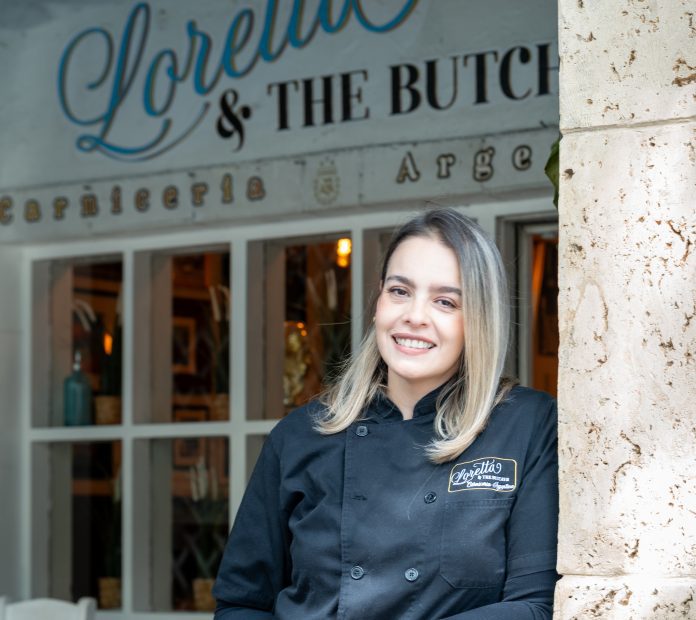
    Maria Alejandra Castaño: Passionate Leadership at Loretta & the Butcher

    Coconut Grove, Miami’s oldest neighborhood, has quietly evolved into one of South Florida’s most successful business communities – and it’s no accident. With its blend of charm, strategy, and community, the Grove offers a blueprint for how local economies can thrive.

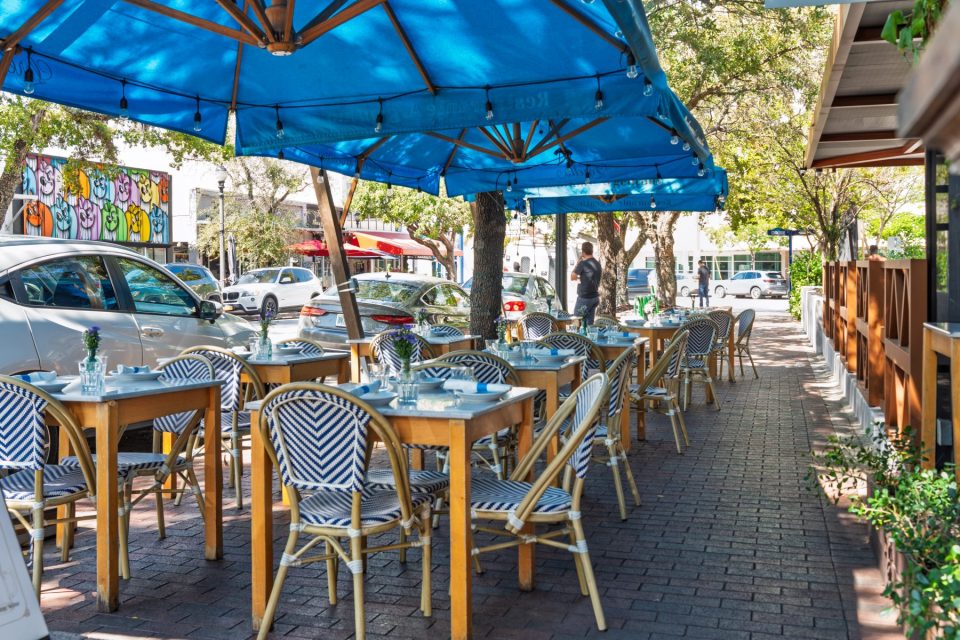
    At the heart of its success is a strong sense of community. And at the heart of the Grove’s bustling downtown district are independent businesses, like Loretta and the Butcher on Commodore Plaza, with Maria Alejandra Castaño at the helm.

    By cultivating a loyal customer base that values authenticity and true connection, Castaño’s quaint bistro tucked between the busy shops and other businesses on Commodore Plaza has fast become a beloved neighborhood staple.

    “Since the very beginning, we wanted to be more than just a restaurant. We’ve built real relationships with our guests and with other businesses in the Grove. We know their names, their favorite dishes, and make each visit one that feels like they’re home.” The loyalty and warmth of their customers continue to fuel the restaurant’s growth.

    Culinary Passion

    With a passion for Argentine cuisine and making guests feel at home, she’s created a fine restaurant that’s a one way ticket to Buenos Aires. Her journey proves that with the right ingredients, vision, and boldness, anything is possible.

    Beyond perfecting beef, Loretta & the Butcher honors an iconic Argentine culinary tradition, led by the passionate and determined Castaño. As a powerful woman in a male-dominated industry, she runs a restaurant that embodies authenticity, quality, and community in the deepest sense.

    Castaño’s love for food began in her childhood, growing up in Colombia where meals are a symbol of unity and tradition. “Since I was a little girl, cooking has been my passion and my way of expression. And I’ve always been fascinated by how the right dish can tell a story, awaken emotions, and bring people together.”

    Her admiration for Argentina’s beloved cuisine eventually led her to acquire Loretta & the Butcher, where she brings the essence of la parrilla (Argentine grill) to the Grove. With respect for each cut of meat and a dedication to using the highest quality ingredients, she ensures each dish represents the true flavors of Argentina.

    “Loretta & the Butcher is more than a restaurant; it’s a total experience. We want patrons to feel transported to Argentina through flavors, aromas, and the welcoming warmth of the atmosphere.”

    What Makes an Argentine Grill Great?

    A true Argentine “parrilla” is more than just grilled meats, it’s a whole ritual. “Everything starts with the highest quality cuts, cooked over fire with patience. Coarse salt is all the seasoning that’s needed to highlight the succulent meat’s true flavor.”

    But beyond the food, it’s about connection. “A true parrilla is meant to be shared with friends and family, with melted provoleta, a glass of wine, and, of course, chimichurri to add the final touch. It’s about friends and family gathering around the grill, living in the moment filled with passion.” At Loretta & the Butcher, every meal is designed to capture that spirit.

    Breaking Restaurant Industry Barriers

    Running a restaurant as a woman comes with some challenges, but Castaño has always met them head-on with the utmost confidence and perseverance. “The biggest challenge has been breaking biases and stereotypes in a typically male-dominated industry, and proving that female leadership is equally strong and strategic.”

    Balancing her roles as a businesswoman, mother, and wife is no easy feat, but Castaño has cultivated a restaurant known for both excellence and inclusivity. “Seeing Loretta and the Butcher grow, curating a unique experience, and being passionate about leadership shows that you can balance those three crucial roles without giving up your dreams.”

    The True Taste of Argentina

    Loretta & the Butcher’s menu is specifically curated to immerse their guests in the authentic Argentine flavor. Signature dishes include bife de chorizo, ojo de bife, and entraña, all grilled to perfection.

    Another standout is Arroz del Gaucho, a bold, comforting dish that echoes Argentina’s rich culinary traditions, alongside their world-famous empanadas, crispy on the outside, boasting a variety of fillings, and bursting with flavor inside. Each dish transports guests straight to Buenos Aires, one bite at a time.

    What’s Next for Loretta & the Butcher?

    Looking ahead, Maria Alejandra envisions expanding Loretta & the Butcher while maintaining its warm and welcoming atmosphere. “We’re exploring new opportunities to bring our delicious dishes to even more people, all without losing the signature warmth that defines us.”

    Her journey is far from over, and that passion burns bright, strong as ever. “Oh, I believe the best is yet to come,” she says.

    ABOUT LORETTA AND THE BUTCHER
    Loretta And The Butcher is located 3195 Commodore Plaza, Coconut Grove, FL 33133. Visit www.lorettaandthebutcher.como to learn more or call 786-618-9982.

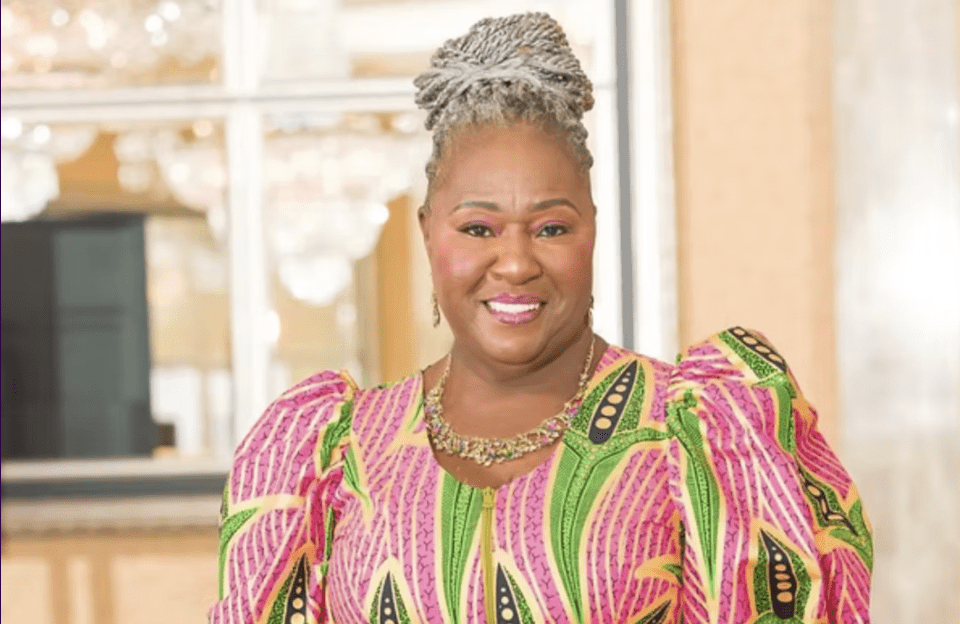
    Stepping out, stepping in: A legacy of love builds a future in Overtown

    To view the accompanying photo essay, click here. To listen to the accompanying audio story, click here.
    Mama Hattie’s House is building hope and opportunity for girls stepping into adulthood to fulfil their mission to give young women a place to call home.

    In the heart of Overtown, a place has begun to take shape, and it all started with one empty lot. Soon, this space will become Mama Hattie’s House, a haven for young women transitioning out of foster care and into independence.

    This project is the vision of Girl Power Rocks CEO and founder, Thema Campbell, in honor of her grandmother, Hattie Skinner Bacon, better known as Mama Hattie. For Thema and her daughter Rashada, this home is more than just a building, but a way to honor her grandmother’s legacy.

    “I grew up around my grandmother, also my mom,” Thema said. “My mom was a great mother, but we loved Mama Hattie. We wanted to be at my grandmother’s house; she had a sweetness about her.”

    According to the Florida Department of Health, there were 20,627 children ages 17 and under in the foster care system in 2024. In Miami-Dade County, there were 1,422 children in the foster care system last year.

    “Mama Hattie’s House is on its way to becoming a real thing and it was just an idea in my head because I wanted a safe place for girls to live, especially those girls who were aging out of foster care,” Thema said.

    Rashada Campbell, director of operations at Girl Power Rocks, highlights that Mama Hattie’s House aims to give young women aging out of foster care the support they need as they enter adulthood.

    “The girls who will be coming to Mama Hattie’s House will be girls who are aging out of foster care,” said Campbell. “The girls are typically not equipped with financial management, higher education. A lot of them don’t understand the real dangers of going out on your own at 18.”

    According to the organization Children’s Rights, 50% of youth with prior involvement in foster care are unemployed by age 24. Research also found that an FBI operation across 76 cities in the nation found that 60% of sex trafficking victims were previously involved with the foster care system.

    The need for a place like Mama Hattie’s House, especially in Overtown, is crucial to helping these young women. The neighborhood has limited access to safe housing and youth services, making it even harder for those aging out of foster care to find the support they need.

    “They are going through some hard things in that community so having that resource of consistency is extremely important,” said Carissa Ford, a clinical social worker.

    The house will provide secure housing, mentorship, educational support and life‑skills training to girls who have aged out of foster care to help and prepare them for the world.

    Screenshot 2025 12 11 at 14.23.23
    Thema Campbell | President & CEO – Girl Power Rocks

    Despite this incredible idea of Mama Hattie’s House being the culmination of a life-long goal, Campbell has been helping girls in need for over 25 years. Their mission is “to create a world where every girl, regardless of background, has the tools and support needed to reach her full potential.”

    They aim to help these girls and to give them a safe space through many programs.

    One of these is their after-school program, which welcomes girls from all over Miami-Dade County for two hours after school for a variety of activities, including arts, sports, field trips, and parent support groups.

    The Girls Choir introduces participants ages 7 to 17 years old to diverse musical genres and cultures, while the Girls Intervention Program Plus helps at-risk youth and first-time nonviolent offenders build essential life skills. Through the Sister Circle Mentorship Program, girls are paired with positive role models for guidance and support.

    “We have to make sure we are putting services, putting support behind these girls so that they can grow up to be good mothers, and unities and friends,” said Campbell.  “We have to make sure that women and girls are held to a very high standard.”

    The organization also provides opportunities through experiences like the College and Heritage Tour, which exposes girls to universities and historical landmarks and the Summer STEAM Workforce Training Camp, where they gain hands-on skills for future careers. Together, these programs prepare girls to thrive academically, professionally, and personally.

    Screenshot 2025 12 11 at 14.23.38
    Carissa Ford | Clinical Social Worker

    Keaira Carter, who was in the foster care system, understands the value and importance of a place like Mama Hattie’s House and the good it can do for these girls.

    “I feel like Mama Hattie’s House will give these girls that were in situations like I was in or worse, it will make them feel like they belong somewhere, like someone actually cares,” said Carter.  “I feel like it is a chance that I never had, that I was never given, that I never knew would have existed in the first place.”

    It’s stories like hers that inspired Campbell to continue to fight for these girls. Not only her own experience but seeing what they were going through made her want to help.

    “The way that Mama Hattie’s House became a thing for me was when I was meeting these girls who had been through trauma, who had been through God knows what atrocities that I couldn’t even imagine could happen to me when I was growing up,” said Campbell.

    According to the Florida Girls Initiative (FGI), in 2022 at least 1.36 million Florida girls were living with circumstances that put their futures at risk. An estimated 461,000 have suffered abuse and trauma.

    The construction of Mama Hattie’s House is scheduled to begin in 2026 and it will represent much more than four walls and a bed.  It will be the first time these girls will have a space they can call their own and feel safe.

    They won’t have to worry about where to sleep or where to sleep, they will have a place in which they will not only be taken care of, but will also help them to achieve the skills to take care of themselves and in the future depend on no one.

    Mama Hattie made Campbell and her family feel like they always had a place to go, a place to call home, and now, she carries that same message that her grandmother taught her and expands it to the girls and the community with one simple message: No one should face life alone.


    This story is part of a collaboration between Miami’s Community Newspapers and the Lee Caplin School of Journalism & Media at Florida International University..

    Comic illustrator turns childhood experience into a creative mission

    Eduardo Burgos still remembers how eager his middle school classmates were to celebrate Christmas. Kids were jumping for joy as they left school, excited to see their families. But for Burgos, reality wasn’t so sweet. His father had been arrested for fraud and robbery in October.

    That left him with only a pen, paper, and his imagination as an escape.

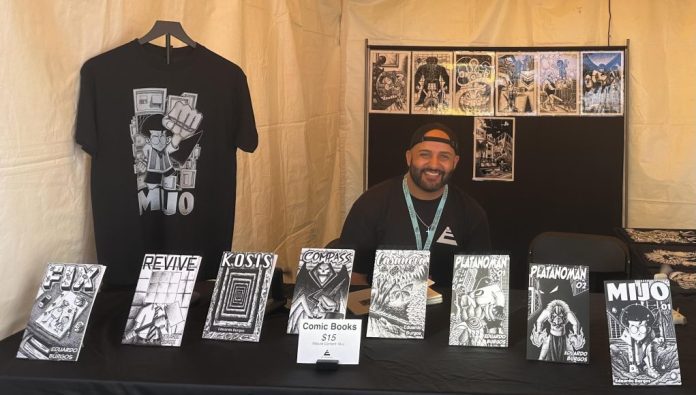
    It worked. Almost 25 years later, Burgos, a Miami local who is now an adjunct art professor at Miami Dade College’s Kendall Campus, sat in a booth at the Miami Book Fair Street Fair recently with stacks of his self-made comics spread across the table. As the illustrator and writer of a wide-ranging comic collection, he has turned those early years of trauma and pain into a career built on connection.

    “I wanted to share my work with the general population in South Florida because I made comic books that are created to help other people,” Burgos said.

    The 37-year-old has eight comic books in total, each about 24 pages, that relate to real-life experiences.

    They weave multiple periods from his life, growing up with a drug-addicted parent, finding refuge in art and navigating unfavorable childhood environments into stories he hopes will resonate with others holding similar memories.

    “Fix” was Burgos’s first release in 2024. It describes his relationship with his drug addict father growing up. “Revive” is an extension of that, focusing on his dad dealing with the problems before it’s too late.

    He then released his self-help book, “Kosis.” He had written it in 2016, but did not officially release it until after he published “Fix.” The book addresses being creatively blocked and how to overcome it by stepping out of one’s comfort zone. That period came after a low point in Burgos’s life: being kicked out of his grandfather’s house and losing his estranged father.

    The next volume was “Compass.” It follows his relationship with his late grandmother, who passed away due to colon cancer. In the book, an evil guy is essentially a manifestation of colon cancer. Burgos gets defeated because his grandmother loses her life.

    In the book, the bad guys are inspired by the killer from the “Scream” franchise and the character “Phantasm” from Batman. He has three finger-like claws on each hand, a hooded gown, a skull face, demon wings for flight and no floats because he has no feet. On the other hand, his grandmother is light-skinned, with gray hair in a low bun, wearing a white nightgown, socks and some wrinkles on her face.

    “My relationship with my grandmother made me feel deeply loved,” Burgos said. “She cooked for me, took me to school whenever I needed, and showed up to every vital moment: parent-teacher nights, school events and graduations. Her presence gave me a sense of stability and unconditional support, shaping who I am today.”

    Two months after he discovered he had a half-sister who was terribly abused as a child on ancestry.com, he put out two volumes of “Plantoman.” In volume one, a masked hero runs against time to save his daughter from an evil priest’s world of addiction and manipulation. Then, in volume two, the masked hero confronts the evil priest who has influenced his daughter’s mind, leading her further into the world of addiction and manipulation.

    Burgos also has books based on others’ experiences. “Casanova” was inspired by an article he read about a kid who was being made fun of in class because his mother used the website “OnlyFans.”

    “Mijo” brings awareness to the growing human trafficking in South Florida.

    “I see [the comic book collection] as a way for me to give back to the community, not just through entertainment but to use my storytelling as a way to help other people,” Burgos said.

    Although Burgos placed a lot of emphasis on the comics’ storytelling, he also focused on the artwork. Inspired by 13th-century and 14th-century art, Burgos consistently uses only black-and-white sketches to convey a sense of immediacy throughout the comics.

    This isn’t new, though, as Burgos has used this artistic style to visually extend his emotions through his work without relying on color since his early childhood.

    Now, Burgos has sold a little over 100 copies of his comics. At the book fair, he was in one of many artists’ booths in downtown Miami.. Attendees stopped by throughout the day to flip through Burgos’ illustrations. Many asked about the real experiences behind the comic.

    Burgos sells prints for $17.49, T-shirts for $30.99 and comics for $9.99 on his official website. He plans to continue expanding the series to reach more people through additional storylines, but ultimately hopes his books help others open up about their experiences. He also hopes to increase his presence at conventions and fairs and develop more apparel.

    “I want them to take away that vulnerability could be their superpower, and they can use it as a means to help other people,” Burgos said.


    This story is part of a collaboration between Miami’s Community Newspapers and the Lee Caplin School of Journalism & Media at Florida International University.

    ‘No one’s going to be able to enjoy this beauty’: How park flooding affects local communities

    Janine Rice chose a state park just north of Dania Beach to say goodbye to her father.

    In July 2021, the now 58-year-old children’s rights attorney hosted Donald Rice’s celebration of life at the coastal Dr. Von D. Mizell-Eula State Park after discovering the spot shortly after his passing. Ever since, she’s been a regular of its beach and trails, sometimes visiting every morning — with a cup of coffee in hand, she starts her day among peaceful tides and memories.

    Originally from Maryland, Rice would come to Florida with her family as a young child, visiting the coast from Fort Lauderdale to the Keys. Her father was once a competitive swimmer, so a connection to water was always a part of their lives.

    Janine Rice, a former scuba instructor, bought a state park pass for its salty breeze and sea grape-lined paths. But when her city of Dania Beach floods, the park gets a bulk of the hit. The standing water blocks cars from entering, and the beach is out of her reach.

    “It’s tragic,” said Rice. “I’m not frustrated in a selfish, kind of personal, ‘Darn it, I didn’t get to go to my happy place today.’ It’s more like, if this keeps up, no one’s going to be able to enjoy this beauty.”

    Rice said the flooding in her area has been getting worse in recent years, recounting how this year she had seen a sign for the first time informing residents that king tides are flooding out the roads.

    Whether from heavy rainfall or the rise of tides, Florida is more likely to flood than any other state due to its flat landscape. In 2024, the state received an average of 56.82 inches of precipitation, which was 3.17 inches above the historical average. Tidal flooding has also been a growing issue, increasing by 352% across Florida since 2000.

    While flooding is extensively covered in the media and discussed by public officials, the issue in local parks often gets less attention, despite the inconvenience to residents and the ecological damage.

    Officials at Dr. Von D. Mizell-Eula State Park declined to comment.

    Img 0688
    Janine Rice passes through a boardwalk exiting the shore of Dr. Von D. Mizell-Eula State Park in Hollywood, Florida, on Nov. 17th, 2025 (Photo by Alexandra Phelps)

    James H. Goodlet Park in Hialeah is home to various courts, fields, and tracks, and the 28-acre recreational facility is a reliable spot for physically active residents nearby.

    German Mata, a 19-year-old Florida International University student and local visitor to the city park for the past eight years, goes to play sports with friends. Mata says that two of the four basketball courts almost completely flood in heavy rain, and that the park’s two artificial turf soccer fields are even worse off.

    “It’s frustrating when I want to play soccer and the water has still not gone into the ground to make it possible for me to play,” he said, adding, “It’s kind of hard to play basketball on water.”

    For urban parks like Goodlet, Ali Ebrahimian, assistant professor in the Department of Civil and Environmental Engineering at Florida International University, finds fault in the consistent use of pavement for the spaces’ flooding.

    Flood water can easily be absorbed into the earth with enough time, getting taken in by roots and dirt. However, when heavy rain falls onto a concrete basketball court or sidewalks, for example, it puddles for far longer, with not much hope beyond evaporation to clear the water over time.

    “Just compare bare soil, or some green space in your backyard, versus pavement in the street, asphalt,” he explained. “[With] the runoff and rainfall that happens, water can penetrate into the soil and soak into the soil and go down… But if rain falls on the street, on an impermeable surface… it runs off the surface, and it becomes a flood.”

    Officials at the City of Hialeah Department of Parks & Community Engagement did not respond to requests for comment on Goodlet park.

    Alexander Garrido, 18-year-old student at Florida International University, joined the community of Key Biscayne when his friends started inviting him to their local spot, Crandon Park, one of Miami-Dade’s seven heritage parks — places designated to preserve their historical and cultural value. Now, whenever he has friends coming in from out of town, the county park is his go-to place to take them to.

    It’s not always available, though.

    “When flooding happens…there’s been times where we flat out just haven’t been able to go, and our entire plans for the entire day was going to the park,” Garrido says.

    He added that, when there are higher tides, he can’t even enjoy the park’s beach. Ryan Brewton, Stewardship Area Manager of Crandon Park, shared the same sentiment, stating, “You won’t see any sand left” in a king tide.

    “We don’t want to just use parks as a barrier, we want to also have it accessible for everyone to be able to enjoy,” Brewton said. “Parks are, I think, one of the biggest benefits to residents and everyone in terms of health, fitness, placemaking. These are all kind of our strategic objectives for the facility. Also, being good stewards and making sure that we’re providing this space — not only for the residents, but also for the local ecosystems.”

    At Crandon Park, Brewton knows the daily walkers, bikers, and long-time visitors from back when the park held a zoo from 1948 to 1980. He’s heard from visitors about both tidal and heavy rain flooding.

    “Residents, most of the ones that have been here, are kind of aware,” Brewton added. “They will ask questions on, ‘When do you expect these king tides to go or some of this flooding?’… But most of the time it’s just more of questions like, ‘Hey, what’s going on?’”

    When flooding seems unpredictable to visitors, some just don’t risk coming.

    “I usually try to time it on a day that it’s like a zero percent chance of rain,” Garrido said. “Anything higher than like 20 percent, I just won’t even plan a day at all.”

    Sonia Infante of the Miami-Dade County Parks, Recreation, and Open Space Department, said the department is studying flooding and sea level rise to help analyze the impacts on their county parks.

    Shark valley 11/9/24
    Bikers cruise through puddles on a trail at Shark Valley in Everglades National Park on Nov. 9th, 2024 (Photo courtesy of Sophia Bolivar)

    “We recognize and appreciate that the community relies on County Parks, greenways, and open spaces daily for recreational opportunities,” she said in an email. “We also understand that flooding in local parks can be a concern for residents, especially as it can impact recreational activities… We anticipate implementing key sea level rise improvements and flood mitigation strategies that address flooding at County Park sites, including Crandon, as funding becomes available.”

    Miami-Dade isn’t the only county trying to deal with the issue.

    “We have to recognize that there is not a strategy where everything’s dry all the time,” said the Chief Resilience Officer of Broward County, Jennifer J. Juradot. “You’ll never design a system that can deal with that volume of water, so there will always be areas and conditions under which, with the right circumstances, there is the potential for flooding.”

    “Success is the preservation of our parks, the continued use as a community asset,” Jurado added.

    For coastal spots, she referenced a developing project in the department for new seawall installations to preserve shorelines. For urban parks, they’ve moved to integrate more stormwater management to preserve recreational assets.

    “Florida’s state parks are designed and managed with resilience in mind, especially in coastal areas where flooding can affect both visitor access and natural resources,” said the Florida Department of Environmental Protection’s (DEP) Communications Director, Alexandra Kuchta.

    She described some choices the department makes to combat flooding — such as raising roads and structures, as well as rebuilding others. “Florida’s state parks experience flooding differently depending on the local landscape, so DEP’s responses are tailored rather than one-size-fits-all,” she said. “In some areas, periodic flooding is part of the natural system. Elsewhere, targeted design changes help reduce impacts on visitors and amenities…These approaches help shorten recovery time and reduce repair costs after storms or flooding.”


    This story is part of a collaboration between Miami’s Community Newspapers and the Lee Caplin School of Journalism & Media at Florida International University.

    He’s only a 22-year-old student, but he’s CEO of his own boxing league

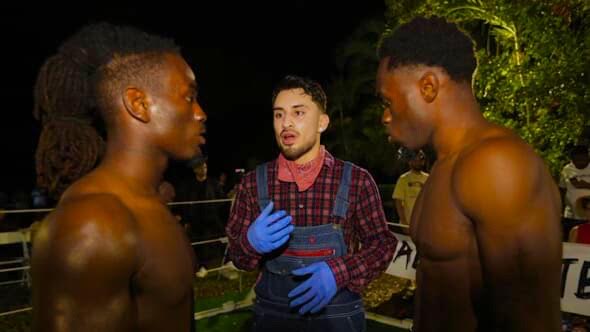
    Being a CEO and a promoter of a boxing league requires sacrifices…. sometimes even your own body. Back in 2022 a 200-pound amateur fighter who called himself Jay Money was scheduled to fight in a Hialeah gym. But his opponent didn’t show up. So Oscar Garcia Jr., who was outweighed by approximately 50 pounds, stepped in the ring.

    It didn’t go well.

    “He beat me,” says Garcia Jr., understating the obvious. “I’ll give it to him”

    “He was going to fight some other guy, his guy pulled out,” Garcia Jr. remembers. “And I was like, ‘Bro, I can’t let this fight not happen.’ ”

    Garcia Jr. is a unique personality. He started Dade Street Boxing, based in Hialeah as a 17-year-old. In the last five years, he has promoted 23 fights including the match-up in 2022 in which he was battered – but still lasted three rounds. The league has been featured in Voyage Mia Magazine and Miami Community Newspapers. The last fight, which was held October 25 in a backyard near Monkey Jungle in the Redland, drew 200 people.

    0 1
    Oscar Garcia Jr. as a kid (Photo courtesy:Krysthel Aleman.)

    Born and raised in Hialeah next to Slade Park, Garcia Jr. wasn’t much of a fighter as a kid. He loved playing guitar and was in a rock band with friends from Ernest R. Graham K-8 Academy. He also loved animals to the point his parents thought he might want to be a vet.
    He even often said he wanted to own a fish store.

    Krysthel Aleman, Garcia Jr.’s mom, says whatever path he chos, she always knew he would be some kind of entrepreneur.

    “Since he was a middle schooler I 100% thought he’d be just like a business owner,” Aleman shares. “Because he always sold candy, fidget spinners I recall, all that stuff.”

    Then in 2015, as a fifth grader, Garcia Jr. got in his first scuffle with another kid at his apartment complex in Hialeah. Garcia remembers it was the first time he got in a fight that wasn’t just for fun. The other kid, he says, would not leave his stuff alone, so he tried beating him up. He landed the first few punches, then got hit back, before neighbors broke it up.

    Even then, boxing or owning a boxing league was still an afterthought. The next time he fought was in 2021 in high school, when a childhood friend got jumped and he had to help.

    Later that year was the first fight in what would become Dade Street Boxing. Garcia Jr. made the two friends step into the homemade ring of laid out book bags and settle their problem. Right then and there, Garcia Jr., who loves his city, came up with the name and made their silhouette the logo for the league.

    At first, it was just friends versus friends fighting each other every couple of weeks. Garcia Jr. even decided to start fighting in the league, sometimes refereeing, then warming up for his own. But he knew he wanted more.

    0 2
    Oscar Garcia Jr weaves punches. (Photo courtesy: Oscar Garcia Jr.)

    He did not expect it to be so much easier said than done. He remembers finding fighters was difficult, so he and his partners would instigate fights between random people at school. Bit that was not a sustainable solution. Finally, a year later he saw the league’s first major turnout at a popup on South Beach.

    “We did a senior skip day and shut the whole beach down, probably had like 200 or 300 people,” Garcia Jr. said. “Word of mouth, it just kept spreading.”

    Jamare Barnes whose Dade Street Boxing debut was that day on  the beach remembers how fun it was. They were picking up random people at the beach letting them put the gloves on and fight with a $100 reward. Barnes does not remember receiving his money for winning, but he continued to fight with D.S.B. after the experience with Garcia Jr.

    “He’s just a good guy, a chill guy, just lets his emotions go,” Barnes says. “And now that I’m not fighting as much, he still keeps in touch.”

    Garcia Jr. did not know what he wanted to do with life before that first fight. Just a typical high school kid not set on a career. He knew he planned to go to college as it was highly encouraged in the house, but he did not know what for.

    In fall of 2022, he chose to attend FIU as a business marketing major. A big factor in that decision was the league. He wanted to learn how to be a more effective promoter and business owner.

    What he did not see coming was how much harder it would be to manage the league and college compared to high school. The league was put on halt for almost a year. D.S.B. 10 was not until January 2023, eight months after the 9th event. Regrowing the league was going to be another struggle.

    Managing school, his business, and fighting himself became stressful. In March of 2024, he was even fighting in the Florida Golden Gloves at Seminole Hard Rock Casino in Hollywood. He won his first round matchup by knockout. The second round was not as easy going as he lost by split decision after going the distance against his rival.

    “In the first fight he caught me with a good one, I saw a little bit of green,” Garcia Jr. remembers. “I was like shoot, lock in”

    After his appearance he focused less on his own boxing career and more on the league.

    In May 2024, that focus helped D.S.B.15 to become the first event to draw over 50 attendees. It was the last outside event the league did before moving indoors. Garcia Jr. refereed all of the cards for this event and remembers it as the first sign that the hard work was paying off.

    “In the final fight, everyone surrounded the ring, everyone had their cameras out, and I’m like, ‘Whoa, I’ve never seen this many people here,” Garcia Jr. shares. “And it was one of our first cards we had none of our friends fighting.”

    0 3
    Oscar Garcia Jr. referees D.S.B. 23 (Photo courtesy: Oscar Garcia Jr.)

    Garcia Jr. fought for the last time in December 2024 and now only hosts personal training clinics and referees league events. He still promotes fighting and trains on the side because he loves it, but he knows he does not want to continue to try to be a professional.

    He devotes his time to organizing events, and it is paying off. D.S.B. 23 was the last event of the year, and it had cars backed up on the street at the venue with nearly 200 people in attendance in the rain.

    “It was crazy bro, it was awesome, being outside like it felt surreal again. It felt like I was in high school again,” Garcia Jr. says. “It ended up raining, it kind of killed my vibe, but the fighters are dogs, they fought in the rain.”

    Garcia Jr. is planning more for Dade Street Boxing. He has an event coming up on campus at FIU and looks forward to next year’s schedule.

    “I know I could do way better,” he says. “I just feel like I could take it to a whole other level.”


    This story is part of a collaboration between Miami’s Community Newspapers and the Lee Caplin School of Journalism & Media at Florida International University.

    ‘I can’t stay in Miami’: Why young people are leaving the Magic City

    Peter Gutierrez, 21, has lived in Cutler Bay for much of his life, but when he reached adulthood, he began to question whether Miami was where he wanted to settle down.

    “There wasn’t really a specific moment I realized I wanted to move away,” Gutierrez said.”It was more of an encroaching feeling.”

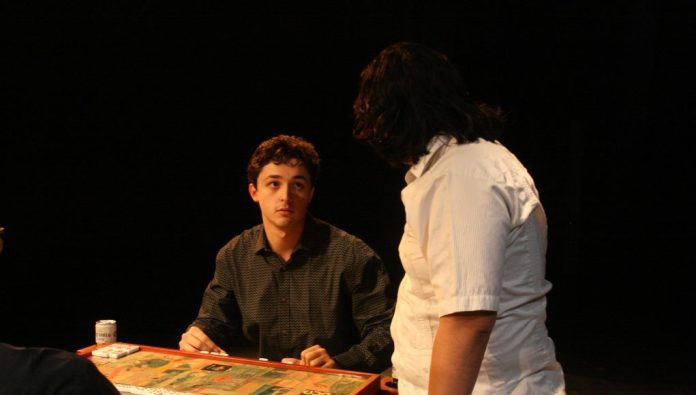
    After developing a love for theater, he decided to move to New York City to pursue his passion after graduating from Florida International University next year.

    “I just knew if I want to be successful in my career, I can’t stay in Miami,” Gutierrez said.

    He’s not alone. Miami ranked the third-highest city in a national survey of young people, ages 18-34, with no children who said they were “very likely” or “likely” to leave their town, according to Gensler, a global design and architecture firm that conducted the survey.

    In contrast, San Diego and Boston have much smaller percentages of young people fleeing, with both cities under 30 percent. The Gensler study, conducted last year and released earlier this year, stated the cost of living, jobs, health care, crime and public transportation are among the most important factors when young people choose where to live.

    The survey found 51.8 percent of Miami’s young residents were likely to leave, while Baltimore ranked the highest with 61.6 percent and Charlotte, North Carolina, came in second with 58.3 percent ready for greener pastures. Detroit placed just behind Miami in fourth with 51.6 percent of young people very likely or likely to leave.

    Dr. Edward Murray, associate director of the Metropolitan Center at FIU, said the area’s economy is a key factor in the trend.

    “Miami-Dade county is reliant on three major industry sectors — leisure and hospitality, health care and retail. They comprise about 60% of Miami Dade’s employment base yet most of those jobs in those three sectors are low-wage service jobs,” Murray said. “Those occupations in our core industries do not provide enough for anybody to be able to afford the current rent and home prices.”

    Img 2914
    Ryan Gleicher at a “Miami Hurricanes” game. (Courtesy of Ryan Gleicher)

    Ryan Gleicher, 24, was born and raised in Westport, Connecticut, before he moved to Miami in 2019 in order to attend the University of Miami, where he double majored in broadcast journalism and public relations.

    After graduating, he jumpstarted his career by working as a producer for “CBS Miami” for two years, where he covered local news. Until he got the opportunity to work as a writer for “Fox News” in New York City.

    “I knew I had to take it,” Gleicher said. “It was the opportunity of a lifetime, and I don’t regret it at all.”

    He left Miami last August and temporarily moved back to Connecticut to “get his ducks in a row” before moving to New York in October.

    While he describes the move as a “difficult decision,” Gleicher says he’s been thriving in New York.

    “New York City has a lot to offer, it’s where I got my big break and I’m sure many other people did as well,” Gleicher said. “I don’t think the same can be said for Miami.”

    Img 2911
    Cara Gilliland on a trip to Zermatt, Switzerland (Courtesy of Cara Gilliland)

    Cara Gilliland, 25, was born and raised in Vero Beach before moving to Miami at 17 for six years. While she enjoyed the different cultures the city had to offer, overcrowding and high cost of living was what ultimately led her back to Vero Beach, where she now works at Citrus Elementary School as a third grade English Language Arts and Social Studies teacher.

    “Keeping up in Miami was just very expensive, and now I don’t have to deal with its traffic anymore,” Gilliland said. “I wanted to move somewhere that was less populated so that led me back to Vero, which is a much smaller town.”

    During her time in Miami, she worked as a waitress at “Forno Italiano Pizzeria” and then as a receptionist at “Love Nail Salon,” while attending the University of Miami.

    After graduation, Gilliland longed to become a teacher but felt the salary ultimately wouldn’t be adequate enough to sustain a comfortable, stable life in the city.

    “I just don’t see how it would be worth it to stay there if you want to be smart with your money,” Gilliland said. “We don’t have it like our parents used to, back in the day.”

    For his part, Gutierrez, the FIU student who is set to New York for theater after he graduates next year, agrees it’s the Miami job market that is driving many young people away.

    “Entry-level positions basically do not exist here, it leaves college students feeling stuck after they graduate,” Gutierrez said.

    While specific data for Miami isn’t available, the national unemployment rate for college graduates, ages 20-24, was 9.3 percent in August, more than double the overall during the same time period, according to the Bureau of Labor Statistics.

    Having to rely on the FIU bus system between campuses to attend his classes, which some days would be on both the Modesto A. Maidique and Biscayne Bay campuses approximately 20 miles apartGutierrez also hopes that Miami will improve its public transportation.

    “I wish I could take the train everywhere, to school or downtown, that would be a blast,” Gutierrez said.

    “I do love Miami as a whole but realistically,” he added, “there’s so many other places out there where I could have a better life and be at peace.”


    This story is part of a collaboration between Miami’s Community Newspapers and the Lee Caplin School of Journalism & Media at Florida International University.

    THE SCHOOL BOARD OF MIAMI-DADE COUNTY, FLORIDA, APPROVES INITIATIVE SPONSORED BY SCHOOL BOARD MEMBER ROBERTO J. ALONSO TO ESTABLISH AN ANNUAL ARMED FORCES SIGNING DAY IN MIAMI-DADE COUNTY PUBLIC SCHOOLS

    A NEWS RELEASE FROM SCHOOL BOARD MEMBER ROBERTO J. ALONSO, DISTRICT 4

    At the School Board Meeting of December 17, 2025, School Board Member Roberto J. Alonso proffered agenda item H-6, commending the immense honor, dedication, and integrity demonstrated by graduating seniors who have enlisted to serve on active duty in the uniformed services; recognizing the commitment of graduating seniors who are entering the United States service academies or who have chosen to serve as part-time citizen soldiers in the Reserve or National Guard; directing the Superintendent to establish annual “Armed Forces Signing Day” ceremonies and related activities for Miami-Dade County Public Schools beginning in April or May 2026 so that the Board, staff, parents, students, and community members may officially honor and congratulate students who have committed to military service and express the Board’s and community’s deepest gratitude for their commitment to our country.

    This initiative establishes an annual, district-wide Armed Forces Signing Day to recognize M-DCPS students who commit to serving in the uniformed services. It highlights military service as a valuable post–high school pathway that builds essential skills and upholds the nation’s tradition of service.

    The event will honor high school juniors and seniors who commit through enlistment (active duty, Reserve, or National Guard), acceptance to a U.S. service academy, or receipt of an ROTC scholarship. This includes those representing the Army, Marine Corps, Navy, Air Force, Coast Guard, Space Force, U.S. Public Health Service, and NOAA Corps.

    “Armed Forces Signing Day will allow us to honor our students who choose a path of service, discipline, and commitment to our nation,” said School Board Member Roberto J. Alonso. “We are proud to celebrate their dedication and thank them and their families for their willingness to serve.”

    Pursuant to agenda item H-6, the Superintendent will report back to the School Board with any recommended annual observances by the Fiscal Accountability and Government Relations Meeting of February 4, 2026.

    Consumer Debt: Debt Collection and Garnishments Hurt Low-Income Families

    A Snapshot of Consumer Debt

    Credit card debt in the United States was over $1.2 trillion in late 2025.  The average person owed about $6,523.00 on credit cards, with an average interest rate of 22.83%.  If someone pays $150 a month on that $6,523 balance at 22.38% interest, they will pay $7,688 in interest alone.  It will take about 95 months (nearly 8 years!) to pay off the whole card. 

    Debt often does not just come from careless spending. Many people state their credit card debt comes from emergencies or unplanned expenses, like car repairs, medical bills, home repairs, or other stressful life events such as death of a family member. Low-income individuals and families are hit harder when this happens because they often do not have savings. They must rely on credit.  And when debt gets too high, many people are sued.  

    Debt Collection: What Happens When You Stop Paying  

    When someone stops paying their consumer debt, they can be sued by the original creditor (or by a company that bought the debt). The person must be served personally with the lawsuit before the court can hear the case.  The person can defend the lawsuit or try to work it out with the creditor.  Defenses, if any, will depend on the person’s situation. If the court decides the creditor proved its case, the court will enter a final judgment against the person, that can include the debt amount and attorney’s fees. In Florida, money judgments last for 20 years and can grow over that time because of interest.  Creditors can try to collect by taking money from a person’s bank account or paychecks, called “garnishments.” Or they can try to take a person’s other property.  However, some income and property are protected from collection.  The person must tell the court on time if they want to use those protections. 

    Legal Services of Greater Miami (Legal Services) helps people who are sued or who have money judgments against them for unpaid consumer debt, like credit cards, medical bills, personal loans and car loan deficiencies. The organization represents individuals in court cases, negotiates payment plans and settlements with creditors, and defends people against wage and bank garnishments.  Legal Services also helps people in Chapter 7 bankruptcy cases to wipe out consumer debt, especially when people risk serious harm from garnishments.  If you are overwhelmed by debt or are being sued for consumer debt, you can get free help and learn about your rights from Legal Services. Anyone who needs help can apply online at www.legalservicesmiami.org or call the office at 305-576-0080

    Risky Business: Signing a Commercial Lease

    Congratulations! You’ve found what looks like the perfect place to open your small business or nonprofit. But be careful—what you don’t know could turn your dream location into a nightmare. Commercial leases are very different from apartment or house leases. In Florida, they offer fewer protections and often include complicated provisions. The fine print can create problems if you don’t understand it.

    Understand Your Lease Before You Sign

    First, make sure you are allowed to run your business in that location. Zoning rules, sign rules, and limits on how a property can be used can be confusing. You might sign a lease for a space that does not allow your type of business or limits important parts of how you operate. Just because another business was there before does not mean it was allowed. Before signing, check with the city, and sometimes Miami-Dade County, depending on your business, to be sure your business can legally operate there.

    Next, consider who is responsible for repairs and upkeep. Unlike residential landlords, Florida law does not require commercial landlords to make repairs unless the lease clearly states so. If your lease does not say the landlord must fix certain things, you may have to pay for expensive repairs yourself. This is why it’s important to read the lease carefully or have a lawyer help negotiate these terms.

    Many commercial leases are called “triple net” leases. This means the tenant pays most of the property’s costs, including taxes, insurance, and maintenance, on top of the rent. These extra costs can add up fast, so be sure you understand the total amount you may have to pay.

    Ending a commercial lease early can also be difficult. Commercial leases often last three to five years and may charge significant penalties if you leave early. If your business needs to move or cut costs, these provisions could cause serious financial trouble.

    Finally, think about personal liability. Even if your business is a corporation or LLC, most commercial landlords require a personal guarantee. This means if your business can’t pay the rent, the landlord may go after you personally, and your credit could be affected.

    How Legal Services Can Help

    A commercial lease is one of the biggest financial decisions a business owner will make. If you need help understanding or negotiating a lease, the Community Economic Development Unit at Legal Services of Greater Miami, Inc. can help at no cost. We represent qualified small businesses owned by low- to moderate-income individuals and nonprofits that serve low-income communities. Our legal services include commercial leases, business formation, licensing, contract drafting and other non-litigation matters. 

    Small business owners and nonprofit leaders can apply online at www.legalservicesmiami.org  or www.flcommunitydevelopment.org. There is no cost, and staff will review eligibility during the application process. We also have a number of small business and nonprofit guides on the www.flcommunitydevelopment.org website, including one on commercial leasing.  Let us help you protect your business or nonprofit and plan for a strong future.

    Helping Students Succeed: Special Education Services in Miami-Dade County

    Many children in Miami-Dade County need extra support in school to learn and succeed. Special Education Services are designed to help students with disabilities receive a free and appropriate public education (FAPE) tailored to their individual needs. While these services can make a significant difference in a child’s academic and social development, families often face challenges understanding their rights and navigating the process. Here’s what you need to know.

    What Are Special Education Services?

    Special Education Services are provided under the federal Individuals with Disabilities Education Act (IDEA). These services support students who have disabilities that affect their ability to learn in a traditional classroom setting. Services may include specialized instruction, speech or occupational therapy, behavioral supports, counseling, or accommodations such as extended time on tests or assistive technology.

    In Miami-Dade County Public Schools (M-DCPS), eligible students receive services through an Individualized Education Program (IEP) or, in some cases, a Section 504 Plan. These plans are developed by a team that includes parents, teachers, and school staff, and they outline the supports and services a student needs to succeed.

    Who May Be Eligible for Special Education?

    Children from ages 3 through 21 may be eligible for special education services if they have a qualifying disability that impacts their educational performance. Disabilities can include learning disabilities, autism, speech or language impairments, emotional or behavioral disabilities, intellectual disabilities, attention-related conditions, physical impairments, and other health conditions.

    Eligibility is determined through an evaluation process conducted by the school district. Parents have the right to request an evaluation if they believe their child may need special education services. Once evaluated, the school must determine whether the child qualifies and, if so, what services are appropriate.

    Special Education in Miami-Dade: Challenges and the Role of Legal Assistance

    Miami-Dade County serves tens of thousands of students receiving special education services, making it one of the largest special education systems in the country. Despite this, many families encounter obstacles, including delays in evaluations, disagreements over eligibility, insufficient services, or failure to properly implement a child’s IEP or 504 Plan.

    Legal Services of Greater Miami (Legal Services) plays an important role in helping families understand and enforce their rights. Legal Services assists parents with requesting evaluations, reviewing IEPs, addressing school noncompliance, and representing families in meetings, complaints, mediations, and due process hearings when necessary. These services are provided at no cost to eligible families.  Call 305-576-0090 or visit legalservicesmiami.org/contact-us to apply and see if you qualify.

    Why Knowing Your Rights Matters

    Special Education Services can be life-changing for students with disabilities, helping them access the curriculum, build skills, and reach their full potential. Understanding the eligibility process, knowing what services are available, and seeking legal assistance when problems arise can make a critical difference in a child’s educational experience.

    Families do not have to navigate this process alone. With the right information and support, students in Miami-Dade can receive the services they are entitled to and thrive in school and beyond.

    Rising seas put Florida’s state tree at risk — new research offers hope

    As sea levels rise and soils grow saltier, even the iconic Sabal palmetto – the official state tree of Florida also known as the cabbage palm – may be in danger. FIU researchers have discovered that silicon might help young palms survive in salty conditions. Photo credit: Daniel Tucker/FIU.
    As sea levels rise and soils grow saltier, even the iconic Sabal palmetto – the official state tree of Florida also known as the cabbage palm – may be in danger. FIU researchers have discovered that silicon might help young palms survive in salty conditions. Photo credit: Daniel Tucker/FIU.

    As sea levels rise and soils grow saltier, even the iconic Sabal palmetto – the official state tree of Florida also known as the cabbage palm – may be in danger. But a new study in HortScience suggests a simple, widely available amendment could help young palms survive in salty conditions.

    Graduate student researcher, Pedro Gonzalez of Conservation and Sustainable Horticulture Lab and the team of researchers: Amir Khoddamzadeh (Florida International University Earth and Environment Department Institute of Environment), Patrick Griffith (Montgomery Botanical Center in Coral Gables), and Madhugiri Nageswara-Rao (USDA ARS Subtropical Horticulture Research Station in Miami) found that treating young cabbage palm seedlings with small amounts of silicon greatly improves their tolerance to salt stress.

    With its sponge-like ability to retain water, silicon —a powerful ally known for its resilience-boosting properties, offers a lifeline for vulnerable young palms by improving physiological processes. Already widely used – even by NASA to grow plants in space – it’s both commercially accessible and affordable, making it a perfect candidate for helping palms survive salinity.

    “We wanted to work on something that ornamental plant nursery producers and landscapers can use,” Khoddamzadeh said.

    The team grew 96 one-year-old seedlings in a greenhouse for 12 months, watering them with varying salt levels, adding silicon to the soil in different amounts and tracking everything from soil nutrients, plant growth and development to survival rates.

    The study also established the ecological threshold for seedling survival – a critical finding for future restoration efforts.

    The results show that salinity alone dramatically reduced growth, chlorophyll content, and leaf production, particularly at higher salt concentrations. At 50 ppt salinity (comparable to seawater), untreated seedlings died.

    However, when silicon was added, seedlings at moderate salinity (10–30 ppt) maintained higher chlorophyll content, better leaf production and improved overall vigor. Even under more extreme salinity, silicon-treated seedlings partially preserved performance — though survival at the highest salinity remained low.

    The implications are serious: cabbage palms are not only a cultural and ecological icon, but they support a multibillion‑dollar landscaping and nursery industry in Florida, generating thousands of jobs.

    “Even in all its glory, this quintessential giant is not spared from the growing threats of sea‑level rise and salt exposure,” Khoddamzadeh said.

    The researchers say that using silicon is both cost‑effective and simple – just a few grams mixed with water can help young palms survive.

    Beyond nurseries, the findings may guide restoration efforts: communities might plant adult palms (more salt‑tolerant) in safer locations or choose native species that better resist salinity.

    As South Florida braces for rising seas and increasing saltwater intrusion, this study offers a practical tool to help preserve a symbol of the state.

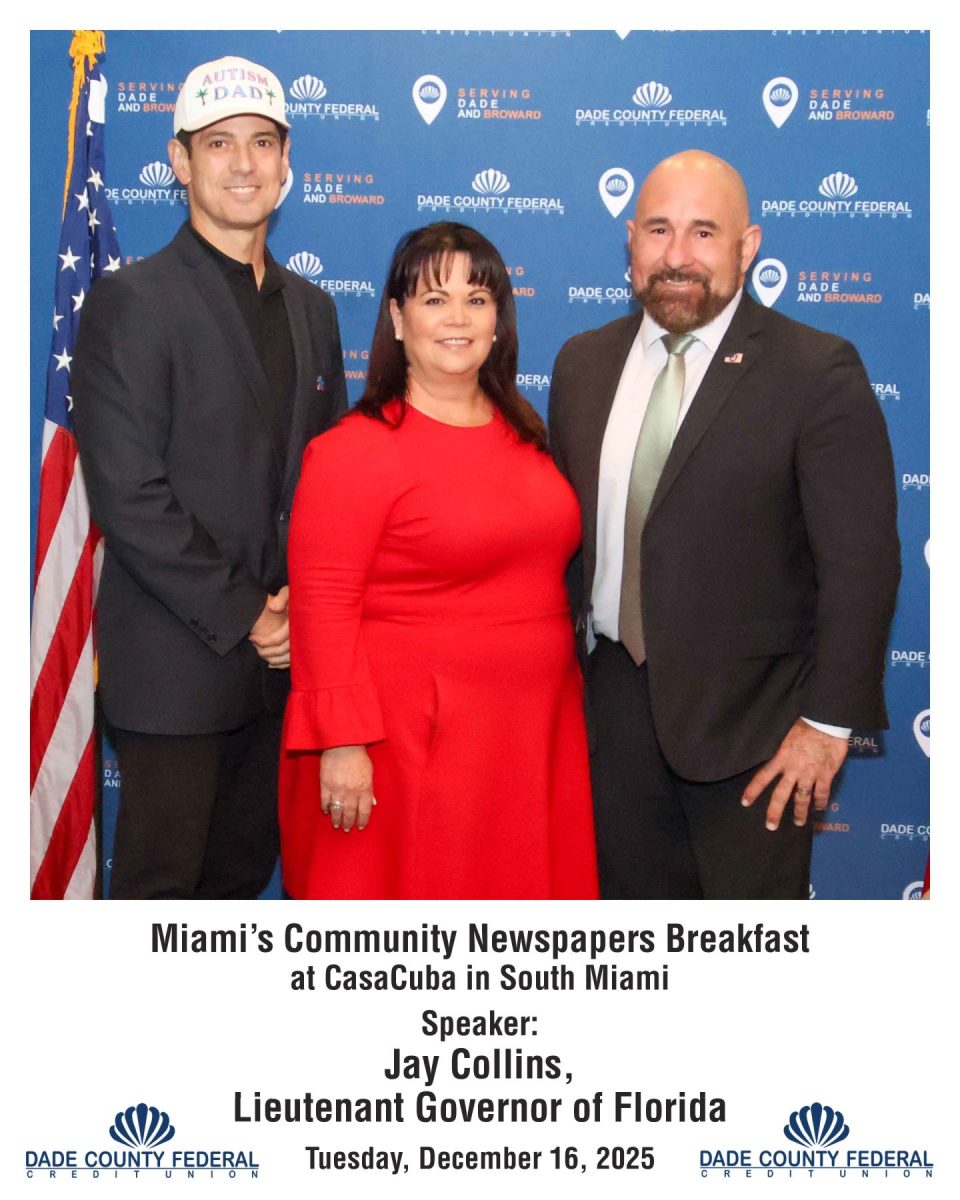
    Disability Parents Are Getting Paid to Stay at Home w/ Miami Autism Dad & Abby Care


    Disability Parents Are Getting Paid to Stay at Home w/ Miami Autism Dad & Abby Care

    For more information on Abby Care visit:

    Website – https://www.abbycare.org/

    Instagram – https://www.instagram.com/abbycareorg/?hl=en

    LinkedIn – https://www.linkedin.com/company/abbycareorg/posts/?feedView=all

    Facebook – https://www.facebook.com/abbycareorg/

    To contact Victor Antunez, Inclusive Realtor: Call/Text: 305.401.6224 or visit https://miamiautismrealestateagents.com/ 

    ABOUT US:

    Miami Community Newspapers is your go-to source for Miami community news, offering daily updates, podcasts, and multimedia content. Covering local events, business updates, and lifestyle features across Miami-Dade County, our family-owned media company publishes a variety of neighborhood publications both online and in print. Explore Miami’s culture through our exclusive community podcasts, magazines, and newsletters.

    #thatscommunitynews #communitynewspapers #miamidade #miamidadecounty #thatscommunity #miamicommunitynews #coralgables #palmettobay #southmiami #doral #aventura #pinecrest #kendall #broward #biscaynebay

    - Advertisement -