

Miami's Community Newspapers White Logo
More
    Home Blog Page 4892

    2012 Scion iQ is a big idea in a small package

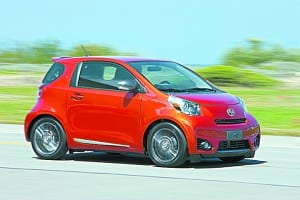
    Three-door hatchback Scion iQ has a high beltline running from the large headlights up the A-pillar and across the roof and wrapping around the rear.
    Three-door hatchback Scion iQ has a high beltline running from the large headlights up the A-pillar and across the roof and wrapping around the rear.

    The new Scion iQ is the latest vehicle to join the growing list of micro-subcompacts that many auto manufacturers are offering American consumers.

    Measuring just 10 feet in length and with the capability of seating four people, Scion is billing the iQ as the world’s smallest fourseat vehicle.

    The iQ is a three-door hatchback with a geometric shape and it should give the Smart Car a run for its money. It has a strong, high beltline that runs from the large headlights, up the A-pillar and across the roof to wrap around the rear. Side mirrors with integrated turn signals accent the geometric design.

    The iQ is billed as a premium micro-subcompact and it is intelligently designed, with six engineering innovations basically responsible for its ability to be small in size, but large in capability. They are:

    • A compact front-mounted differential;

    • A high-mount steering rack with electronic power-steering;

    • A compact air-conditioning unit;

    • A flat gas tank housed beneath the floor;

    • Slim-back front seats that optimize rear legroom, and

    •A 3+1 offset seating arrangement that allows one adult to sit behind the front passenger and a child or small package behind the driver.

    The iQ has a 78.7-inch wheelbase and a unique suspension design of MacPherson struts up front and a compact torsion beam in the rear. The combination allows the little car to maneuver through city traffic much easier than a larger vehicle. The overall length of just 120.1-inches and short front and rear overhangs allows the iQ to slip into virtually any urban parking space. At the same time, the iQ has a wide track of 66.1 inches for solid handling, much like a larger sports car.

    The 2012 iQ is powered by a 1.3-liter, four-cylinder engine that produces 94 hp and 89 pounds-feet of torque. It also has the latest dual VVT-i, allowing the engine to operate efficiently and deliver a broader powerband, yet requiring less fuel and generating fewer emissions. The engine is paired with a Continuously Variable Transmission (CVT) for smooth acceleration and excellent fuel efficiency of 37 mpg.

    The iQ comes standard with safety features that consumers expect and demand. It has 11 standard airbags, including the world’s first rear-window airbag, along with driver and front passenger airbags; driver and front passenger seat-mounted side airbags; side curtain airbags; driver and front passenger knee airbags, and (a Scion first) driver and front passenger seat-cushion airbags.

    All iQs have the Star Safety System, which includes anti-lock Brakes (ABS), Electronic Brake-force Distribution (EBD), Brake Assist (BA), Traction Control (TRAC), Vehicle Stability Control (VSC) and Smart Stop Technology brake-override. A tire-pressure monitoring system also is standard equipment.

    Pricing on the Scion iQ starts at $15,265.

    Ron Beasley is the automotive editor for Miami’s Community Newspapers. He may be contacted by calling 305-662-2277, ext. 261, or by addressing email correspondence to LetsTalkCars@aol.com.

    Biscayne National Park photos by Brian Trainor at City Hall

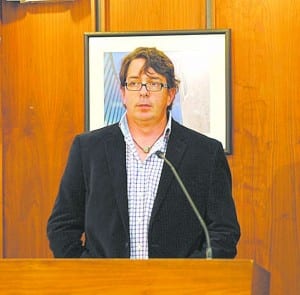
    Photographer Brian Trainor

    Fine Art photographer Brian Trainor presented his Biscayne National Park photography exhibit at the December’s Homestead City Council meeting. The pieces will be exhibited at the Homestead City Hall Council Chambers through January.

    The photos, which were captured during his month-long artist residency at the National Park that surrounds Homestead, present themes of conservation and sustainability.

    “In some of the pieces I focus on the beauty of our national park,” said Trainor, who recently completed an artist residency at Everglades National Park. “In others I isolated garbage I saw in the park to bring attention to the issue of pollution and destruction of our unique South Florida environment.”

    Councilmember Stephen Shelley, who started the “Art in the Chamber” program, inaugurated the exhibit during the Wednesday, Dec. 14, Homestead City Council meeting, and invited the community to visit the council chamber and enjoy Trainor’s photography of Biscayne National Park.

    Trainor, who has practiced photography for more than 30 years, does not digitally manipulate the pictures, but focuses on the process of photography from conception to life. His Everglades National Park artist in residency work also will be exhibited at the City of Homestead City Hall Council Chambers later in 2011.

    For more information on Brian Trainor’s fine art photography visit online at http://briantrainorphotography.com or contact him by email at briansgallery@bellsouth.net.

    KRMC hosts students for ‘Day in Life of a Nurse’

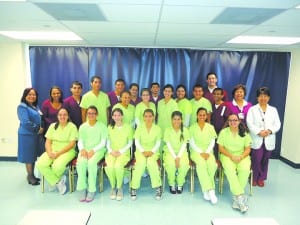
    Kendall Regional Medical Center nursing staff meets with students in the Medical Assistance Program at Miami Senior High for the annual “Day in the Life of a Nurse” program.

    Kendall Regional Medical Center (KRMC) hosted 20 students from Miami Senior High School on Nov. 10 for a “Day in the Life of a Nurse” program.

    Mayra McCoy, RN, BSN, MS, KRMC’s director of education, partnered with Natasha Turner, head of the Vocational Department at Miami High, to provide the inspired learning experience.

    The students enjoyed interacting with and listening to presentations by people who understand the nursing field like few others including Marcia Causa, RN, MBA, MSN, CCRN; Sehnie Talisayon, RN, BSN; Zenaida Ferro-Rodriguez, RN, BSN; Carmen Hamilton, RN, BSN, MSHSA, and Estela Carmona, RN, BSN. Those presentations, along with department tours, gave these students a true feel for the profession.

    All those participating are part of the Medical Assistant Program offered at Miami High, one that promises to inspire many to go into the medical field as they move onto college.

    For Kendall Regional Medical Center, this has been an annual activity for almost 10 years. Best of all, it gives the KRMC staff an opportunity to share their passion for nursing with the next generation.

    Palace residents send touch of home to troops overseas

    Marjorie Bonien, of The Palace Suites, spent Saturday mornings creating one-of-a-kind cards for troops stationed overseas.

    The Palace’s senior living communities are paying tribute to the U.S. military, veterans and their families by participating in the fifth annual American Red Cross Holiday Mail for Heroes campaign.

    The Palace Royale’s Make A Difference Club, comprised of assisted living residents, recently collected and assembled more than 150 Chanukah, Christmas and Kwanzaa cards which the Red Cross will deliver to military bases and veterans hospitals during the holidays.

    Each card was personally signed by club members and included notes of encouragement and gratitude.

    “We’re honored to support such a worthwhile cause,” said entertainment director Pamela Parker, who organizes the service club. “Residents sent a ‘touch of home’ and were moved knowing their words would be read by the brave men and women who protect our freedoms and sacrifice so much for our country.”

    The Palace Suites, which offers independent living, also participated in the campaign. Residents dedicated their Saturday mornings to creating and decorating one-of-a-kind holiday cards.

    The Palace’s Kendall campus offers a continuum of care and includes The Palace Royale, The Palace Suites, The Palace Renaissance and The Palace Nursing & Rehabilitation Center.

    For more information, call 305-270-7000 or visit online at www.ThePalace.org.

    Local road use increased since xway tolls started

    By Richard Yager….
    Are you among many Kendall motorists avoiding SunPass and wondering why traffic is heavier on local roadways?

    Three major East Kendall roadways showed increases in 2011 ranging from 2 percent to 12 percent in segments between S. Dixie Highway (US 1) and SW 110th Avenue, compared to 2010 counts when the Snapper Creek Expressway (SR 878) and a busy section of the Don Shula Expressway (SR 874) were toll-free.

    Vehicle counts by the Florida Department of Transportation (FDOT) showed corresponding increases in 2011 traffic on Sunset Drive (SW 72nd Street), Kendall Drive (SW 88th Street) and Killian Drive (SW 112th Street) since the establishment of Open Road Tolling (ORT) on SR 878 and SR 874.

    Once ORT began in July 2010, use dropped by up to 21 percent on five of those former toll-free segments monitored through July 2011 in the same area frequently used by eastbound and westbound motorists. Brian Rick, public information officer for FDOT, said reduced expressway use may or may be attributed to the result of many factors including the economic conditions of recent years.

    “I can also understand people may not want to pay tolls if they’ll be slowed down by new construction,” Miami-Dade Commissioner Joe A. Martinez said, referring to reconstruction on the Shula Expressway in 2011.

    Recognizing Kendall traffic remains a major issue, Martinez said “the countywide need to improve transit is the best way to get people moving again.

    “We need to take the entire county into consideration by utilizing existing rail lines to establish routes that can accommodate four-car commuter trains that can safely move commuters at speeds of up to 50 miles an hour.”

    Tracing FDOT website counts back to 2009, each of the three Kendall roadways “show steadily increasing number of vehicle trips,” said Miles E. Moss, traffic engineer who served as president of Kendall Federation of Homeowner Associations for 15 years through 2010.

    “But there is obviously a correlation of increased numbers with the falloff of traffic on SR 878 over the same periods,” he added after his study of FDOT and MDX tables, and comparing vehicle counts in July 2010 and July 2011.

    The Snapper Creek Expressway showed the largest drop of 10,300 vehicle trips during 2011 as against 2010, Moss pointed out.

    “In that same period, directly north of SR 878 on Sunset Drive, there was a gain of 5,000 vehicle trips,” he observed. “On Kendall Drive, the count was up by 4,400 vehicle trips and on Killian Drive, trips increased to 1,900,” he noted.

    “By adding the increased vehicle trips on all three roads over the same 2010-11 period, you have a total of 11,300 new vehicle trips over and above the counts in 2010,” he said. “Naturally, Sunset and Killian were the highest, being located directly north and south of SR 878.”

    Moss agrees that such findings tend to bear out the often-heard complaints of commuting motorists that paying daily tolls on the Snapper Creek at $1 per roundtrip becomes a significant annual expense.

    “What is important is that FDOT may face consequences of heavier east-west use of arterials,” he added. “That compounds the problem that already exists, as well as the potential of higher maintenance, safety and other factors that go along with increased usage of any roadway.”

    Martinez’s proposal for an East Kendall commuter line using FEC tracks was defeated by resident opposition two years ago but today, he said he is continuing to explore rail system routes to establish a viable commuter service.

    “There has been no vision to improve transit since Metrorail expansion has become just about cost-prohibitive,” he concluded.  “It’s a shame because the FEC is not only willing but eager to reach an agreement to utilize its tracks.”

    The still active “Roll Back Tolls” movement in 2010, headed by Kendall residents Carlos Garcia and Miller Myers, was based largely on the MDX decision to convert free roads to a ORT revenue source for the agency’s maintenance and system expansion.

    “While that’s true, we’ve concentrated on the new Shula construction during the past year,” Garcia said. “Primarily, we’re still concerned about the SW 104th Street intersection where so many accidents at the rebuilt Killian Drive interchange have occurred since last August.”

    Iconic Alhambra Water Tower restoration almost complete

    The historic restoration of one of Coral Gables’ most iconic landmarks is almost complete.

    ALHAMBRA WATER TOWER

    The Alhambra Water Tower, built in 1924 and used for many years as part of the city’s water supply system, has been undergoing a series of renovations including the painting of the exterior walls, doors, windows and railings as well as the restoration of its sundial and murals.

    Workers have replaced the lower and upper level railings, ground floor double doors, keyhole windows, and the broken glass in windows. The rehabilitation work also includes the installation of new interior stairs, replacing the old deteriorated wooden stairs as well as the replacement of the interior wood decks.

    Improvements to the tower’s electrical system and the installation of a climate controlled ventilation system are part of the restoration project. The entire site subsequently will be landscaped. Total cost of the project is approximately $280,000.

    Commissioner Palmer reflects and considers re-election

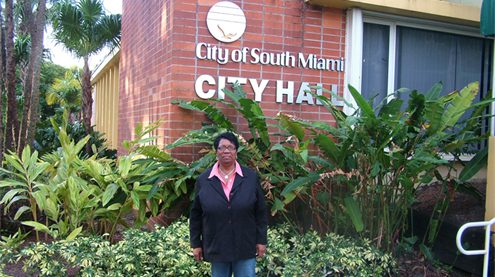
    Commissioner Palmer outside city hall

    Commissioner Velma Palmer strides confidently into the room. Her classic outfit accentuated by a Versace scarf and scholarly spectacles seem to magnify an apparently all-knowing glance that must come from over 30 years of teaching youth. Before she has a chance to sit down, supporters try to pull her aside to confirm she is planning to run for re-election. After serving eight years as city commi s s ione r, Palmer has decided to meet with Community Newspapers as the seasoned commissioner contemplates whether or not to commit to another campaign.

    “ In ever considered myself a politician and I still don’t. This all began nearly 10 years ago when I would help citizens fill out paper-work in order to connect them with local resources through the Community Action Agency. I got stopped by two residents at city hall one day who said they were looking for a strong commissioner to run for local office and that ‘I was the one.’” While Palmer sought the disavowal of such a preposterous idea from family and friends, she got a different response. “I talked to dear friends and my husband and kids and instead of agreeing with me that it was ludicrous, everybody encouraged me to proceed.”

    And proceed she did, overcoming her own trepidations to visit nearly 10,000 residents over a year’s time with a simple message. “My name is Velma Palmer, I am a teacher. I do not have anything to give you but I will be your voice and I will represent you fairly in office if I become your commissioner.” The overwhelming reception and accompanying votes she received gave her the encouragement to go on and serve with authority and confidence.

    “You have to say what you mean and mean what you say. Be truthful and consistent and speak up to probe things before making a decision. My voting record shows a consistent pattern. You have to be willing to compromise and not bring a one sided activist perspective to office. Without compromise you cannot achieve anything. We have to serve and protect the citizens and community as a whole. If you are not willing to work together and sometimes make concessions, nothing gets done.”

    Palmer contends that shortcomings of the current commission stem from a myopic activist mentality that prevents issues from moving forward. “It is no secret that citizens are very disappointed with our leadership. Very little has been accomplished and it seems like we are spinning our wheels and even moving backward instead of forward. In some cases this commission has sought legal reasons to hold someone responsible for particular issues which have even expired under the statute of limitations.”

    Calculated delay strategies meant to derail projects from taking shape are some of the impediments behind the limbo status of the Murray Pool and Madison Square according to Palmer. “There is a silent movement in my view preventing these projects from moving forward. Changing the date, changing the design, going back to the drawing board, and constantly redefining projects mean no progress. The pool has suffered constant setbacks from this approach as has Madison Square. How are we going to get developers interested in Madison Square with only two stories for building? I am not a developer but this project was intended as a mixed use commercial and residential development to draw business and it seems to need at least three stories to make it profitable. The original spirit of the project has faded out.”

    Palmer attributes the lack of citizen participation at city hall to be a result of community fatigue when critical long term objectives like Madison Square flounder over the years instead of coming to life. “I hear people say, ‘I’m going to the soap opera tonight’ when they actually do come to meetings at city hall. Sometimes it is a perceived personality handicap that certain people are just not heard no matter what they say. You have to go beyond the personal and evaluate opportunities professionally while respecting other people and their unique ideas for change. As commissioners we need to be willing to make sacrifices and changes to accomplish what is most needed for our unique and wonderful city.”

    A South Miami resident for over 24 years, Palmer’s zeal for her hometown comes from a love of the small town feel she gets here where people are warm and friendly, so unlike the mega-metropolis anonymity of most of South Florida. “It is such a pleasant environment, a walkable community where you can stroll to the post office or library and the hospital is just around the corner. The festivals and events we enjoy throughout the year are one-of-akind, and residents cherish their homes, making it also a lovely green oasis in a concrete jungle.”

    Commissioner Palmer can be reached at 305-668-2483 or by email at palmer2007@gmail.com.

    Everything’s coming up roses at Hirni’s florist shop

    Hirni’s Wayside Gardens Florist owner Janice Tate (left) and daughter-in-law Kimberly assist longtime customer Robert Malec with a flower arrangement for his wife’s birthday.

    If you ask high school sweethearts Ted and Janice Tate if they ever expected to be running a flower shop together after 38 years of marriage, Janice answers for her husband.

    “He knew when he married me that he was marrying into the family business,” says Janice, 59, who lives in Pinecrest near the florist shop her parents first opened almost 50 years ago.

    Hirni’s Wayside Gardens Florist, at 9950 SW 57 Ave., originally was an outdoor flower stand started by William and Evelyn Hirni on Ludlam Road. The roadside stand evolved into the full-grown flower shop it is today back in 1966, where it has been servicing Pinecrest and neighboring residents ever since.

    As little girls, Janice, her twin sister Jeanie, 59, and older sister Marilyn, 65, would come to the shop everyday after school to help their parents grow flowers, water plants and take care of customers. Younger brother, Billy, 53, also helped, but the girls were the most devoted. Their dedication to the family business blossomed through young adulthood, even when the sisters held careers as nurses at South Miami Hospital.

    When their mother died in 1981, the Hirni girls began to run the shop full-time with help from their father, who then was a retired police officer from Miami-Dade County. By this time, the family operation had stopped growing flowers onsite and started ordering their best sellers — including roses, lillies, snap dragons, hydrangeas and orchid plants — from mostly South American vendors.

    For Janice, already a mother of two girls and one boy, the transition from nursing to managing a florist shop full time actually took some pressure off.

    “It was much easier and more beneficial to raise my kids,” she said. “At the hospital, I couldn’t leave to go on a field trip or attend one of my kids’ programs. At the flower shop, I could. Looking back, I can’t imagine having done anything different with my life.”

    Husband Ted, also a Miami-Dade police officer, helped out at the shop when he was off duty. He retired in 2006 and has helped Janice full-time ever since. Her sisters have since retired from the business, leaving Janice the remaining Hirni to run the family operation. Her father died in 2004.
    But Janice has a backup plan to keep the family business going. She recently hired her daughter-in-law, Kimberly Tate, to help and learn the business.

    “My intention is for her to hopefully like it and carry it on, keep it in the family,” she said. “She seems to love it and has a nice way with people.”

    Kimberly, 31, said she’s having a great time learning the business and looks forward to the possibility of running it full time one day with her daughters, ages 4 and 18 months.

    “It’s a happy place to work at, very neighborly,” she said. “I have a background in sales and merchandising and I’m a people pleaser like my mother-in-law. Keeping the Hirni family business going was an opportunity I couldn’t resist.”

    Fran Berrin, 60, who lives in Pinecrest, has been a customer at Hirni’s Wayside Gardens Florist for at least 30 years. She says Janice and the staff are like her extended family, always pleasant, upbeat and creative with their arrangements.

    “They’ve seen me through so many special occasions, from birthdays to Bar Mitzvahs,” Berrin said. “What keeps me coming back is the personal touch and sincere interest they put in everything they do. That human connection, that willingness to go the extra mile and add that perfect finishing touch. That’s what’s made me a customer for life.”

    Hirni’s Wayside Gardens Florist is open from 9 a.m. to 5 p.m. Monday through Saturday. For more information, call 305-661-6266 or go to www.hirnisflorist.com.

    Miami Marine Stadium to be reborn

    Once destined for the wrecking ball, the legendary Miami Marine Stadium is now on a path to restoration. Visitors and residents alike may have access to what may be the greatest outdoor entertainment venue in tn the United States. Friends of Miami Marine Stadium (www.marinestadium.org), a not for profit organization will be presenting shortly to the City of Miami a plan to restore the Stadium.

    THE PAST
    The Miami Marine Stadiumis a 6,500 seat grandstand, was built in 1963 and located on Virginia Key. It is an iconic Landmark which sits is part of the Marine Stadium Basin which was designed for boat racing and dredged out at when the Stadium was built. The stadium was designed by architect Hilario Candela, a young, 28 year old, Cuban architect, educated at Georgia Tech. The initial cost of the Stadium and Basin, was $2 million. When it was built, the origami like folded plate roof was the largest span of cantilevered concrete in the world.

    During its years of operation (1963-1992), the Stadium hosted many events such as powerboat races, symphony and rock concerts, Easter services, presidential appearances, talk shows and countless numbers of community events. Performers would play on a floating stage anchored just a few feet from the Marine Stadium. Dozens—sometimes hundreds of boats-would surround the stage to create one of the most unique entertaintment environments to be found anywhere. Performers at the Marine Stadium included The Who, Ray Charles, Arthur Fiedler and the Boston Pops, Jimmy Buffett, and many more.

    The Stadium was shuttered after Hurricane Andrew in 1992 (it was never damaged) and has set vacant ever since.

    THE PRESENT
    In 2008, The Friends of Miami Marine Stadium was organized to actively promote retention and restoration of this remarkable building.

    Since that time, much progress has been made. In October of 2008, the Miami Marine Stadium was designated historic by the City’s Historic Preservation Board. The City’s Master Plan for Virginia Key, approved in July of 2010 makes the Marine Stadium one of the key components of the plan. The Stadium is also a key priority for Miami Mayor Tomas Regalado.

    Meanwhile, the Stadium has generated significant national interest. The Marine Stadium was named to the National Trust For Historic Preservation’s “11 Most Endangered List” (2009) and the World Monuments Fund Watch List (2010). Jimmy Buffett cut a video endorsement and the Miami Herald has written six editorials in support of restoration.

    THE FUTURE
    Given the challenging economic situation for government, Friends of Miami Marine Stadium is committed to restore and operate the Stadium without any funding from the City of Miami. The estimated $30 million restoration cost will be funded through the sale of Historic Tax credits, $3 million from a Historic Preservation Bond fund of Miami Dade County, and a capital campaign. Plans are now being prepared to present to the City of Miami.

    The Miami Marine Stadium will be a tremendous asset to Miami-a wonderful amenity for residents and an economic generator capable of hosting one of a kind events and spectacles. To learn more and join the email list, go to the website www.marinestadium.org.

    ‘Dancing with the Seniors’ big hit with SAS students

    School for Advanced Studies student Vanessa Chaparro enjoys a salsa with Ventura Acosta.

    The Salsa Club at School for Advanced Studies (SAS) took its fancy moves to the Joy of Life Adult Daycare Center in West Kendall for a December holiday celebration. The students were welcomed by a very friendly staff and a lively group of elderly members of the facility.

    The salsa group started by dancing one of its most invigorating routines. After dancing to a few songs, they asked the elderly to join in and each student invited a resident to dance.  At first many of the students and residents were shy and a bit hesitant, but before they knew it, they were all dancing and having a good time.

    After a few dances, the students helped serve lunch and took part in congratulating four residents whose birthdays were being celebrated.

    The SAS students joined the staff in singing Happy Birthday, and after a healthy lunch, three of the students took turns playing the guitar and singing songs.

    When the students were done performing, it was their turn to be entertained. Many of the elderly in the center were very talented too. One of the center’s Chinese members, Cay Sen, taught the students some basic Thai martial arts moves and everyone was amazed by his ability and knowledge. Mercedes was the last member to entertain the students. In her youth, she was a teacher and she reminded the students of their kindergarten days.

    She had the students singing their ABCs, Mary had a Little Lamb, and La Cucaracha among other old-time hits. After listening to many stories and dancing along with everyone, the students joined the elderly in their favorite game of dominos.  After a few hours at the center, no one was ready to leave. A bond was built and the students felt as if they were leaving their grandparents behind. Many of the students’ eyes were filled with tears and sadness.

    One of the ladies ran after the group to find out when the students would be coming back. The Salsa Club at SAS hopes to return to the center to “Dance with the Seniors” in the near future.

    Redland: Its history and pioneers topic of next Bea Peskoe lecture

    When it comes to the history of Redland (not the Redland and not Redlands) George Grunwell is the senior local chronicler of everything Redland. He will be the Bea Peskoe Lunchtime Lecture series speaker on Jan. 9, noon, at the Redland Fruit and Spice Park, located at the corner of Redland Road (SW 187th Avenue) and Coconut Palm (248th Street).

    The lecture is open free to the public. The Mango Café at the park will serve a lunch at 11:30 a.m. for $10 by reservation only at 305-230-9185 made before 2 p.m. on Jan. 6.

    The history of Redland is interesting and important to understanding Redland of today. Grunwell has spent all of his life here except for the first six months in Key West and 1943-46 when he served in the U.S. Navy.

    A licensed architect and Homestead’s first non-political appointee postmaster (1972-80), Grunwell has spent a lot of time paying attention to detail. The special purpose maps he has drawn for this presentation will themselves be an important addition to local history.

    Those attending will learn of the first two homesteaders, the first woman homesteader and who the other six single women homesteaders were. Contrary to what we remember of the rush of homesteaders into new territories out West, here the inflow was much less harried and more orderly. The planned community of Aladdin City also will be highlighted. Photos from Grunwell’s personal collection will add to the appreciation for life in early Redland. Grunwell will take questions at the end of his presentation.

    Ample free parking is available at the Fruit and Spice Park.

    The Bea Peskoe Lunchtime Lecture Series is presented by the Homestead Center for the Arts in honor of the late Homestead activist for justice, education and the arts and is presented free to the public with the support of the Miami-Dade County Department of Cultural Affairs, the Cultural Affairs Council, the Mayor and the Miami-Dade County Board of County Commissioners.

    Exhibition of photos zooms in on Israel’s Galilee region

    The University of Miami Sue and Leonard Miller Center for Judaic Studies will present the photographic exhibition “Window to My World — Winds of Change in Galilee.” The exhibition will be on view Jan. 6-27, 2012, at the UM College of Arts and Sciences (CAS) Gallery, located at the Wesley Foundation at 1210 Stanford Dr., Coral Gables. A closing reception will take place on Jan. 25 at 5 p.m.

    “Window to My World” is a photograph competition that is conducted annually by ORT Braude College of Engineering in Israel. It is open to all people residing in Israel. The theme of this year’s competition was “The winds of change in the Galilee.”

    Participating in the competition this year were 63 Arab and Jewish photographers from a broad spectrum of ages and from all parts of Israel. They used the medium of photography as a tool for transmitting their own personal stories, their weltanschauung, and their individual points of view regarding the changes that are taking place in the north of Israel, the Galilee, and the influence of these changes on the landscape and the residents of this region.

    In recent years Israel’s Galilee region has undergone many changes that find expression in all spheres: social, cultural, technological and ecological, as well as in various projects and initiatives.

    ORT Braude College which stands in the heart of the Galilee in Karmiel attributes great importance to the development of the Galilee by its encouragement and support for the changes occurring in the region in various spheres and has therefore chosen to give its patronage to this project. The competition and exhibition were the result of the initiative and direction of Effy Omiel-Pedida in collaboration with Shlomi Schvartsberg, curator and director of the Lady Roslyn Lyons Gallery at the ORT Braude College.

    The three previous “Windows to My World” exhibitions were held in the Lady Roslyn Lyons Gallery in the ORT Braude Academic College of Engineering in Karmiel, and parts of these exhibitions were shown in Pittsburgh in 2007. Before coming to UM, the exhibition will be shown at the Massachusetts Institute of Technology (MIT).

    For more information, call the Miller Center at 305-284-6882, or visit online at www6.miami.edu/miller-center.

    - Advertisement -