
Miami's Community Newspapers White Logo
More
    Home Blog

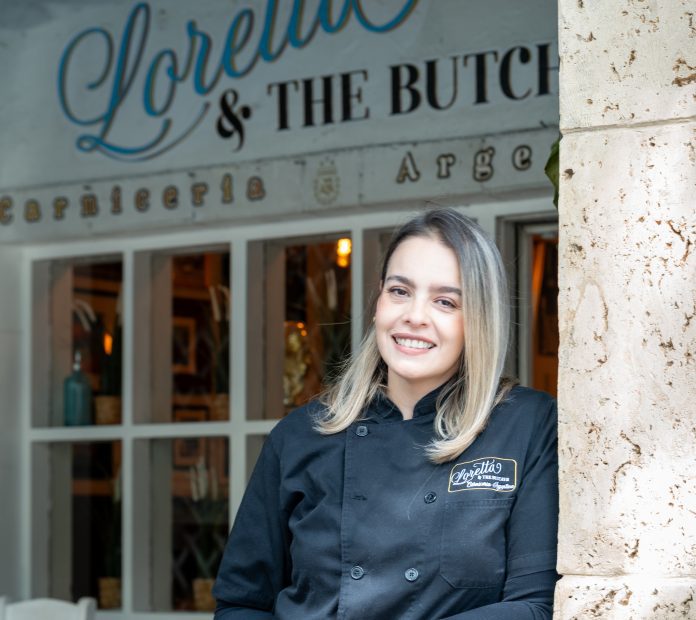
    Maria Alejandra Castaño: Passionate Leadership at Loretta & the Butcher

    Coconut Grove, Miami’s oldest neighborhood, has quietly evolved into one of South Florida’s most successful business communities – and it’s no accident. With its blend of charm, strategy, and community, the Grove offers a blueprint for how local economies can thrive.

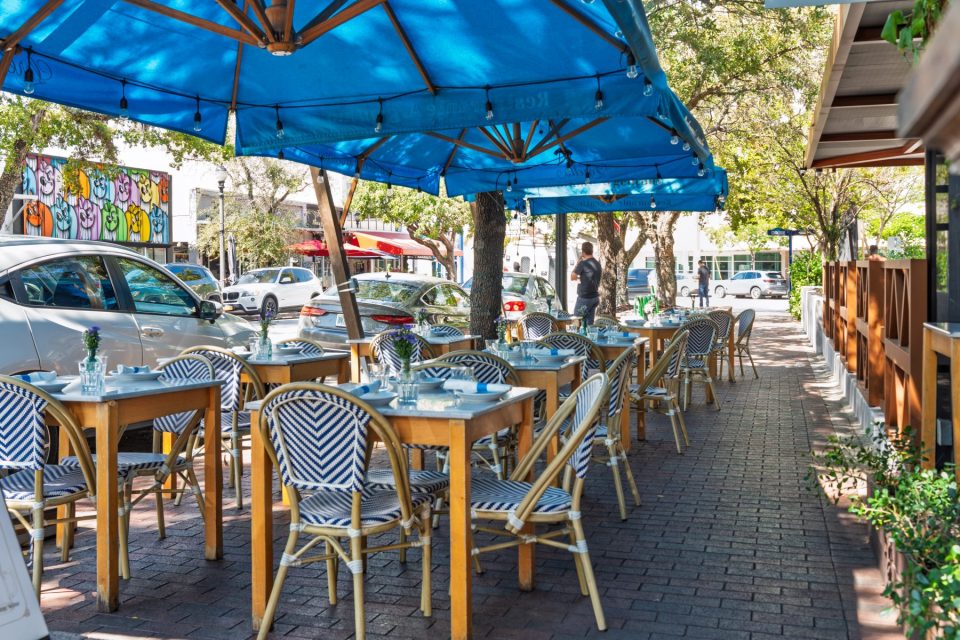
    At the heart of its success is a strong sense of community. And at the heart of the Grove’s bustling downtown district are independent businesses, like Loretta and the Butcher on Commodore Plaza, with Maria Alejandra Castaño at the helm.

    By cultivating a loyal customer base that values authenticity and true connection, Castaño’s quaint bistro tucked between the busy shops and other businesses on Commodore Plaza has fast become a beloved neighborhood staple.

    “Since the very beginning, we wanted to be more than just a restaurant. We’ve built real relationships with our guests and with other businesses in the Grove. We know their names, their favorite dishes, and make each visit one that feels like they’re home.” The loyalty and warmth of their customers continue to fuel the restaurant’s growth.

    Culinary Passion

    With a passion for Argentine cuisine and making guests feel at home, she’s created a fine restaurant that’s a one way ticket to Buenos Aires. Her journey proves that with the right ingredients, vision, and boldness, anything is possible.

    Beyond perfecting beef, Loretta & the Butcher honors an iconic Argentine culinary tradition, led by the passionate and determined Castaño. As a powerful woman in a male-dominated industry, she runs a restaurant that embodies authenticity, quality, and community in the deepest sense.

    Castaño’s love for food began in her childhood, growing up in Colombia where meals are a symbol of unity and tradition. “Since I was a little girl, cooking has been my passion and my way of expression. And I’ve always been fascinated by how the right dish can tell a story, awaken emotions, and bring people together.”

    Her admiration for Argentina’s beloved cuisine eventually led her to acquire Loretta & the Butcher, where she brings the essence of la parrilla (Argentine grill) to the Grove. With respect for each cut of meat and a dedication to using the highest quality ingredients, she ensures each dish represents the true flavors of Argentina.

    “Loretta & the Butcher is more than a restaurant; it’s a total experience. We want patrons to feel transported to Argentina through flavors, aromas, and the welcoming warmth of the atmosphere.”

    What Makes an Argentine Grill Great?

    A true Argentine “parrilla” is more than just grilled meats, it’s a whole ritual. “Everything starts with the highest quality cuts, cooked over fire with patience. Coarse salt is all the seasoning that’s needed to highlight the succulent meat’s true flavor.”

    But beyond the food, it’s about connection. “A true parrilla is meant to be shared with friends and family, with melted provoleta, a glass of wine, and, of course, chimichurri to add the final touch. It’s about friends and family gathering around the grill, living in the moment filled with passion.” At Loretta & the Butcher, every meal is designed to capture that spirit.

    Breaking Restaurant Industry Barriers

    Running a restaurant as a woman comes with some challenges, but Castaño has always met them head-on with the utmost confidence and perseverance. “The biggest challenge has been breaking biases and stereotypes in a typically male-dominated industry, and proving that female leadership is equally strong and strategic.”

    Balancing her roles as a businesswoman, mother, and wife is no easy feat, but Castaño has cultivated a restaurant known for both excellence and inclusivity. “Seeing Loretta and the Butcher grow, curating a unique experience, and being passionate about leadership shows that you can balance those three crucial roles without giving up your dreams.”

    The True Taste of Argentina

    Loretta & the Butcher’s menu is specifically curated to immerse their guests in the authentic Argentine flavor. Signature dishes include bife de chorizo, ojo de bife, and entraña, all grilled to perfection.

    Another standout is Arroz del Gaucho, a bold, comforting dish that echoes Argentina’s rich culinary traditions, alongside their world-famous empanadas, crispy on the outside, boasting a variety of fillings, and bursting with flavor inside. Each dish transports guests straight to Buenos Aires, one bite at a time.

    What’s Next for Loretta & the Butcher?

    Looking ahead, Maria Alejandra envisions expanding Loretta & the Butcher while maintaining its warm and welcoming atmosphere. “We’re exploring new opportunities to bring our delicious dishes to even more people, all without losing the signature warmth that defines us.”

    Her journey is far from over, and that passion burns bright, strong as ever. “Oh, I believe the best is yet to come,” she says.

    ABOUT LORETTA AND THE BUTCHER
    Loretta And The Butcher is located 3195 Commodore Plaza, Coconut Grove, FL 33133. Visit www.lorettaandthebutcher.como to learn more or call 786-618-9982.
    Homestead’s Progress Is No Accident

    I have been coming to Homestead since the 1960s, when my parents used to take me to the Homestead Rodeo. I have seen this city through decades of change, both good and bad. Seeing Homestead today, it is clear the city is moving forward.

    That progress deserves recognition. Credit is due to Mayor Steven Losner for helping put the framework in place that allows this kind of leadership to succeed. Under his tenure, Homestead has become a place where people can live, work, play, worship, and learn, with a focus on long term stability and quality of life.

    That leadership is visible both inside the Homestead Police Department and across City Hall.

    Chief Knapp

    Chief Mario Knapp

    Chief Knapp is a 27 year veteran of the Miami-Dade Police Department. When he took command of the Homestead Police Department, he made his priority clear from the start. Public service through public trust.

    Rather than relying on internal assurances, the Chief ordered what he described as a three dimensional audit of the department, focusing on high liability areas. While many reviews were conducted internally, outside agencies were brought in to ensure transparency and credibility.

    The Florida Department of Law Enforcement conducted a full audit of the Property and Evidence Bureau, reviewing chain of custody, storage procedures, facility security, digital tracking, and compliance standards. External Internal Affairs Commanders reviewed investigative timelines, documentation standards, complaint handling, and legal compliance. The Miami-Dade County Association of Chiefs of Police reviewed the department’s victim advocacy program, focusing on coordination, follow up practices, and trauma informed response.

    The goal was not to assign blame. The goal was to identify weaknesses and fix them permanently.

    One of the first operational issues identified was staffing. A budgetary review revealed 17 funded vacancies that needed to be filled. In the midst of well documented national recruitment challenges, the department launched an aggressive recruitment effort. That effort generated hundreds of applications and resulted in every one of those positions being filled. This was a critical step in stabilizing operations and improving service delivery.

    A lack of transparency in the vacancy process was also addressed. Positions had often been filled informally, creating perceptions of favoritism and limiting opportunity. A department wide Vacancy Announcement System was implemented so every sworn and civilian opening is publicly advertised, interviews are standardized, and advancement is based on merit.

    The department was reorganized to correct a fragmented structure where employees reported to multiple supervisors. The agency was realigned into Police Services and Departmental Services, each with clearly defined divisions, supervision, and accountability.

    A modern command structure followed. The colonel rank was eliminated. A Deputy Chief position was created. The rank of Major was reintroduced, with Captains managing divisions. This structure aligns with comparable Florida agencies and restores promotional pathways while strengthening accountability.

    Training operations were elevated through the creation of a full time Training Sergeant position to oversee firearms, emergency vehicle operations, and required training standards. This provided consistency, oversight, and improved risk management.

    Operational deployment was also reviewed. Investigations staffing exceeded case volume, while patrol lacked a proactive enforcement unit. A full time Crime Suppression Team was created without reducing patrol staffing, focusing on repeat offenders, high crime areas, nuisance crimes, and emerging trends.

    The department also created the first full time HOA and Condo Fraud Unit in the State of Florida to address long standing complaints involving fraudulent elections, misuse of association funds, and exploitation of residents. The unit works closely with the State Attorney’s Office and serves as a resource for affected communities.

    Transparency efforts expanded through a rebuilt social media presence, public safety alerts, and community outreach. A Therapy Dog Program, grant funded drone operations, a Force Avoidance Model, and a Staff Duty Officer Program were also implemented to modernize operations and strengthen public trust.

    The results are measurable. In 2025, shootings declined by 54 percent. Contact shootings dropped by 71 percent. Non contact shootings declined by 30 percent. Homicides fell by 33 percent. Staffing stabilized, evidence controls were strengthened, and accreditation progress continues.

    City Manager Ihekwaba

    These reforms are supported by a broader approach to governance under City Manager Zerry Ihekwaba.

    Dr. Zerry Ihekwaba

    Since assuming the role, Ihekwaba has led the City of Homestead through a period of structural transformation focused on strategic planning, infrastructure modernization, fiscal responsibility, and quality of life improvements. His administration has emphasized transparency, efficiency, and long term planning.

    Under his leadership, the City adopted its first professionally developed Strategic Plan, creating a five year roadmap aligned with community priorities. A City Manager’s Bi Monthly Report was introduced to improve transparency and communication with elected officials and residents.

    The City adopted a balanced Fiscal Year 2026 budget totaling $348.7 million, including an $89.2 million General Fund. A critical consent agreement related to wastewater transmission operations was resolved with Miami-Dade County regulators, bringing seven facilities into compliance and removing barriers to future economic development.

    Infrastructure and safety improvements advanced, including traffic signal upgrades and transportation planning aligned with smart growth and workforce mobility. A major digital transformation modernized permitting, inspections, licensing, payments, and internal communication systems.

    Economic development efforts accelerated with the advancement of the $275 million Sports Performance Hub at Homestead Regional Park, a privately funded project that preserves the Homestead Rodeo, introduces professional soccer, and is expected to generate thousands of construction and permanent jobs.

    Homestead was designated a Spaceport Territory, positioning the city as an emerging innovation center and already attracting new investment. Community programming expanded through city hosted summer camps, cultural events, Art in Public Spaces initiatives, and workforce development partnerships aimed at preparing the next generation.

    Looking Ahead

    The work is not finished. Priorities include completing technology upgrades, advancing accreditation, strengthening infrastructure, expanding workforce pipelines, and continuing to invest in public safety and quality of life.

    The foundation is in place. The progress is visible. And for a city that has waited a long time for lasting reform, that matters.

    Oh, Canada — the tourists missing from Florida

    Lynne Sladky / AP FILE – A Canadian flag flies as people walk along the boardwalk in Hollywood, Fla on Nov. 23, 2015.

    This story was originally produced by WLRN, South Florida’s only public radio station at 91.3 FM, as part of a content sharing partnership with Miami’s Community News. Read more at WLRN.org.

    American tourists are picking up the slack left by missing Canadian visitors to Florida. Yet, the Sunshine State’s tourism numbers would signal even more growth if tourists from north of the U.S. border were still coming as they have in similar years.

    Total visits to Florida grew one-tenth of one percent through the third quarter of 2025, according to the latest data available from Visit Florida, the state’s tourism marketing agency. The slim increase represented 100,000 more visitors between January and September compared to a year earlier.

    Enough travelers from other U.S. states — and from other foreign countries — were able to make up for the continued sharp decline in Canadians coming to Florida.

    Florida attracts the bulk of its tourists from the 49 other states. More than 9 out of every 10 visitors to Florida live elsewhere in the U.S.

    The most important foreign travelers have come from Canada, responsible for upwards of 3 million visitors a year. That is about a quarter to a third of all foreign visitors each year.

    Canadian tourism was down almost 15% through the first nine months of last year. If a similar trend held for the fourth quarter, that would mean about a half million fewer Canadians came to Florida in 2025 compared to a year earlier. Such a decline would reduce Canadian tourism to its lowest level in three years, when the hospitality industry was booming thanks to a post-COVID-19 pandemic travel rush.

    Made with Flourish • Create a chart

    Few Florida destinations rely on Canadians more than South Florida, especially Broward County.

    Canadian tourism took a dive in 2025 as trade tensions and political rhetoric from President Donald Trump and his administration crescendoed through the year.

    While Florida-specific data is not available, the number of Canadians returning from overnight visits to America continued to plummet in September and October. There were 800,000 fewer Canadians crossing back over the border with the U.S. during those two months compared to a year earlier, according to data from Canada’s national statistics service.

    It is not as though Canadians have lost their urge to travel internationally, though. The number of them returning to their home country from countries other than the U.S. increased over the same period.

    Made with Flourish • Create a chart

    Hotel occupancy was down 1.6% in November in Broward County. However, that was an improvement from the sharper drop in October. November marked the third straight monthly decline in revenue per available room, a key financial metric in the hospitality industry.

    Visit Lauderdale, the county’s tourism development agency, said the declines “reflect the weakening economy and pressures on discretionary income spreading to the full spectrum of consumers.”

    It did not single out the impact of the slowdown in Canadian tourism.

    Hotels in the Keys continued reporting the highest average hotel room rates in the state at more than $300 in November.


    ABOUT US:

    For more Miami community news, look no further than Miami Community Newspapers. This Miami online group of newspapers covers a variety of topics about the local community and beyond. Miami’s Community Newspapers offers daily news, online resources, podcasts and other multimedia content to keep readers informed. With topics ranging from local news to community events, Miami’s Community Newspapers is the ideal source for staying up to date with the latest news and happenings in the area. 

    This family-owned media company publishes more than a dozen neighborhood publications, magazines, special sections on their websites, newsletters, as well as distributing them in print throughout Miami Dade County from Aventura, Sunny Isles Beach, Miami Beach, Coral Gables, Brickell, Coconut Grove, Pinecrest, South Miami, Kendall, Palmetto Bay, Cutler Bay and Homestead. Each online publication and print editions provide comprehensive coverage of local news, events, business updates, lifestyle features, and local initiatives within its respective community.

    Additionally, the newspaper has exclusive Miami community podcasts, providing listeners with an in-depth look into Miami’s culture. Whether you’re looking for local Miami news, or podcasts, Miami’s Community Newspapers has you covered. For more information, be sure to check out: https://communitynewspapers.com.

    If you have any questions, feel free to email Michael@communitynewspapers.com or Grant@communitynewspapers.com

    #thatscommunitynews #communitynewspapers #miamidade #miamidadecounty #thatscommunity #miamicommunitynews #coralgables #palmettobay #southmiami #doral #aventura #pinecrest #kendall #broward #biscaynebay

    Heart of the Homily – Episode 13

    ‘Heart of the Homily features prominent figures from the St. Augustine Church & Catholic Student Center at the University of Miami. Michelle Ducker Lopez, Director of Evangelization and Campus Ministry, and Fr. Richard Vigoa, Pastor of St. Augustine Catholic Parish and Student Center, discuss the Homily from Sunday’s mass and dive more into their faith. Join them as they prepare for the celebration of Christmas and recap this Advent season.

    ABOUT US:

    Miami Community Newspapers is your go-to source for Miami community news, offering daily updates, podcasts, and multimedia content. Covering local events, business updates, and lifestyle features across Miami-Dade County, our family-owned media company publishes a variety of neighborhood publications both online and in print. Explore Miami’s culture through our exclusive community podcasts, magazines, and newsletters.

    #thatscommunitynews #communitynewspapers #miamidade #miamidadecounty #thatscommunity #miamicommunitynews #coralgables #palmettobay #southmiami #doral #aventura #pinecrest #kendall #brickell

    Crossfire Ep. 6: AI, Free Speech & Competition: Vedant Sharan with Andres Jaramillo

    🎙️ On this episode of Crossfire, host Vedant Sharan sits down with Andres Jaramillo, who recently placed second in a district-wide coding competition with a project centered on artificial intelligence and free speech.

    Andres breaks down the inspiration behind his project, how AI can influence expression and dialogue, and the ethical questions that arise when technology and speech intersect. The conversation explores innovation, responsibility, and what it’s like competing at a high level with a concept-driven tech project.

    ABOUT US:

    For more Miami community news, look no further than Miami Community Newspapers. This Miami online group of newspapers covers a variety of topics about the local community and beyond. Miami’s Community Newspapers offers daily news, online resources, podcasts and other multimedia content to keep readers informed. With topics ranging from local news to community events, Miami’s Community Newspapers is the ideal source for staying up to date with the latest news and happenings in the area. 

    This family-owned media company publishes more than a dozen neighborhood publications, magazines, special sections on their websites, newsletters, as well as distributing them in print throughout Miami Dade County from Aventura, Sunny Isles Beach, Miami Beach, Coral Gables, Brickell, Coconut Grove, Pinecrest, South Miami, Kendall, Palmetto Bay, Cutler Bay and Homestead. Each online publication and print editions provide comprehensive coverage of local news, events, business updates, lifestyle features, and local initiatives within its respective community.

    Additionally, the newspaper has exclusive Miami community podcasts, providing listeners with an in-depth look into Miami’s culture. Whether you’re looking for local Miami news, or podcasts, Miami’s Community Newspapers has you covered. For more information, be sure to check out: https://communitynewspapers.com.

    If you have any questions, feel free to email Michael@communitynewspapers.com or Grant@communitynewspapers.com

    #thatscommunitynews #communitynewspapers #miamidade #miamidadecounty #thatscommunity #miamicommunitynews #coralgables #palmettobay #southmiami #doral #aventura #pinecrest #kendall #broward #biscaynebay

    The America First Hemisphere: Why Marco Rubio Is the Key to Trump’s Latin American Revival

    What a difference it makes to have a president who takes an America First agenda in the Western Hemisphere seriously, and whose actions finally match his words. For decades, U.S. presidents talked about Latin America while allowing chaos, corruption, and hostile regimes to metastasize in our own backyard. That era is ending quickly under President Donald Trump.

    The world just witnessed one of the cleanest and most decisive actions in support of this renewed doctrine: the removal of illegitimate Venezuelan strongman Nicolás Maduro and his wife, Cilia Flores, under a U.S. arrest warrant executed with the backing of the renamed U.S. Department of War. The message could not be clearer. America is no longer content to issue statements while criminal regimes entrench themselves, export misery, and threaten our national security.

    This moment also puts into sharp relief President Trump’s genius in selecting Marco Rubio as Secretary of State. If personnel is policy, then Trump and Rubio together represent a profound strategic shift. Rubio is not just executing an America First agenda in the Americas with discipline and clarity. He is doing so with lived experience, moral conviction, and a deep understanding of what instability in this hemisphere actually produces.

    Marco Rubio is a son of Miami-Dade County. Born to Cuban immigrants who came to America before Castro’s rise but whose family story was shaped by Cuba’s descent into tyranny, he was raised among families defined by communism’s wreckage, political imprisonment, and forced exile. He lived, worked, and governed here before stepping onto the national and global stage. That background matters. Rubio understands that a chaotic and unstable Latin America is fertile ground for socialist misery, entrenched poverty, humanitarian crises, and mass illegal migration. It fuels drug and human trafficking into the United States and finances criminal enterprises that do real harm to American communities.

    Rubio also understands something Washington elites have long ignored: instability in our hemisphere is not accidental. It is actively cultivated by America’s adversaries. Russia, China, and Iran have spent years exploiting weak states, propping up dictators, laundering influence through proper and sham business ventures, and disguising geopolitical penetration as humanitarian relief. A weakened and distracted United States suits them just fine.

    Growing up in Miami-Dade, Rubio did not just see the Castro regime as an abstract adversary. He saw its export model. He saw how authoritarian regimes support terror and the drug trade, meddle in neighboring countries, and sometimes pose a direct security threat to the United States itself. That understanding now informs American diplomacy in real time.

    We are already seeing the consequences. Cuba, long sustained by external lifelines and ideological inertia, is facing mounting pressure and the real possibility of collapse. In Colombia, the narco-fueled leftist regime of Gustavo Petro is under visible strain as regional dynamics shift, and old assumptions fall apart. Antagonistic regimes in the Americas, whether independent actors or ideological puppets, are no longer merely on notice. They are confronting an evolution in hemispheric thinking that cannot be reversed.

    What makes this moment extraordinary is its velocity. Activity breeds activity. Strength clarifies choices. As the Left’s grip weakens across the Americas, new conversations are beginning inside these countries among people who know, as Rubio knows, that the era of chaos and permanent instability is coming to an end.

    Public service at this level carries real cost. It means time away from family, community, and the familiar rhythms of home. Yet history will show that Marco Rubio’s willingness to step forward at this moment mattered. His work is driven by what he learned in Miami-Dade, by his Cuban heritage, and by a Christian faith that understands the moral stakes of freedom versus tyranny.

    Thank God that Marco Rubio was available and willing to serve as President Trump’s tip of the spear in the Americas at this pivotal moment in history. Watch closely. Things are moving fast, and the net positives for our hemisphere, and for the United States, are only beginning to emerge.

    FIU researchers take over Academic Minute

    FIU researchers taking on the world’s greatest challenges are sharing their findings with a national audience during FIU Week on The Academic MinuteJan. 5-9, a radio show and podcast. The three-minute program features researchers from colleges and universities around the world. FIU’s experts are explaining research related to important topics that include health, technology, child development and how the brain works.   

    Monday 

    Jaclyn Tanenbaum, faculty director of the  Master of Science in Marketing (MSM) Program in FIU Business,  has found that dissuasive framing – telling non-target consumers a product isn’t for them – can be more effective than traditional persuasive messages. Her research challenges a foundational belief in marketing: that persuasive messages aimed directly at target customers are the most effective. 

    Tuesday  

    Amanda Thomas, clinical assistant professor in the Nicole Wertheim College of Nursing and Health Sciences, discusses her study, which has shown that children with upper limb deficiencies can significantly improve strength, coordination, and independence with a novel exercise program using a body-powered 3D-printed prosthetic hand

    Wednesday  

    With her research, Tana Carson, assistant professor of occupational therapy in the Nicole Wertheim College of Nursing and Health Sciences, tackles a major cause of death for disabled children in the U.S. – drowning. She discusses how a five-day adapted swim program improved safety skills for children with disabilities. 

    Thursday  

    Karinna Rodriguez, a doctoral candidate in the Department of Psychology Developmental Science program, explains how Center for Children and Families research provides parents with ways to support their children’s learning before they even enter a classroom. It’s backed by science and surprisingly simple: puzzles, blocks, and spatial words. It’s aimed at developing spatial reasoning.  

    Read more about her research in The Conversation 

    Friday  

    Marcelo Bigliassi, assistant professor of psychophysiology and neuroscience in the College of Arts, Sciences & Education, knows why it might be hard to start or stick with a workout routine: your brain, not your body, may be what’s holding you back. And it can be trained to help you push through.  

    Read more about his research in The Conversation 

    Later this month,  Academic Minute also will feature FIU researchers working on early detection of Alzheimer’s disease and next-generation battery technologies.

    Tomás Guilarte, dean of the Robert Stempel College of Public Health and Social Work, has studied the biomarker TSPO for three decades. His latest discovery found that TSPO may allow Alzheimer’s disease to be detected years before symptoms appear. 

    Bilal El-Zahab, associate professor of mechanical and materials engineering at the College of Engineering and Computing, and his research team have made a breakthrough with a next generation battery technology. Known as beyond lithium-ion, it could one day make owning an electric vehicle a lot more convenient.  

    Produced by WAMC Northeast Public Radio, The Academic Minute is hosted by Lynn Pasquerella, President of theAmerican Association of Colleges and Universities.  The program airs on70 stations around the United States and Canada. Segments are also available on Apple PodcastsandSpotify. 

    - Advertisement -