
Miami's Community Newspapers White Logo
More
    Home Blog

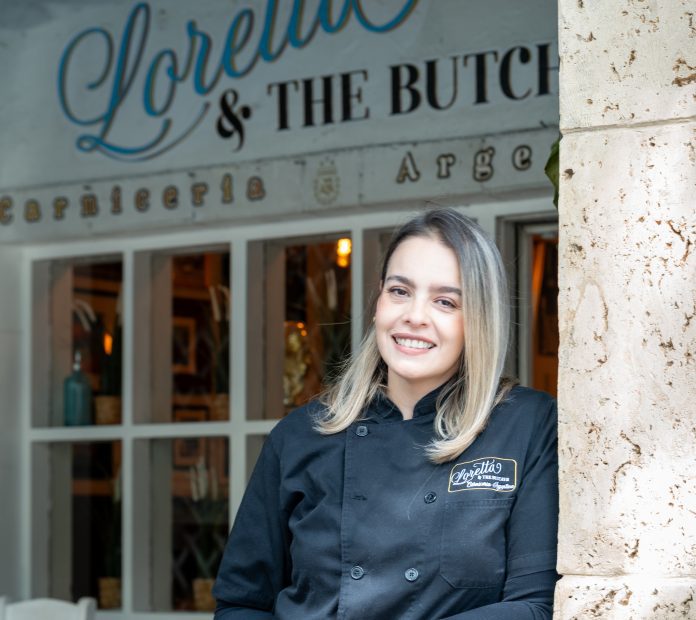
    Maria Alejandra Castaño: Passionate Leadership at Loretta & the Butcher

    Coconut Grove, Miami’s oldest neighborhood, has quietly evolved into one of South Florida’s most successful business communities – and it’s no accident. With its blend of charm, strategy, and community, the Grove offers a blueprint for how local economies can thrive.

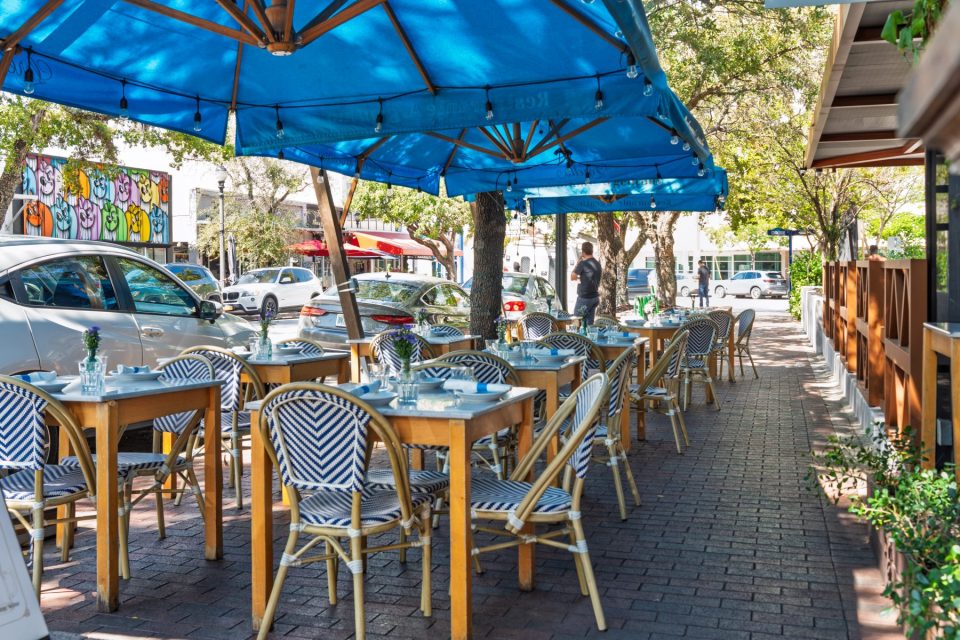
    At the heart of its success is a strong sense of community. And at the heart of the Grove’s bustling downtown district are independent businesses, like Loretta and the Butcher on Commodore Plaza, with Maria Alejandra Castaño at the helm.

    By cultivating a loyal customer base that values authenticity and true connection, Castaño’s quaint bistro tucked between the busy shops and other businesses on Commodore Plaza has fast become a beloved neighborhood staple.

    “Since the very beginning, we wanted to be more than just a restaurant. We’ve built real relationships with our guests and with other businesses in the Grove. We know their names, their favorite dishes, and make each visit one that feels like they’re home.” The loyalty and warmth of their customers continue to fuel the restaurant’s growth.

    Culinary Passion

    With a passion for Argentine cuisine and making guests feel at home, she’s created a fine restaurant that’s a one way ticket to Buenos Aires. Her journey proves that with the right ingredients, vision, and boldness, anything is possible.

    Beyond perfecting beef, Loretta & the Butcher honors an iconic Argentine culinary tradition, led by the passionate and determined Castaño. As a powerful woman in a male-dominated industry, she runs a restaurant that embodies authenticity, quality, and community in the deepest sense.

    Castaño’s love for food began in her childhood, growing up in Colombia where meals are a symbol of unity and tradition. “Since I was a little girl, cooking has been my passion and my way of expression. And I’ve always been fascinated by how the right dish can tell a story, awaken emotions, and bring people together.”

    Her admiration for Argentina’s beloved cuisine eventually led her to acquire Loretta & the Butcher, where she brings the essence of la parrilla (Argentine grill) to the Grove. With respect for each cut of meat and a dedication to using the highest quality ingredients, she ensures each dish represents the true flavors of Argentina.

    “Loretta & the Butcher is more than a restaurant; it’s a total experience. We want patrons to feel transported to Argentina through flavors, aromas, and the welcoming warmth of the atmosphere.”

    What Makes an Argentine Grill Great?

    A true Argentine “parrilla” is more than just grilled meats, it’s a whole ritual. “Everything starts with the highest quality cuts, cooked over fire with patience. Coarse salt is all the seasoning that’s needed to highlight the succulent meat’s true flavor.”

    But beyond the food, it’s about connection. “A true parrilla is meant to be shared with friends and family, with melted provoleta, a glass of wine, and, of course, chimichurri to add the final touch. It’s about friends and family gathering around the grill, living in the moment filled with passion.” At Loretta & the Butcher, every meal is designed to capture that spirit.

    Breaking Restaurant Industry Barriers

    Running a restaurant as a woman comes with some challenges, but Castaño has always met them head-on with the utmost confidence and perseverance. “The biggest challenge has been breaking biases and stereotypes in a typically male-dominated industry, and proving that female leadership is equally strong and strategic.”

    Balancing her roles as a businesswoman, mother, and wife is no easy feat, but Castaño has cultivated a restaurant known for both excellence and inclusivity. “Seeing Loretta and the Butcher grow, curating a unique experience, and being passionate about leadership shows that you can balance those three crucial roles without giving up your dreams.”

    The True Taste of Argentina

    Loretta & the Butcher’s menu is specifically curated to immerse their guests in the authentic Argentine flavor. Signature dishes include bife de chorizo, ojo de bife, and entraña, all grilled to perfection.

    Another standout is Arroz del Gaucho, a bold, comforting dish that echoes Argentina’s rich culinary traditions, alongside their world-famous empanadas, crispy on the outside, boasting a variety of fillings, and bursting with flavor inside. Each dish transports guests straight to Buenos Aires, one bite at a time.

    What’s Next for Loretta & the Butcher?

    Looking ahead, Maria Alejandra envisions expanding Loretta & the Butcher while maintaining its warm and welcoming atmosphere. “We’re exploring new opportunities to bring our delicious dishes to even more people, all without losing the signature warmth that defines us.”

    Her journey is far from over, and that passion burns bright, strong as ever. “Oh, I believe the best is yet to come,” she says.

    ABOUT LORETTA AND THE BUTCHER
    Loretta And The Butcher is located 3195 Commodore Plaza, Coconut Grove, FL 33133. Visit www.lorettaandthebutcher.como to learn more or call 786-618-9982.

    In The Know: Venezuela, Maduro, and Power Shifts | Willard Shepherd, Helena Poleo & Brian Fonseca

    In this episode of In The Know, Willard Shepherd, Helena Poleo, and Brian Fonseca come together for an in-depth discussion on Venezuela, the evolving situation surrounding Nicolás Maduro, and the broader regional and international implications.

    The conversation explores political pressure, security dynamics, U.S.–Latin America relations, and what recent developments could mean for Venezuela’s future and global stability.

    🔎 Topics Covered:

    • Venezuela’s current political landscape

    • Maduro’s position and international pressure

    • Regional security and foreign policy implications

    • Expert analysis and real-time discussion

    ABOUT US:

    Miami Community Newspapers is your go-to source for Miami community news, offering daily updates, podcasts, and multimedia content. Covering local events, business updates, and lifestyle features across Miami-Dade County, our family-owned media company publishes a variety of neighborhood publications both online and in print. Explore Miami’s culture through our exclusive community podcasts, magazines, and newsletters.

    #thatscommunitynews #communitynewspapers #miamidade #miamidadecounty #thatscommunity #miamicommunitynews #coralgables #palmettobay #southmiami #doral #aventura #pinecrest #kendall #broward #biscaynebay

    Broward Teachers Union 29th Annual Innovative Teacher IDEA EXPO Set for Saturday, January 31

    Broward Education Foundation is hosting the Broward Teachers Union 29th Annual Innovative Teacher IDEA EXPO onSaturday, January 31 from 7:30 a.m. to 3:30 p.m. at Fort Lauderdale High School located at 1600 NE 4th Avenue in Fort Lauderdale.

    Attendees will interact with more than 35 grant-winning innovative teacher disseminators who will display their projects illustrating effective and dynamic teaching strategies. Each attendee will receive access to links featuring each project that includes course outlines, lesson plans, resource lists, student worksheets and tools to help adapt projects to their classroom.

    This year’s keynote speaker will be Kiki Prottsman, Educator, Author and Former Director of Education at Microsoft MakeCode. As the creator of The Educator’s Workshop, Prottsman is an expert at bringing fun, play and hands-on learning to classrooms through educational games, tools and teacher training.  

    Registration is $50 if made by January 23, 2026. Day of registration, space permitting, is $60. Click browardedfoundation.org/expo to register. For additional details or sponsorship opportunities, contact Coco Burns, program director at 754-321-2032 or colette.burns@browardschools.com.

    Broward Education Foundation awards monetary grants to innovative teachers who have developed classroom curriculum that engages and propels students in Broward County Public Schools (BCPS) to succeed and increase their learning outcomes. Funding for these grants is made possible through public-private partnerships, business and community leaders, and contributors to the Education First Employee Giving Campaign. Adapter grants are available for BCPS teachers who want to adapt these award-winning programs in their classrooms. If awarded an Adapter Grant, teachers can earn 10 in-service points.

    In addition to Broward Teachers Union, other partners in the Broward Education Foundation Innovative Teacher Idea Expo include the State of Florida District Education Foundation’s matching grants program, BrightStar Credit Union, Broward Area Stem Ecosystem, City of Hollywood, Education First Employee Giving Campaign, JM Family Enterprises, American College of Education, Broward County Public Schools, Carnegie Learning, Florida Gulf Coast University, Fort Lauderdale High School, Grand Canyon University,  NTA Life,   STU Online, University of West Florida and Wahoo Bay.

    About Broward Education Foundation:    

    The nonprofit Broward Education Foundation aligns with Broward County Public Schools by providing grants for teachers who develop innovative curriculum that increases student outcomes; vitally needed school supplies for students and teachers in Title I schools; scholarships for qualified high school seniors; and support for programs and initiatives like Debate, TurnAround Arts, STEM and more.  Each year, Broward Education Foundation contributes nearly $5 million to Broward County schools, serving as the catalyst for educational excellence.

    For more information, visit Broward Education Foundation, email BEFInfo@browardschools.com, and like or follow us on Facebook , Twitter, Instagram and LinkedIn.

    Our Elders Are Not Disposable

    Frances Reaves

    On December 23, 2025, at approximately 2:15 p.m., an explosion tore through the Bristol Health and Rehab Center—also known as Silver Lake Nursing Home—in Bucks County, Pennsylvania. Two people died: one resident and one employee. At least twenty others were injured, some critically.

    This was not an unforeseeable tragedy.
    Just two months earlier, a Pennsylvania Department of Health inspection found the facility out of compliance with multiple safety regulations. The report cited missing and inaccurate floor plans, poorly maintained stairwells cluttered with paint buckets and bed frames, missing fire extinguishers, absent smoke barrier partitions, and improperly stored oxygen cylinders. Medicare rated the facility “much below average,” with particularly poor marks for health inspections.

    This happened in Bucks County, one of the wealthiest suburbs outside Philadelphia. The median home price is roughly $550,000. Homes sell above asking. Taxes are high. Disposable income exists.
    Yet somehow, the most basic life-safety protections for seniors—fire extinguishers and smoke barriers—were optional.

    Let’s be honest about what this says: our elders are not a priority. That should terrify all of us.

    Between 25% and 35% of Americans over 65 will spend time in a nursing facility. Some studies place the lifetime risk as high as 56%. Nearly half of people over 94 live in institutional care. This is not a fringe issue. This is our future.

    Still, our public narrative remains obsessively focused on “the children.” Of course children matter. But children do not exist without elders. Wisdom, mentorship, history, stability, caregiving, and yes—love—flow downward from those who have lived long enough to earn perspective.

    A recent holiday commentary captured the problem perfectly. In a sentimental exchange about loss and gratitude, the ultimate wish offered was to “give every child a chance.” A beautiful sentiment—but a revealing omission.

    What about our elders?

    What about giving them a chance to live safely?
    A chance to age with dignity?
    A chance to be valued, protected, and respected—not warehoused in under-regulated buildings until tragedy strikes?

    Elders are forgotten because our culture allows them to be forgotten. We celebrate youth, fund youth, legislate for youth—and then act shocked when aging becomes dangerous.

    This is not about politics. It is about priorities.
    A society that cannot keep its elders safe has failed—not just them, but itself.

    Growing old is not a moral failing. It is an achievement.
    And seniors—at 65, 75, 85, and beyond—still have enormous value to impart.  

    The question is whether we are willing to give something back.

    About Frances Reaves

    H. Frances Reaves, Esq. is an estate and Medicaid planning attorney in Miami, FL.  She began her career as a litigator/lobbyist.  After 15 years in Maryland politics, she moved back to Miami and began her practice, and founded Parent Your Parents, an Elder Advocacy Group.  Her inspiration was her parents, whose battle with the ‘elder bureaucratic system’ made clear the pervasive discrimination against elders.  Should you have any questions or comments, please contact her at hfrancesr@parentyourparents.com or 786 418 3303.

    Miami Voters Charted a New Course Last Week – And it Started With Affordability

    Voters across Greater Miami delivered a clear message in our most recent elections: local governments must do much more to improve residents’ quality of life. For years, Miamians have felt the squeeze of rising housing costs, limited public transportation options, and uneven access to high-quality K-12 education. From Brickell to West Kendall, families have watched everyday expenses rise with little meaningful relief.

    This election, voters chose leaders who understand that improving everyday life and providing pathways to opportunity are the defining local issues of our time.

    In the City of Miami, voters elected Eileen Higgins as mayor and Rolando Escalona as commissioner for District 3, both of whom centered their campaigns on pocketbook concerns and resident-focused governance. In Hialeah, Miami-Dade’s second-largest city, voters sent 27-year-old Bryan Calvo to City Hall as mayor on a similar platform: a government that puts residents first.

    Much of the post-election coverage has focused on milestones: Higgins as the first female mayor, Escalona as a young newcomer who arrived in the U.S. just 13 years ago, and Calvo as the youngest mayor in Hialeah’s history. Those stories matter. But they are not why these candidates won.

    They won because voters recognized themselves in the agendas they put forward.

    Higgins ran on improving housing affordability, strengthening transit, supporting small businesses, and building increased trust in a City Hall that feels connected to daily life. Her message resonated because it reflected the realities of raising a family, commuting to work, and staying rooted in the city people love.

    Escalona’s victory in District 3 tells the same story. In neighborhoods where affordability is a daily concern his focus on community voice and neighborhood-level solutions signaled a generational shift in how residents expect to be represented.

    Our future will be determined by whether leaders deliver real progress on affordability, mobility, economic opportunity, and high-quality public education. The next evolution of our city is one where young families can put down roots, where every child has access to a great public school in their neighborhood, and where long-time residents can age in place. In short, Miamians want a Miami that works for everyone.

    This election sent a clear signal: Miamians expect progress, not rhetoric. Affordability, mobility, economic opportunity, and strong schools are now the core test of local leadership. Meeting that test will require more than government action alone.

    The business community is prepared to be an active partner—bringing capital, expertise, and accountability to help turn voter priorities into real, measurable improvements in everyday life. If public, private, and civic leaders align around outcomes, this moment can mark a decisive shift toward a Miami that works for everyone.

    Raul Moas is President of the Partnership for Miami. Raul leads a dynamic group of business leaders acting in the civic interest to build a world-class Miami that works for all its residents. Through the Partnership, Raul collaborates with grassroots organizations, researchers, policymakers and philanthropists to develop and implement solutions that improve Miami’s affordability, livability, educational systems and resilience.

    Miami Should Learn From New York’s Mistakes Before Inviting Success Academy In

    Florida’s public schools deserve investment, not privatization disguised as innovation.

    Miami-Dade’s public schools already deliver what charter operators only promise: high performance, innovation, and genuine community connection. Yet Florida’s new laws are paving the way for out-of-state corporations like Success Academy to muscle into our district threatening a system that’s working for our families and our future.

    Supporters point to Success Academy’s test scores as proof of its effectiveness. But beneath those glossy numbers lies a record that should give Miami serious pause. Its story in New York City and the political forces driving its expansion into Florida reveal a model built not on equity or excellence, but on exclusion, control, and profit.

    A Culture of Exclusion Behind High Scores
    Success Academy rose to prominence by boasting some of the highest standardized test scores in New York. But those results come at a cost. The network has faced lawsuits for discriminating against students with disabilities and for systematically pushing out children who struggle academically or behaviorally.

    Administrators were found to have maintained a “Got to Go” list a roster of students deemed too disruptive to keep enrolled. Families reported relentless pressure to withdraw their children rather than see them repeatedly suspended or publicly humiliated.

    The organization’s “no-excuses” discipline model enforces rigid behavioral compliance, even among the youngest students. A viral classroom video showing a teacher berating and tearing up a kindergartner’s work laid bare the emotional toll of a system driven by fear and conformity. Former teachers describe burnout, high turnover, and an environment where compliance is valued over compassion.

    A Bad Fit for Miami’s Public School Landscape
    Miami-Dade County Public Schools (M-DCPS) stand as one of the most diverse and successful urban districts in America. The district serves students from more than 160 countries, offers over 400 choice programs, and has been recognized by the Florida Department of Education as an Academically High-Performing School District for maintaining excellence, transparency, and fiscal responsibility.

    That record wasn’t built through exclusion or intimidation it was built through innovation and inclusion. Miami’s teachers, principals, and families have proven that diverse classrooms and multilingual learners are not obstacles, but strengths. Importing a rigid, one-size-fits-all model like Success Academy’s would undermine decades of local progress and risk alienating the very students our public schools are meant to uplift.

    Billionaire-Driven, Not Community-Driven
    Let’s be clear: Success Academy isn’t expanding to Florida because families asked for it. It’s coming because wealthy political donors and out-of-state power brokers made it possible. Behind the scenes, billionaire financiers with deep political ties lobbied for state laws that tilt the playing field toward large charter operators like Success.

    Under these new laws, charter schools can co-locate inside public school buildings and require districts to provide transportation, maintenance, and security at no cost effectively forcing taxpayers to subsidize private control of public assets.

    This is not grassroots reform. It’s a top-down takeover a calculated effort by political and corporate interests to profit from public education while stripping communities of local control. Miami didn’t ask for this, and our families shouldn’t be forced to bear the consequences.

    The Local Cost of Corporate “Choice”
    When well-funded charter chains enter a district, they don’t compete fairly they drain. Each student who leaves for a charter takes public funding with them, pulling resources from neighborhood schools that serve every child, not just those who fit a mold. Over time, that means fewer dollars for arts, athletics, career programs, and special education, the very programs that make public education whole.

    Miami’s public schools are more than places of learning; they’re pillars of community stability. They provide meals, after-school programs, counseling, and family support. Weakening them destabilizes neighborhoods, particularly in working-class and immigrant communities that rely on their schools as centers of opportunity and care.

    Accountability Belongs to the Public Not Private Boards
    Traditional public schools answer to the public. They’re governed by elected boards, subject to open meetings, and bound by laws that ensure transparency and accountability. Success Academy, on the other hand, answers to a private board and its funders.

    That difference matters. In M-DCPS, parents have a voice. Teachers have representation. Decisions are made in the open. In a corporate-style charter system, those decisions happen behind closed doors often without recourse or transparency. A network repeatedly accused of secrecy and retaliation should not be entrusted with Miami’s classrooms.

    Miami’s Own Proven Path Forward
    Miami doesn’t need to import controversy to achieve excellence, it already has a blueprint for success. Through magnet programs, dual-language academies, and career pathways, M-DCPS has created real choices for families without abandoning equity or accountability.

    What Miami’s schools truly need is not privatization, but investment: competitive teacher pay, affordable housing for educators, smaller class sizes, and stronger mental health supports for students. Those are real, evidence-based solutions not the corporate experiments being sold as “innovation.”

    A Warning, Not a Roadmap
    Success Academy’s story is a cautionary tale one of impressive numbers hiding deeper inequities, of public dollars flowing into private hands, and of policies that divide rather than unite.

    Miami should take that warning seriously. Our public schools are thriving because they belong to the community not to donors, investors, or political interests. Allowing an out-of-state network designed and financed by billionaires to reshape what we’ve built would be a grave mistake.

    Miami’s families don’t need another corporate experiment. They need continued investment in what already works: public schools that welcome every child, strengthen every neighborhood, and answer only to the people they serve.


    Crystal President of EduVoter is a Miami-Dade educator with years of classroom experience, Crystal is committed to ensuring every child, regardless of background, has the same chance to succeed. She champions strong, free, and open public schools—free from privatization, censorship, and political agendas—so every child can learn and thrive. Crystal works directly with communities, educators, and policymakers to protect school funding, support teachers, and defend the rights of all students to a quality education.

    Affordable Living Starts With Accountability

    As we head into a new year, I want to thank the families of Miami-Dade County for the opportunity to serve you. Over the course of twelve town halls, more than two hundred community events and neighborhood visits, and thousands of calls, emails, and text messages, my team and I have heard directly from residents. The issues vary, from potholes and illegal dumping to speeding and traffic safety. One concern is universal. Affordability. 

    Residents ask me a simple and serious question. Do I ever truly own my home, or am I just renting it from the government? That question is always on my mind. 

    Homeownership matters. It is how families build security, remain rooted in their neighborhoods, and pass something on to their children. When housing costs rise, people feel insecure. 

    That is why I support real reform at the state level to cut or eliminate property taxes, especially for seniors who deserve certainty and peace as they age in place. Long time residents should not be taxed out of the homes they spent decades working to keep. And property taxes should not determine whether a young couple buys their first home or delays starting a family. 

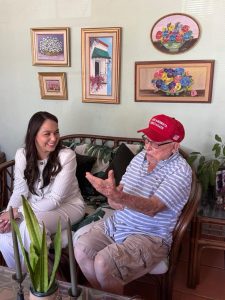
    Natalie Milian Orbis meeting with homeowners.


    At the county level, homeowners deserve a government that respects their money and prioritizes life safety and core services. That is what residents tell me every day. It means holding the line on taxes and fees, cutting waste, and demanding accountability for every public dollar. A great example was our recent legislation aimed at reforming how Miami-Dade funds Community Based Organizations. I worked with my colleagues to advance legislation requiring greater transparency, performance review, and accountability, because every dollar spent comes from family budgets. 

    That same discipline must apply to life safety. We advanced an initiative to evaluate countywide emergency response times, because when seconds count, government performance is not optional. 

    Residents also deserve a government that is easy to reach and responsive. That is why we hold Mobile Office Hours every Monday in different parts of the community. We launched a text message helpline so people can request assistance without delays or bureaucracy. Through neighborhood outreach, our office listens directly, answers questions, and connects residents with real help.

    Last year, our office handled more than one thousand constituent cases by phone, text, email, and in person. We assisted residents at more than two hundred community events and home visits. We supported the resurfacing of nearly thirty miles of roadways, added more than eighty new 25 mph signs near schools, and installed speed tables in high crash zones to protect families. None of that happens without a team that understands service and follows through. 

    This year, the focus continues on lowering taxes, making life more affordable, and getting back to basics, meaning responsible spending, reliable services, public safety, and attention to the everyday issues families face. 

    Moving forward, we must continue examining how government operates, including procurement. Recently, I pushed for a best and final offer on a contract that delivered three million dollars in savings, proof that when government tightens its processes, taxpayers keep more of their hard earned money. 

    Natalie Milian Orbis meeting with homeowners.

    That same approach guides our work to protect homeowners today. Through expanded property tax outreach, we have helped residents better understand exemptions, payment options, and appeals so rising costs do not force families out of the homes they worked hard to build. 

    That is how we protect homeowners. That is how we respect taxpayers. And that is how we keep Miami-Dade a place where families can build a life and stay rooted for generations. 

    If you have questions about property taxes, exemptions, neighborhood concerns, or ideas to make Miami-Dade more affordable and more responsive, please call or text my office at 305 267-6377.

    Transforming Lives and Communities Through Music Education

    Every morning across Miami-Dade County, thousands of students walk into classrooms that look, sound, and feel different because of one thing: music.

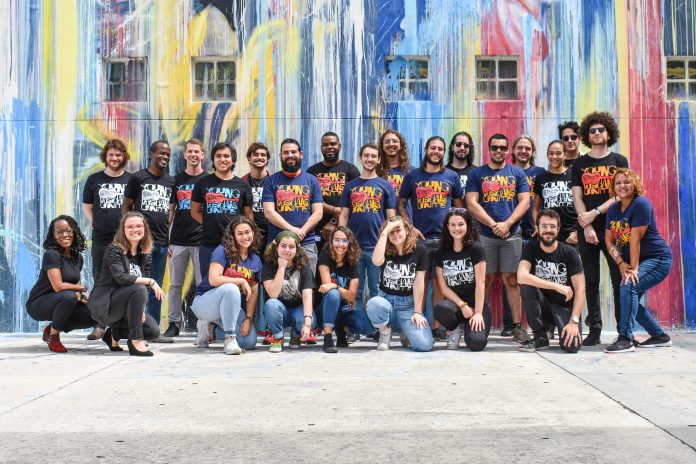
    At Young Musicians Unite (YMU), we believe every child deserves access to high-quality music education—no matter their ZIP code or family income. Since 2013, YMU has partnered with public schools across the county to provide free, in-school music programs to students who otherwise might never have had the chance to learn an instrument or experience the joy of creative expression.

    To date, we’ve served more than 37,000 students. This school year alone, 12,125 students across 75 schools will learn, grow, and perform in 388 classrooms supported by YMU each week. And we’re doing it all at an average annual cost of just $454 per student—a small investment that makes a lasting difference.

    Our mission is simple: use music to transform lives and strengthen communities. Research shows that music enhances learning by developing the very capacities—cognitive, emotional, and social—that drive success in every subject. In fact, over 96% of YMU students report feeling more motivated to do better in school after taking music classes. Teachers also tell us that students are more engaged, cooperative, and confident in their work.

    What makes YMU unique is how we build sustainable music programs. We start by partnering with schools that have little or no music instruction. We bring in trained teachers, instruments, and lesson plans. As programs grow, schools begin to match our investment—hiring part-time, then full-time teachers until music becomes a permanent part of the school culture.

    This approach strengthens entire feeder patterns, ensuring continuous music education from elementary through high school. It also helps schools attract and retain students, especially in neighborhoods where enrollment has been declining.

    At a time when funding for the arts continues to shrink and pressure on our kids is greater than ever, YMU is proving that collaboration and creativity can fill the gap. When we invest in music education, we’re not just teaching notes and rhythms—we’re nurturing confidence, teamwork, and leadership. We’re giving young people the tools to express themselves, connect with others, and envision a brighter future.

    The sound of a school band tuning up or a guitar ensemble rehearsing isn’t just music—it’s the sound of opportunity.

    And with continued community support, we can make sure that sound continues to grow louder across Miami-Dade County. Because every child deserves the chance to play.

    Young Musicians Unite was founded by Sammy Gonzalez, a Miami-born, internationally acclaimed musician and mentor. Sammy recognized the staggering lack of music education in many of Miami’s underserved communities and created YMU as a response to this deficiency.

    Pinecrest’s Diana Jaramillo publishes novel for young readers

    There’s a famous Bob Mankoff cartoon that appeared years ago in The New Yorker magazine. It shows a patient in a medical office as the doctor announces ‘There’s a novel in you that has to come out.’”

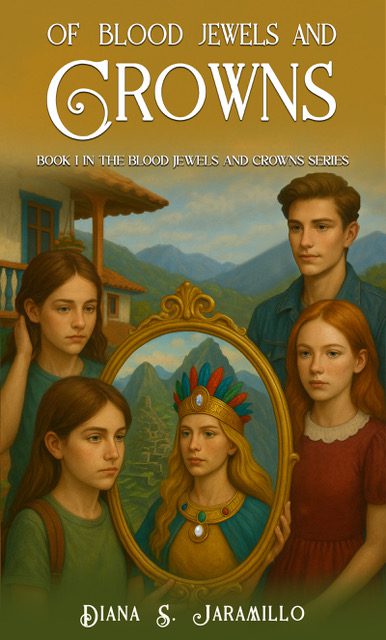
    That patient might have been Pinecrest resident Diana Jaramillo, who recently published her first novel in a planned trilogy for young readers entitled Of Blood, Jewels and Crowns. It’s a series of novels about friendship, family, high adventure and mystery. Diana wrote the first novel over the course of 10 years while working full time and raising a family. It was recently published and can be ordered on Amazon here

    “My novel takes the reader to Colombia, South America, where I was born, and to California, where I was raised. From there, we crisscross the Americas and Spain searching for a cache of invaluable jewels about which the protagonist, 14 year-old Cristina, has been told by her grandfather on his deathbed,” explains Diana. “Cristina is accompanied during the adventure by her cousin and her two best friends.”

    The danger and drama lie in the fact that that a feared Colombian drug lord named Francisco Valdez is also aware of the jewels and is actively searching for them too. 

    Diana Jaramillo

    Diana was born in Medellin, Colombia and moved to Southern California at age three with her parents and four siblings at a time when her peers thought that Colombia was the capital of South Carolina. As an adult she had dreams of becoming a pilot and studied aviation management. She joined a Miami-based aircraft repair company and traveled all over South America before marrying her husband Fernando in Miami. They live in Pinecrest with their two children. 

    “My hope is that through my books, young readers will realize that I too had fears about growing up and succeeding but was determined enough to follow my passions and dreams to make them happen,” she says.

    The idea for the novel has its roots in Diana’s childhood when she would travel from California to Colombia to visit family. “I would spend my summers in Medellin, having adventures with my cousins as a young girl,” she says. 

    Once the novel was completed, Diana worked for a year with an editor at HarperCollins Publishers to get the book ready for publishing. “I was told that my first draft was too long, so we ended up turning it into two books. This is the first; the second will be published in April of 2026. I’m currently writing the final book of the trilogy, which takes the reader to Peru,” explains Diana. 

    Of Blood, Jewels and Crowns is available in paperback, hardback and E-Book and will soon be available as an audiobook. 

    Copies of Diana’s book can be purchased here.

    - Advertisement -